


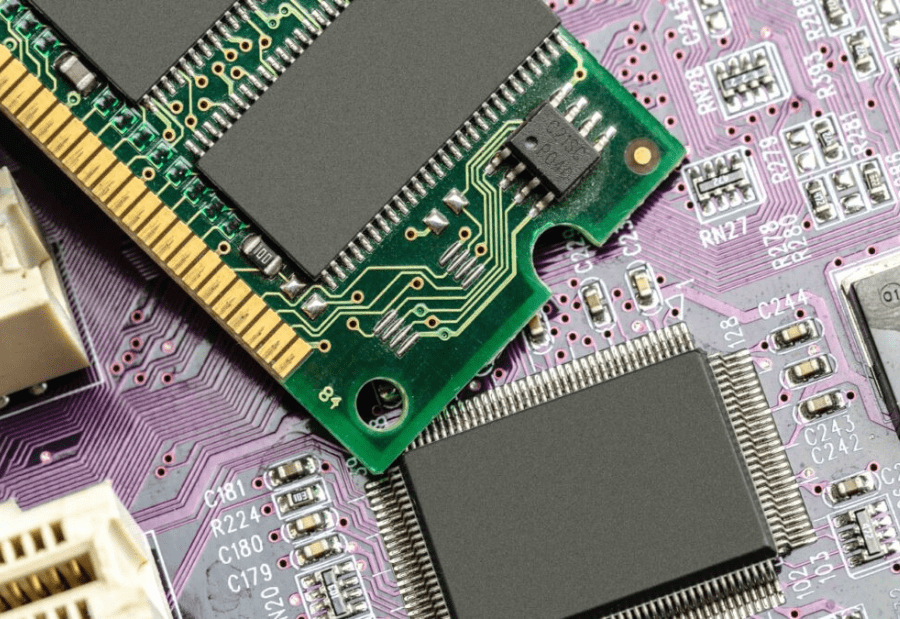
A fresh round of US-China trade discussions is creating both opportunity and uncertainty for South Korea’s semiconductor industry. Korean chipmakers are now balancing short-term business gains in China against the long-term risk of helping Chinese firms narrow the technology gap with global leaders such as Samsung Electronics and SK hynix.
The ongoing Trump-Xi summit in Beijing is heavily focused on semiconductor export controls and China’s dominance in rare earth supplies, both of which directly impact Korea’s chip supply chain and export market. The US recently tightened restrictions on semiconductor equipment exports to China to slow advances in artificial intelligence and high-performance computing. In response, China is expected to use its control over rare earth materials as leverage during negotiations linked to the trade truce reached in October last year.
Reports suggest the US may ease some semiconductor equipment restrictions if China increases purchases of American agricultural products, energy resources, and Boeing aircraft. “If the US eases some restrictions on semiconductor equipment exports while China guarantees stable rare earth supplies, both sides could frame the outcome as a diplomatic success,” said Yeo Tae-kyung, analyst at Hyundai Motor Securities.
Attention has also shifted toward Nvidia after CEO Jensen Huang joined the US delegation. Reports indicate that around 10 Chinese companies, including Alibaba, Tencent, and ByteDance, received approval to purchase H200 AI chips under specific licence conditions, with each company reportedly allowed up to 75,000 units.
For Korean chipmakers, the bigger concern is whether restrictions around 14-nanometer and 7-nanometer semiconductor processes could be relaxed. Analysts warn that such a move may help Chinese firms strengthen advanced chip production capabilities. “This would be a negative scenario for Korean memory makers,” said Cho Yeon-joo of NH Investment & Securities.
However, some experts believe the biggest risk remains unlikely unless China gains access to EUV lithography technology. “The key is EUV lithography equipment, and I do not think the US will allow China to access it,” said semiconductor engineering professor Park Jae-geun.
At the same time, easing tensions could benefit Korean exports to China, which reportedly surged 62.5% year-on-year in April, led by semiconductor shipments.
Also read: Viksit Workforce for a Viksit Bharat
Do Follow: The Mainstream LinkedIn | The Mainstream Facebook | The Mainstream Youtube | The Mainstream Twitter
About us:
The Mainstream is a premier platform delivering the latest updates and informed perspectives across the technology business and cyber landscape. Built on research-driven, thought leadership and original intellectual property, The Mainstream also curates summits & conferences that convene decision makers to explore how technology reshapes industries and leadership. With a growing presence in India and globally across the Middle East, Africa, ASEAN, the USA, the UK and Australia, The Mainstream carries a vision to bring the latest happenings and insights to 8.2 billion people and to place technology at the centre of conversation for leaders navigating the future.