


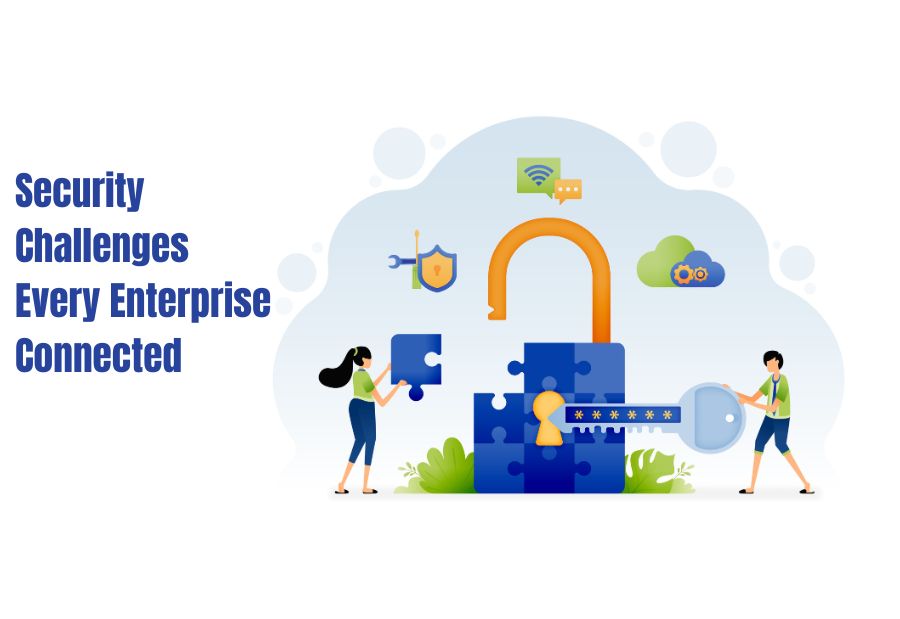
Modern enterprises are more connected than ever. Cloud platforms, remote access, APIs, SaaS applications, connected devices and digital services help businesses operate faster and serve customers more efficiently. However, this connectivity also creates new security risks.
The security challenges every enterprise connected environment faces are becoming more complex because systems, users and applications are constantly interacting with one another. Security teams must therefore protect a broader and more dynamic technology environment.
Why connected enterprises face greater risk
A connected enterprise may depend on hundreds of applications, cloud services and external relationships. Every connection creates an opportunity for data to move between systems.
The challenge is not simply securing individual applications. Organisations need visibility across the entire environment and must understand how systems interact.
Key Security Challenges
1. Expanding Attack Surfaces
As businesses add cloud services, APIs, connected devices and digital applications, their attack surface grows.
Security teams may struggle to maintain an accurate inventory of all assets. Unknown or forgotten systems can become weak points that attackers exploit.
2. Identity and Access Risks
Connected environments depend heavily on user and machine identities. Employees, contractors, applications and automated systems may all require access to enterprise resources.
Excessive permissions or poorly managed accounts can increase the risk of unauthorised activity.
3. Third-Party Connections
Enterprises often connect their systems with vendors, technology partners and service providers.
These relationships can create additional security risks because an organisation may not have complete control over the security practices of every connected party.
4. Data Exposure
Data moves continuously between applications and platforms. Without appropriate encryption, access controls and monitoring, sensitive business or customer information may be exposed.
Data security therefore needs to be considered across the entire data lifecycle.
5. Limited Visibility
Security teams need clear visibility into users, assets, applications and network activity. Fragmented security tools can make this difficult.
When information is spread across multiple systems, identifying unusual behaviour and responding quickly to incidents becomes harder.
Building a Stronger Security Approach
Organisations can improve their security posture by focusing on visibility, identity and continuous monitoring.
A central asset inventory can help security teams understand what systems are connected. Identity controls can ensure users and applications receive only the access they need.
Security monitoring should also cover cloud environments, endpoints, APIs and third-party connections rather than focusing only on traditional network infrastructure.
Automation can further support security teams by identifying unusual activity and prioritising high-risk events.
Security Needs Business Context
One of the most important security challenges every enterprise connected environment faces is understanding which risks matter most to the business.
A technical alert may indicate a potential issue, but security leaders need to understand its possible impact on critical applications, customer data and business operations.
This makes collaboration between cybersecurity, IT and business teams increasingly important.
The Mainstream Perspective
As enterprise technology becomes more connected, cybersecurity strategies must evolve with it. The Mainstream continues to cover the changing security landscape, including enterprise risk, technology leadership and emerging cybersecurity priorities.
Final Thought
Connected enterprises gain speed and flexibility, but they also face a broader security environment. Managing the security challenges every enterprise connected ecosystem creates requires strong identity controls, better visibility, continuous monitoring and clear risk priorities. Security must remain closely connected to business operations as digital environments continue to expand.