


This breakthrough highlights how NASA is exploring sustainable ways to extract valuable resources beyond Earth using biological processes.
The BioAsteroid experiment, conducted aboard the International Space Station, demonstrated that microorganisms can extract metals such as palladium and platinum from meteorite material in microgravity. The study used a fungus, Penicillium simplicissimum, and a bacterium, Sphingomonas desiccabilis, along with a mixed culture to compare results.
The fungus showed the most promising results. In microgravity, it significantly enhanced the release of metals compared to non-biological methods. Scientists tracked 44 elements in the meteorite sample and found that 18 were biologically extracted, confirming the potential of biomining in space.
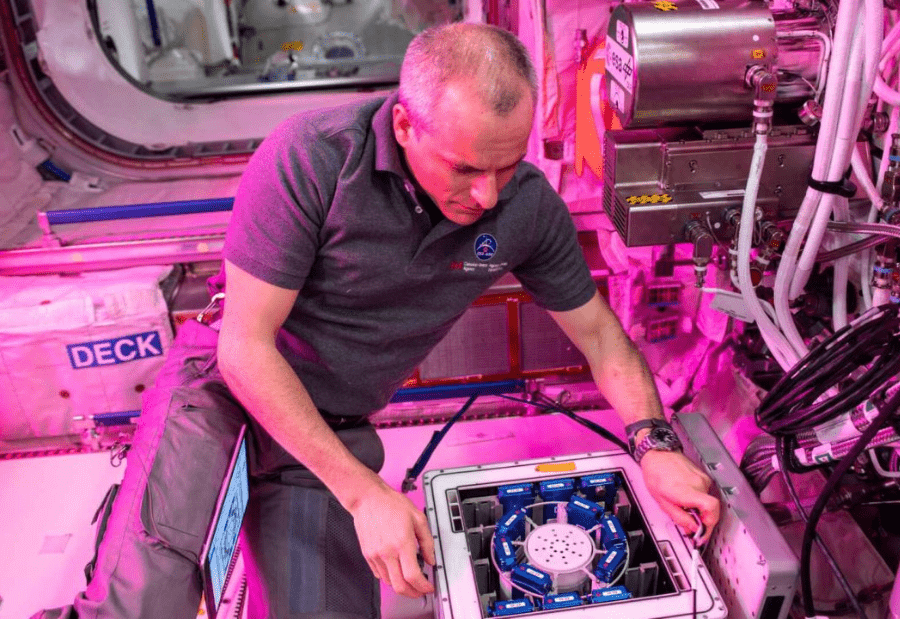
The experiment was carried out using small reactors placed inside ESA’s KUBIK incubators, with astronaut Michael Scott Hopkins supporting operations. Researchers used an L-chondrite meteorite to test how microbes behave in orbit compared to Earth-based conditions.
Biomining works by using microorganisms to alter rock chemistry and release metal ions into solution. In this case, the microbes produced carboxylic acids that helped break down the rock and free valuable elements. Microgravity also changed how fluids and dissolved materials behaved, influencing extraction efficiency.
Interestingly, while some non-biological extraction processes performed worse in space, the fungus improved palladium recovery by 5.5 times compared to control conditions, showing that microbes can compensate for microgravity challenges.
These metals are critical for modern industries. Palladium and platinum are widely used in catalytic converters, electronics, and industrial processes. Their extraction on Earth often involves environmentally harmful methods, including toxic chemicals and high-impact mining.
The findings suggest biomining could offer a cleaner alternative, both for future space missions and for improving extraction methods on Earth. It may also support in-situ resource utilization, where astronauts use local materials on the Moon or Mars instead of transporting resources from Earth.
However, the technology is still at an early stage. Researchers note variability in results and highlight challenges around scalability, economics, and infrastructure needed for space mining.
Even so, the experiment marks an important step toward sustainable resource use, showing that living organisms could one day play a role in how humanity mines both Earth and space.
Also read: Viksit Workforce for a Viksit Bharat
Do Follow: The Mainstream LinkedIn | The Mainstream Facebook | The Mainstream Youtube | The Mainstream Twitter
About us:
The Mainstream is a premier platform delivering the latest updates and informed perspectives across the technology business and cyber landscape. Built on research-driven, thought leadership and original intellectual property, The Mainstream also curates summits & conferences that convene decision makers to explore how technology reshapes industries and leadership. With a growing presence in India and globally across the Middle East, Africa, ASEAN, the USA, the UK and Australia, The Mainstream carries a vision to bring the latest happenings and insights to 8.2 billion people and to place technology at the centre of conversation for leaders navigating the future.