


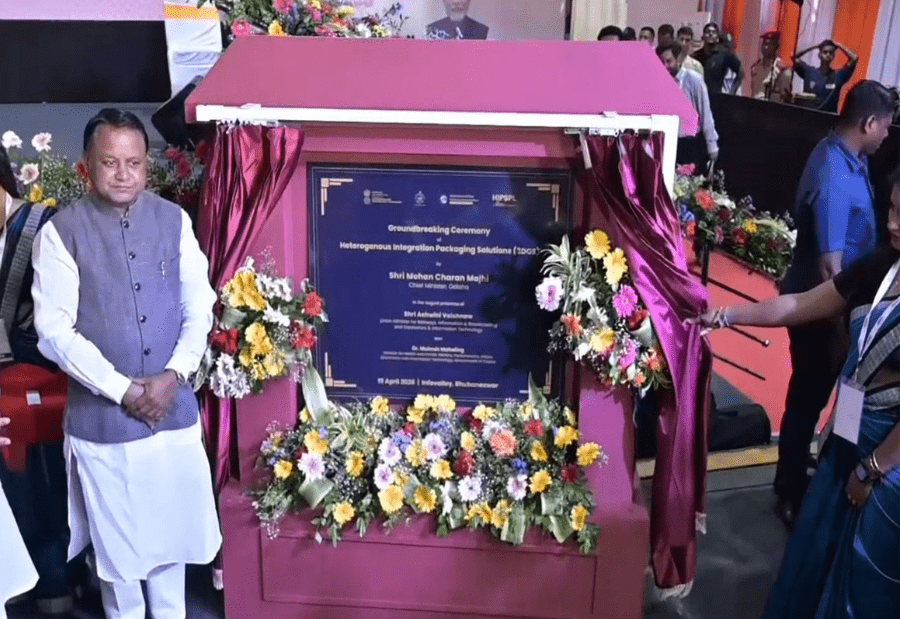
In a significant push towards semiconductor self-reliance, India has initiated its first glass substrate-based advanced chip packaging unit in Bhubaneswar. The project marks a shift from dependence on imported technologies to building domestic capabilities for high-end applications.
The foundation stone for the facility was laid on Sunday by Odisha Chief Minister Mohan Majhi at Info Valley. The unit is being developed by US-based 3D Glass Solutions Inc. with an investment of ₹1,943 crore. It will deploy advanced 3D heterogeneous integration (3DHI) packaging technology, which India has so far relied on imports to access.
Union Electronics and IT Minister Ashwini Vaishnaw, present at the event along with state IT Minister Mukesh Mahaling, described the development as “a historical day” for Odisha. He highlighted the state’s transition from a metals and minerals base to emerging sectors like IT and electronics manufacturing.
“The state is diversifying from metals and minerals to many new industrial bases,” Vaishnaw said. He added that the use of advanced 3D glass substrate technology marks a shift from traditional silicon-based methods. “We will also work to double the capacity of the plant after the completion of the first phase of the plant,” he said.
The facility will package semiconductor chips for applications such as artificial intelligence, 5G networks, defence systems, data centres, and high-performance computing. At full scale, it is expected to produce 69,600 glass panel substrates, 50 million assembled units, and 13,200 3DHI modules annually. The project is also expected to generate over 2,500 direct and indirect jobs.
The use of glass interposers and embedded glass substrates offers improved thermal performance and higher integration density compared to conventional packaging methods, making it suitable for AI-grade chips.
This marks the second semiconductor project in Odisha in recent months. SiCSem Private Limited, in partnership with UK-based Clas-SiC Wafer Fab Ltd., is also developing a silicon carbide fabrication unit at the same location. The facility will target an annual output of 60,000 wafers and 96 million packaged units for sectors including electric vehicles, railways, defence, and renewable energy.
Both projects were approved by the Union Cabinet in 2025 as part of a broader initiative that has cleared 10 semiconductor projects with total investments exceeding ₹1.6 lakh crore. The move aligns with India’s long-term goal of building a self-reliant semiconductor ecosystem.
Also read: Viksit Workforce for a Viksit Bharat
Do Follow: The Mainstream LinkedIn | The Mainstream Facebook | The Mainstream Youtube | The Mainstream Twitter
About us:
The Mainstream is a premier platform delivering the latest updates and informed perspectives across the technology business and cyber landscape. Built on research-driven, thought leadership and original intellectual property, The Mainstream also curates summits & conferences that convene decision makers to explore how technology reshapes industries and leadership. With a growing presence in India and globally across the Middle East, Africa, ASEAN, the USA, the UK and Australia, The Mainstream carries a vision to bring the latest happenings and insights to 8.2 billion people and to place technology at the centre of conversation for leaders navigating the future.