


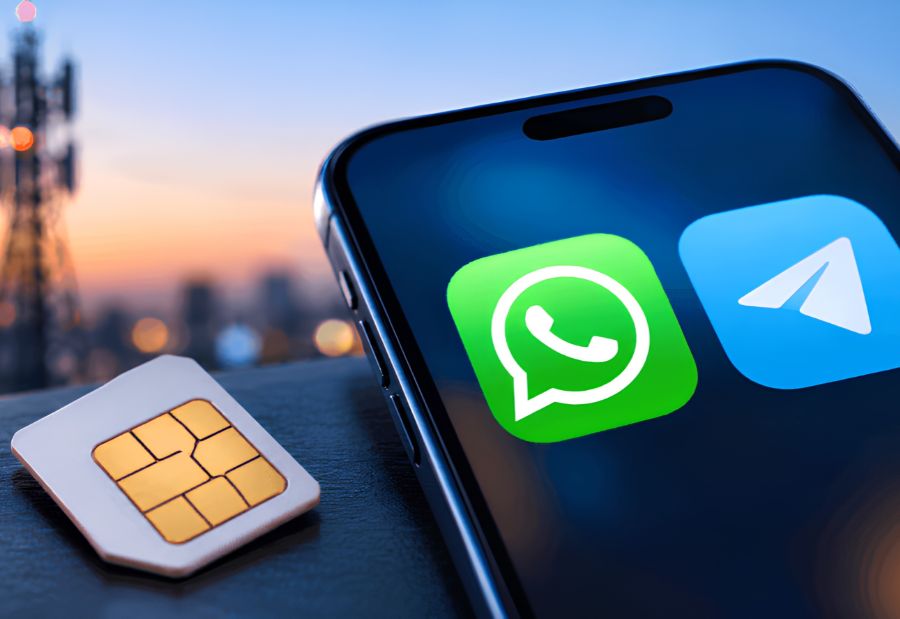
Users of popular messaging platforms in India may need to keep their registered SIM cards active and installed in their devices under new government rules. The SIM-binding requirements cover apps such as WhatsApp, Telegram and Signal, with a compliance deadline of December 31 and implementation expected from January 1.
Most messaging apps verify a user’s phone number through a one-time code sent by SMS. After verification, accounts can continue to work even if the SIM card is removed, replaced or deactivated.
Under the new SIM-binding rules, messaging accounts must remain linked to the SIM card used during registration. According to the Ministry of Communications, this could restrict access to apps on devices that do not contain the registered, active SIM card.
The Department of Telecommunications (DoT) said cybercriminals exploit the existing system to conduct large-scale digital fraud, including cross-border scams. Accounts that remain active after a SIM is removed, deactivated or moved abroad can be misused to make digital arrest calls and impersonate government officials using Indian phone numbers.
The Ministry of Communications reported that cyber-fraud losses exceeded ₹22,800 crore last year. It described the directions issued under the Telecom Cyber Security Rules as a proportionate step to prevent the misuse of telecom identifiers, improve traceability and protect trust in India’s digital ecosystem.
Issued on November 28, 2025, the order covers WhatsApp, Telegram, Snapchat, Arattai, ShareChat, Josh, JioChat and Signal. WhatsApp, which has around 500 million users in India, is expected to be among the most affected platforms.
Initially, the apps were given 90 days to comply and 120 days to submit compliance reports. However, the government extended the deadline following industry concerns about technical challenges.
Some requirements have also been relaxed. The earlier proposal to log users out of web versions every 6 hours has been replaced with a risk-based logout requirement. WhatsApp has also started beta testing SIM binding on Android.
How could SIM binding affect users?
- Removed or deactivated SIM cards: Messaging apps may stop working if the registered SIM is removed or deactivated.
- WhatsApp Web and linked devices: Users may need to log in again more frequently. The DoT wants users to be able to reconnect devices through QR codes.
- Tablets and secondary phones: Devices without a SIM card could face access restrictions.
- Travellers and multi-device users: People who change SIM cards while travelling or use messaging apps across multiple devices may experience disruptions.
A survey by think tank CUTS International found that 80% of consumers and more than 60% of small businesses expected disruptions from the rules. Around 86% of users said they allowed family members to use their phone or SIM for messaging.
Apps that fail to comply could face action under the Telecommunications Act, 2023, and the Telecom Cyber Security Rules, 2024.
The DoT also plans to introduce a Mobile Number Verification platform to check whether phone numbers belong to genuine users.
Also read: Viksit Workforce for a Viksit Bharat
Do Follow: The Mainstream LinkedIn | The Mainstream Facebook | The Mainstream Youtube | The Mainstream Twitter
About us:
The Mainstream is a premier platform delivering the latest updates and informed perspectives across the technology business and cyber landscape. Built on research-driven, thought leadership and original intellectual property, The Mainstream also curates summits & conferences that convene decision makers to explore how technology reshapes industries and leadership. With a growing presence in India and globally across the Middle East, Africa, ASEAN, the USA, the UK and Australia, The Mainstream carries a vision to bring the latest happenings and insights to 8.2 billion people and to place technology at the centre of conversation for leaders navigating the future.