


India’s move to introduce a merchant discount rate (MDR) on certain high-value UPI transactions is prompting concern among electronics retailers, who say the additional payment cost could further squeeze margins in a highly competitive market.
From October 15, 2026, eligible person-to-merchant UPI transactions above ₹2,000 will attract an MDR of 0.4%, subject to a maximum charge of ₹300 per transaction. Payments of ₹2,000 or less will continue to remain free, while eligible small merchants will also be protected under the revised framework.
Thin margins make electronics retailers particularly sensitive
For a retailer, the headline rate of 0.4% may appear modest. However, its impact becomes more visible when applied repeatedly to high-value transactions.
For example, a ₹50,000 UPI payment would attract an MDR of ₹200, while a ₹1 lakh transaction would ordinarily attract ₹400 but would be subject to the ₹300 transaction cap. GST is applicable on the MDR.
Retailers argue that absorbing the charge could reduce already limited margins, particularly in categories where product prices are closely benchmarked across online marketplaces and competing stores.
Industry associations representing consumer electronics, mobile phone and other retailers have opposed the proposed MDR, arguing that retailers may have limited scope to pass the additional cost on to customers in a competitive market.
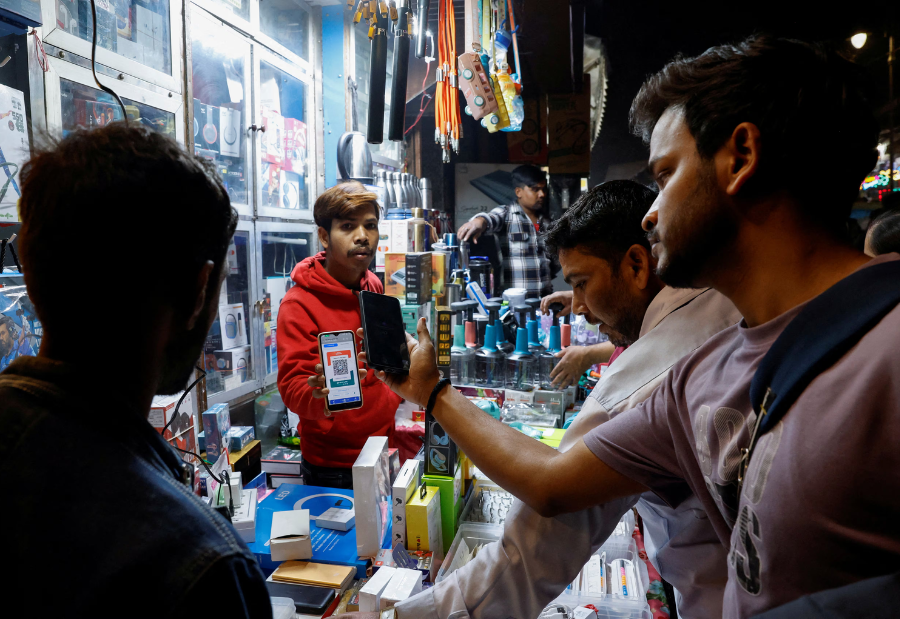
The concern is already visible in major electronics markets. Traders in Delhi’s Nehru Place, for instance, have said they are unlikely to be able to pass the additional cost to customers because of intense price competition.
Customers will not directly pay the MDR
The revised framework does not introduce a UPI convenience fee for consumers. The MDR is a merchant-side charge, and banks have been advised to ensure that merchants do not pass it on to customers.
This distinction is important because the change does not mean that consumers will suddenly pay an additional 0.4% every time they use UPI for a large purchase.
Instead, the immediate financial impact falls on the merchant and the wider payments ecosystem. Retailers will therefore have to decide whether to absorb the cost, factor it into their commercial calculations or explore alternative payment methods.
Why UPI is being monetised
The MDR framework comes after years in which UPI merchant payments operated without a conventional merchant fee. The government has positioned the revised structure as a way to support the sustainability of the digital payments ecosystem, including investments in infrastructure, innovation and cybersecurity.
The move also creates a new revenue stream within an ecosystem that has grown rapidly. UPI processed 2,366 crore transactions worth ₹29.9 lakh crore in July 2026 alone, according to data cited by India Today.
Reuters reported that PhonePe and Google Pay together account for about 80% of India’s UPI transaction market and could capture a significant share of the additional revenue generated through the new fee structure.
This has added another dimension to the debate: while the MDR could provide greater financial support for the payments ecosystem, its distribution could also influence competition among payment service providers.
Most smaller transactions remain outside the charge
The revised framework does not make all UPI payments chargeable.
Person-to-person transfers remain free, while transactions of ₹2,000 or less do not attract the new MDR. Small merchants receiving up to ₹1 lakh a month through eligible UPI QR payments are also covered by the zero-MDR framework.
Certain sectors have also been assigned a different pricing structure. Transactions above ₹2,000 involving categories such as fuel, telecom, insurance and railways can attract a flat ₹5 MDR rather than the standard 0.4% rate.
The government has indicated that around 96% of UPI transactions by volume will remain unaffected by the revised framework.
A new calculation for high-value digital payments
For electronics retailers, the change comes down to a simple commercial question: how much of the cost of accepting a digital payment can a business absorb without affecting already tight margins?
Unlike categories dominated by small-ticket purchases, electronics retail has a higher concentration of transactions above the ₹2,000 threshold. That makes the sector more exposed to the new MDR structure.
The impact will also vary between retailers depending on their transaction volumes, margins, payment mix and ability to negotiate costs within their banking or payment arrangements.
As UPI moves into its next phase, the electronics sector is therefore emerging as an important test case for how India’s digital payments ecosystem balances widespread consumer adoption with the cost of maintaining and expanding the infrastructure behind it.
Also read: Viksit Workforce for a Viksit Bharat
Do Follow: The Mainstream LinkedIn | The Mainstream Facebook | The Mainstream Youtube | The Mainstream Twitter
About us:
The Mainstream is a premier platform delivering the latest updates and informed perspectives across the technology business and cyber landscape. Built on research-driven, thought leadership and original intellectual property, The Mainstream also curates summits & conferences that convene decision makers to explore how technology reshapes industries and leadership. With a growing presence in India and globally across the Middle East, Africa, ASEAN, the USA, the UK and Australia, The Mainstream carries a vision to bring the latest happenings and insights to 8.2 billion people and to place technology at the centre of conversation for leaders navigating the future.