


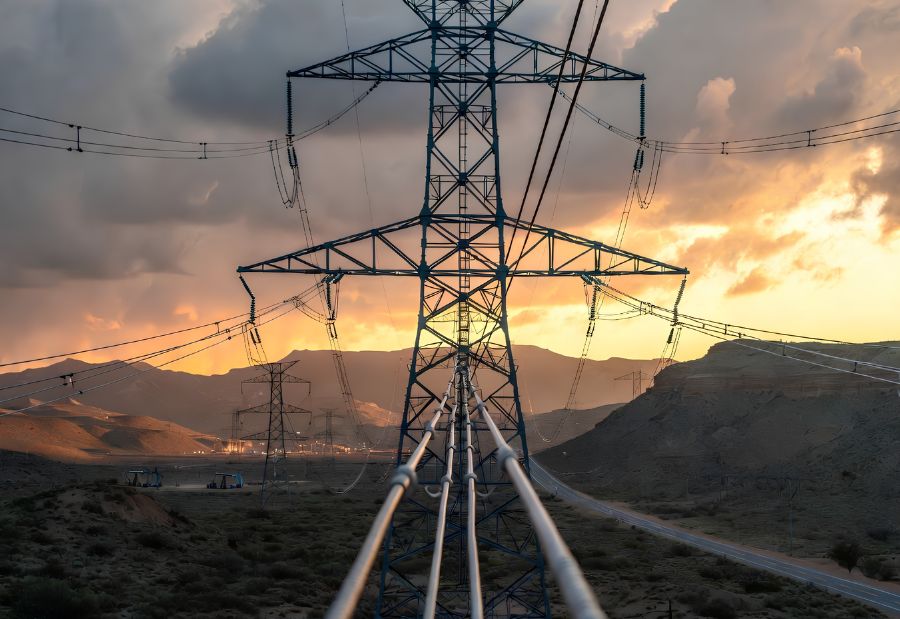
Record-breaking heat across the U.S. is placing unprecedented pressure on the country’s electricity grids.
Temperatures above 100°F (38°C) are driving heavy air conditioner use, while the rapid expansion of AI-powered data centers and factories is pushing electricity demand even higher. Together, these factors are reducing power reserves and putting decades-old transmission infrastructure under significant stress.
This summer has highlighted a new challenge for the U.S. power system, where extreme weather and rising AI-driven electricity demand are happening at the same time. Data centers require uninterrupted power for computing and cooling, adding constant pressure to grids already strained by heat.
In early July, PJM Interconnection, which serves about 67 million people, recorded demand close to or above 166,000–168,000 MW, surpassing the previous record of 165,563 MW set in 2006. The operator issued Hot Weather Alerts, Maximum Generation Alerts, and Load Management Alerts. Emergency measures also included directing large electricity users, such as data centers, to switch to on-site backup generation. Transmission congestion, especially near northern Virginia’s data center hub, also increased wholesale electricity prices.
ERCOT in Texas reached a new demand record of about 91,308 MW on July 22, exceeding the previous 85,500 MW record from 2023. The grid remained stable with reserves of about 14,000 MW as of July 26, although officials noted that demand from data centers is expected to rise further.
MISO issued multiple Hot Weather Alerts through late July as heat indices reached 110°F or higher across several states. NYISO activated demand-response programs during demand peaks of 31,000–32,000 MW, while ISO New England and CAISO continued monitoring heat and wildfire-related risks, with California reporting normal grid conditions.
Heat warnings remained active on July 26, with heat indices reaching 112°F across parts of the central and eastern U.S. At the same time, forecasts suggest data centers could account for 6%–12% or more of U.S. electricity use by the late 2020s. Some projections estimate demand could approach 200 GW by 2035.
Authorities continue to rely on emergency measures while accelerating investments in natural gas, nuclear, solar, wind, battery storage, and transmission upgrades. Consumers are also being encouraged to conserve electricity during 2–8 p.m., prepare outage kits, stay updated with utility alerts, use generators safely, protect vulnerable people, and adopt energy-efficient solutions to help reduce pressure on the grid.
Also read: Viksit Workforce for a Viksit Bharat
Do Follow: The Mainstream LinkedIn | The Mainstream Facebook | The Mainstream Youtube | The Mainstream Twitter
About us:
The Mainstream is a premier platform delivering the latest updates and informed perspectives across the technology business and cyber landscape. Built on research-driven, thought leadership and original intellectual property, The Mainstream also curates summits & conferences that convene decision makers to explore how technology reshapes industries and leadership. With a growing presence in India and globally across the Middle East, Africa, ASEAN, the USA, the UK and Australia, The Mainstream carries a vision to bring the latest happenings and insights to 8.2 billion people and to place technology at the centre of conversation for leaders navigating the future.