


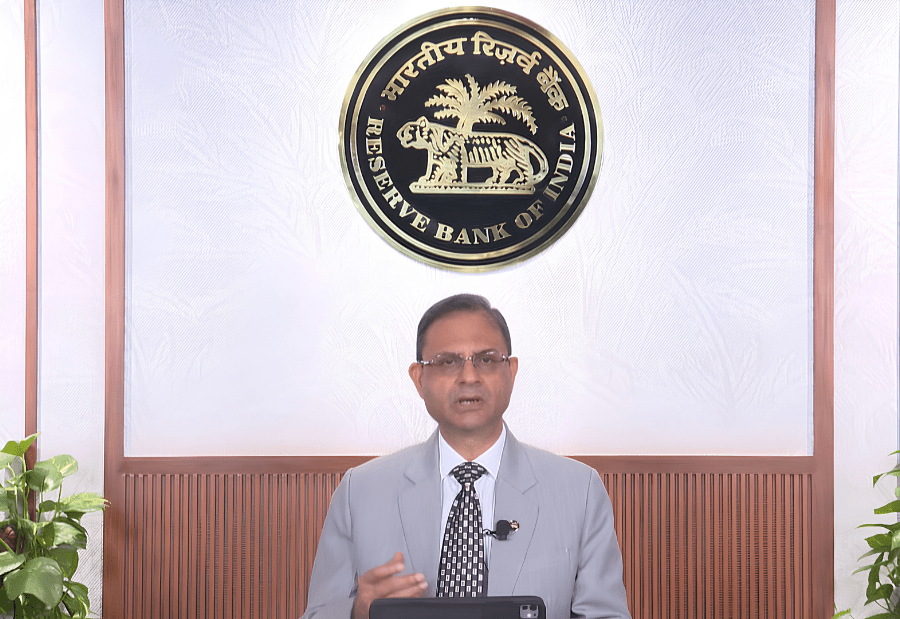
Amid growing geopolitical uncertainty, Reserve Bank of India (RBI) Governor Sanjay Malhotra has indicated a cautious and data-led approach to monetary policy, highlighting the need for flexibility as risks from West Asia impact inflation and growth outlook.
Speaking at Princeton University on 18 April, Malhotra emphasized the importance of remaining agile. “In uncertain times such as this, it is important to be agile and nimble, maintain a broad policy stance, and avoid making firm commitments on the future path of policy,” he said. He added that the RBI is currently in a “wait-and-watch mode,” maintaining a neutral stance across recent policy cycles.
The central bank kept the repo rate unchanged at 5.25% in its latest policy decision on 8 April, marking the second consecutive pause. This follows cumulative rate cuts of 125 basis points between February and December 2025. However, the RBI flagged upside risks to inflation from potential energy price increases and weather disruptions, while also warning that prolonged instability in West Asia could weigh on growth.
India’s economic exposure to the region remains significant. West Asia accounts for about one-sixth of exports, one-fifth of imports, half of crude oil imports, two-fifths of fertilizer imports, and nearly two-fifths of inward remittances.
Malhotra highlighted the importance of managing “second-round effects” of supply shocks, where initial disruptions translate into sustained inflation. He noted that preventing such effects is critical and requires influencing inflation expectations rather than relying solely on demand control measures.
India’s CPI inflation rose to 3.4% in March 2026, up from 3.2% in February and 2.7% in January. The RBI has projected CPI inflation at 4.6% for FY27, with core inflation at 4.4%. While real GDP growth is estimated at 7.6% for FY26, it is projected to moderate to 6.9% for FY27, with quarterly growth ranging between 6.7% and 7.2%.
Operating under a single mandate of price stability within the flexible inflation targeting framework introduced in 2016, the RBI aims to keep inflation within the 2–6% band. Since adopting this framework, average headline inflation has declined to 4.7% from 7.4% in the earlier period, with reduced volatility.
Malhotra also noted that policy measures such as boosting oil and gas production, diversifying import sources, and fiscal consolidation have helped absorb external shocks. These steps, along with institutional strength and reforms, have supported the resilience of the Indian economy.
Also read: Viksit Workforce for a Viksit Bharat
Do Follow: The Mainstream LinkedIn | The Mainstream Facebook | The Mainstream Youtube | The Mainstream Twitter
About us:
The Mainstream is a premier platform delivering the latest updates and informed perspectives across the technology business and cyber landscape. Built on research-driven, thought leadership and original intellectual property, The Mainstream also curates summits & conferences that convene decision makers to explore how technology reshapes industries and leadership. With a growing presence in India and globally across the Middle East, Africa, ASEAN, the USA, the UK and Australia, The Mainstream carries a vision to bring the latest happenings and insights to 8.2 billion people and to place technology at the centre of conversation for leaders navigating the future.