


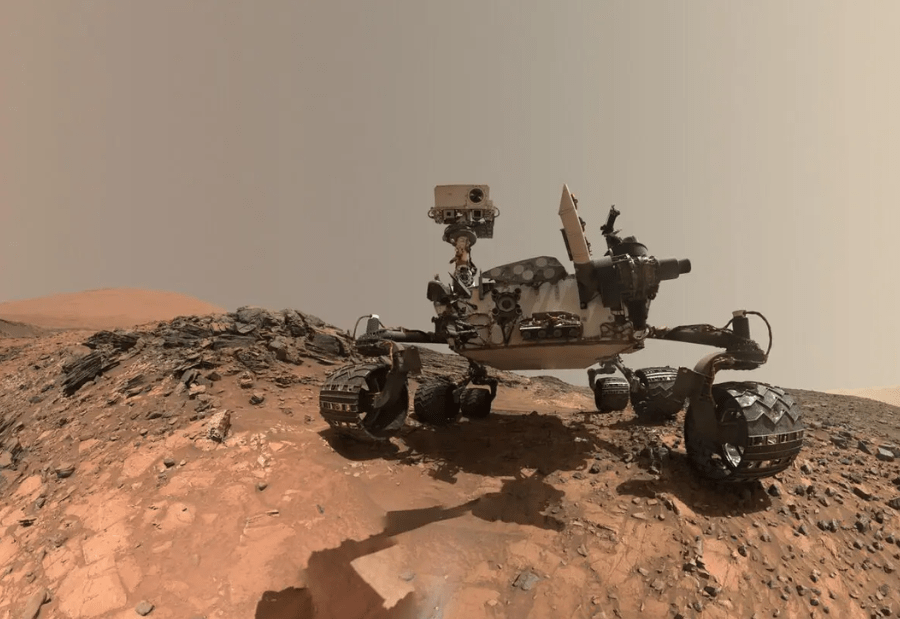
In a significant step for space exploration, NASA’s Curiosity rover has detected more than 20 organic compounds in Mars’s Gale Crater, marking a major scientific development.
The discovery was made using a chemical called TMAH, which has been used for the first time on another planet. These compounds were found in ancient, clay-rich rocks and are similar to the basic building blocks of life known on Earth.
Scientists noted that these organic molecules have survived for billions of years despite harsh Martian radiation. This suggests that Mars’s subsurface holds a diverse range of chemical materials that could offer insights into past conditions on the planet.
The study was led by Amy Williams from the University of Florida. The findings align with earlier observations from Perseverance rover, strengthening evidence of organic presence on Mars.
The results are expected to guide upcoming missions such as Rosalind Franklin rover by European Space Agency and Dragonfly mission by NASA, both focused on searching for signs of life beyond Earth.
The discovery highlights the long-term preservation of organic material on Mars and adds momentum to ongoing efforts to understand the planet’s potential to support life.
Also read: Viksit Workforce for a Viksit Bharat
Do Follow: The Mainstream LinkedIn | The Mainstream Facebook | The Mainstream Youtube | The Mainstream Twitter
About us:
The Mainstream is a premier platform delivering the latest updates and informed perspectives across the technology business and cyber landscape. Built on research-driven, thought leadership and original intellectual property, The Mainstream also curates summits & conferences that convene decision makers to explore how technology reshapes industries and leadership. With a growing presence in India and globally across the Middle East, Africa, ASEAN, the USA, the UK and Australia, The Mainstream carries a vision to bring the latest happenings and insights to 8.2 billion people and to place technology at the centre of conversation for leaders navigating the future.