


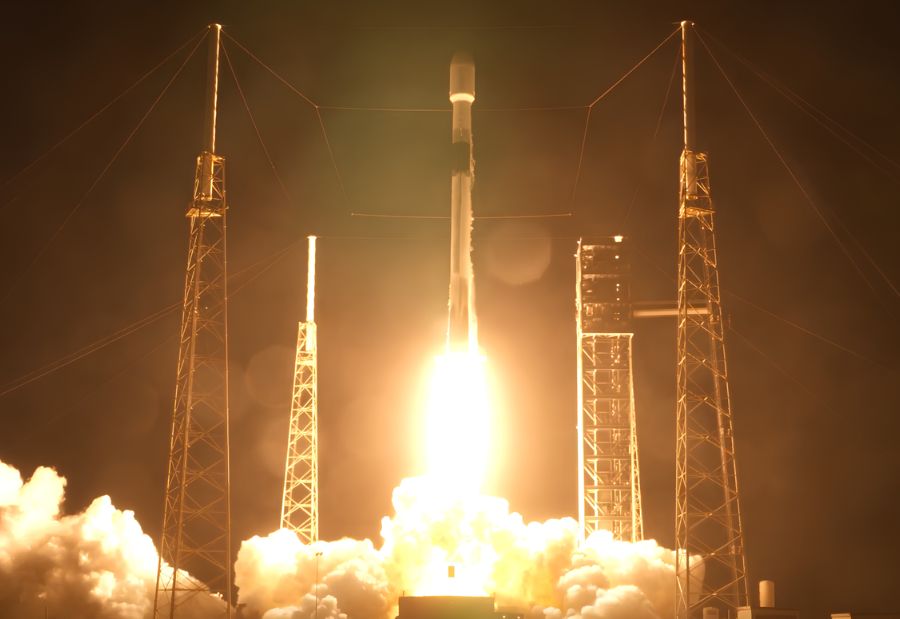
NASA is testing new ways to improve communication between spacecraft and Earth after 2 commercial satellite communication demonstrations successfully launched into low Earth orbit aboard the SpaceX Bandwagon-5 rideshare mission.
The demonstrations, led by NASA’s industry partners Viasat and SES Space and Defense, will test high-rate and low-rate communication services designed to support the agency’s future science missions.
Spacecraft rely on different types of communication to operate effectively. High-rate links transmit large volumes of data, including scientific findings and 4K images, while low-rate links carry basic commands and tracking signals. Both are essential for maintaining reliable connections during space missions.
Viasat will test communication relay services using Maxwell, a demonstration spacecraft built by Rocket Lab. The system is designed to keep spacecraft connected throughout their missions by routing data between Maxwell, satellites in geosynchronous orbit and ground stations across the world. Viasat will also use intelligent autonomous technology to manage data routing.
Meanwhile, SES Space and Defense will test its own high-rate and low-rate relay capabilities. The company plans to use its O3b mPOWER satellite fleet in medium Earth orbit to transmit high-rate data, while satellites in geosynchronous orbit will handle low-rate communications between the demonstration spacecraft and ground stations on Earth.
The demonstrations are part of NASA’s broader effort to expand the use of commercial communication services for space missions. In 2022, the agency’s Space Communications and Navigation division awarded $278.5 million to industry partners through its Communications Services Project to develop these capabilities.
The initiative supports NASA’s plan to gradually retire its Tracking and Data Relay Satellite fleet and transition future low Earth orbit missions to commercial communication alternatives.
By testing these systems, NASA aims to assess how commercial networks can deliver critical information more efficiently and reliably. The Communications Services Project, managed by NASA’s Glenn Research Center in Cleveland, will continue working with industry partners to test advanced relay technologies through 2027.
Also read: Viksit Workforce for a Viksit Bharat
Do Follow: The Mainstream LinkedIn | The Mainstream Facebook | The Mainstream Youtube | The Mainstream Twitter
About us:
The Mainstream is a premier platform delivering the latest updates and informed perspectives across the technology business and cyber landscape. Built on research-driven, thought leadership and original intellectual property, The Mainstream also curates summits & conferences that convene decision makers to explore how technology reshapes industries and leadership. With a growing presence in India and globally across the Middle East, Africa, ASEAN, the USA, the UK and Australia, The Mainstream carries a vision to bring the latest happenings and insights to 8.2 billion people and to place technology at the centre of conversation for leaders navigating the future.