


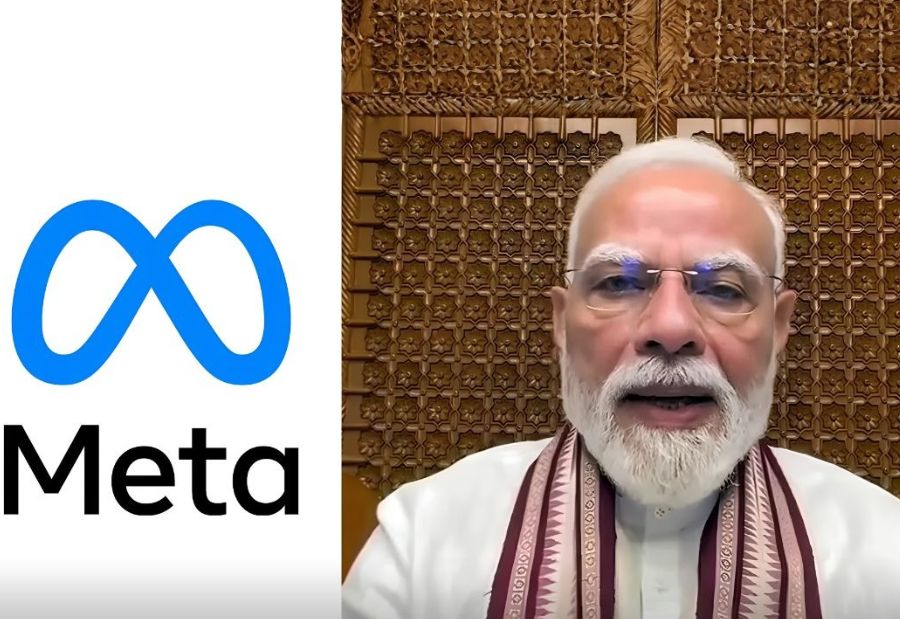
After facing pressure over the temporary removal of Prime Minister Narendra Modi’s Facebook video, Meta’s global team has met MeitY to explain the incident, shifting the focus from a moderation error to the larger question of how global platforms are governed in India.
The controversy over the temporary removal of Prime Minister Narendra Modi’s Facebook video has moved into its next phase.
Days after the incident triggered scrutiny from India’s parliamentary technology panel and calls for accountability from Meta, the company’s global leadership met officials from the Ministry of Electronics and Information Technology (MeitY) on Wednesday to explain the circumstances surrounding the takedown. Meta’s delegation was led by Chief Global Affairs Officer Joel Kaplan, who met MeitY Secretary S. Krishnan.
The meeting marks a significant escalation from an issue that Meta initially characterised as an error.
The video, in which Prime Minister Narendra Modi addressed concerns around examination paper leaks, had been temporarily restricted on Facebook before being restored. Meta said the removal was inadvertent. But the explanation has not ended the questions around how the decision was triggered, what safeguards were in place and how such an error could occur on a post belonging to one of the world’s most prominent political leaders.
From a Moderation Error to a Governance Issue
The latest meeting changes the nature of the conversation.
What began as a content-moderation incident is now becoming a question of platform governance and regulatory accountability.
Large technology platforms increasingly depend on automated systems to identify, classify and restrict content. These systems operate across billions of posts and interactions, making automation essential to scale. But when automated or semi-automated enforcement produces an incorrect outcome, the responsibility cannot simply end with describing the incident as a technical mistake.
The important questions are what happens next.
Can the platform identify the precise point of failure? Can it explain the decision? Is there a sufficiently robust escalation mechanism for high-profile or sensitive content? And can the same mistake be prevented from recurring?
These questions become even more important when platforms operate in jurisdictions where digital services have become deeply embedded in public communication.
MeitY’s Role Becomes More Significant
The involvement of MeitY places the incident within India’s broader technology-regulation framework.
The ministry has increasingly become a central point of engagement between the Indian government and major digital platforms on issues ranging from intermediary compliance and content governance to emerging technology regulation.
The Meta meeting therefore carries significance beyond the specific video.
It reflects the growing expectation that global technology companies operating in India must be able to explain not only what their platforms do, but also how decisions affecting users and public discourse are made.
That expectation is particularly relevant as algorithmic systems become more deeply integrated into content recommendation, moderation and enforcement.
The Safe-Harbour Question
The episode has also acquired a legal dimension.
The parliamentary Standing Committee on Communications and Information Technology has sought an apology from Meta CEO Mark Zuckerberg over the removal and has warned of possible consequences involving the company’s intermediary protections if the issue is not addressed.
That raises the stakes considerably.
Safe-harbour protections are central to the operating model of internet intermediaries because they provide platforms with protection from liability for user-generated content, subject to applicable legal requirements and conditions.
Any serious debate around those protections therefore moves the discussion beyond an individual moderation decision and towards the responsibilities platforms carry while operating within India’s legal framework.
Why This Matters for AI-Driven Platforms
There is also a larger technology lesson here.
The more platforms automate moderation, the more they need human oversight, auditability and clear accountability mechanisms around those systems.
An algorithm can process content at a scale no human team can match. But it does not eliminate the need for context.
A system may identify a policy signal correctly and still arrive at the wrong conclusion. A content decision may technically follow an internal rule while failing to account for the significance of the account, the nature of the content or the wider public context.
This is where platform governance becomes critical.
The challenge is no longer simply to build better moderation systems. It is to build systems that can explain decisions, flag anomalies, provide meaningful human review and establish responsibility when something goes wrong.
A Larger Test for Global Platforms in India
For Meta, the immediate task is to explain the circumstances behind the video removal and address the concerns raised by Indian authorities.
For India, however, the episode represents a broader test of how the country balances platform autonomy, regulatory oversight and digital accountability.
Global technology companies operate across multiple legal systems and often apply globally designed policies. Governments, meanwhile, expect platforms to respect domestic laws and respond to local regulatory requirements.
That tension is unlikely to disappear.
As AI and automation increasingly influence what users can see, share and access online, the governance of these systems will become as important as the systems themselves.
The Meta–MeitY meeting is therefore not simply the next chapter in the story of one removed video.
It is a signal that platform errors are increasingly being treated as governance questions — and that global technology companies may be expected to provide more than an explanation when their systems fail.
The bigger question now is not whether Meta can restore a removed post.
It is whether platforms can build enough transparency, oversight and accountability into their technology to ensure that users, regulators and institutions can trust the decisions those systems make.
Also read: Viksit Workforce for a Viksit Bharat
Do Follow: The Mainstream LinkedIn | The Mainstream Facebook | The Mainstream Youtube | The Mainstream Twitter
About us:
The Mainstream is a premier platform delivering the latest updates and informed perspectives across the technology business and cyber landscape. Built on research-driven, thought leadership and original intellectual property, The Mainstream also curates summits & conferences that convene decision makers to explore how technology reshapes industries and leadership. With a growing presence in India and globally across the Middle East, Africa, ASEAN, the USA, the UK and Australia, The Mainstream carries a vision to bring the latest happenings and insights to 8.2 billion people and to place technology at the centre of conversation for leaders navigating the future.