


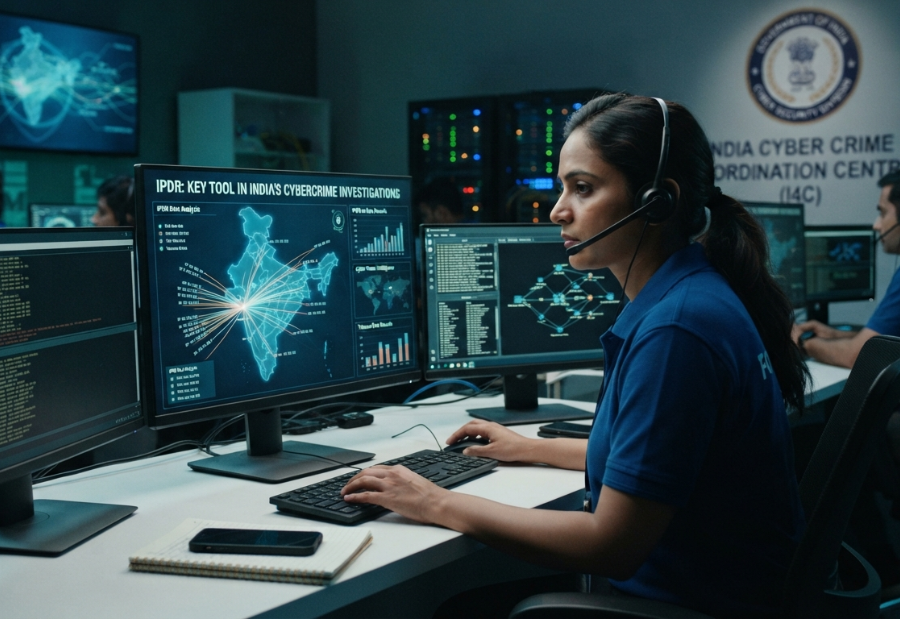
As cybercriminals increasingly rely on encrypted messaging apps, online banking platforms, and social media, law enforcement agencies in India are turning to Internet Protocol Detail Records (IPDR) to strengthen cybercrime investigations. The growing use of digital communication has made IPDR one of the most important sources of evidence in tracking online criminal activities.
For years, Call Detail Records (CDR) helped investigators trace phone calls and SMS. However, with internet-based communication replacing traditional methods, IPDR now provides valuable metadata, including the IP address assigned to a device, websites or servers accessed, session timings, ports used, and the amount of data transferred. While IPDR does not reveal the content of messages or calls, it enables investigators to reconstruct a suspect’s online activity.
“Cybercrime investigations today depend more on metadata than on message content. Even if communication is encrypted, every internet session leaves behind a digital trail that can be analysed to establish online activity,” a senior Cyber Crime Police official said.
Officials said internet service providers generate and store IPDR logs through their network systems. These records are shared with investigating agencies only after lawful requests and help identify the subscriber, device, or internet session linked to a suspected offence.
According to officials, IPDR plays a vital role in investigating phishing attacks, online banking fraud, cyberstalking, anonymous social media abuse, ransomware, and child exploitation cases. “In financial fraud cases, IPDR helps us establish when a device connects to a bank’s server or a fraudulent website, allowing investigators to reconstruct the sequence of events,” the official added.
Investigators combine IPDR data with CDR, subscriber information, device identifiers, tower location data, Wi-Fi logs, open-source intelligence, and CCTV footage to build digital profiles of suspects. The records also help identify anonymous social media accounts, trace connections to suspicious servers, and establish links between organised cybercrime networks.
Officials added that police are increasingly using AI-powered tools to analyse millions of internet session records. “Manual analysis of these records takes considerable time. AI-based platforms can quickly correlate different datasets, rebuild timelines and detect suspicious patterns, making investigations faster and more accurate,” the official explained.
As internet-based communication continues to grow, IPDR is becoming a key digital evidence source, helping investigators determine when a person was online, the services accessed, and the digital footprint left behind.
Also read: Viksit Workforce for a Viksit Bharat
Do Follow: The Mainstream LinkedIn | The Mainstream Facebook | The Mainstream Youtube | The Mainstream Twitter
About us:
The Mainstream is a premier platform delivering the latest updates and informed perspectives across the technology business and cyber landscape. Built on research-driven, thought leadership and original intellectual property, The Mainstream also curates summits & conferences that convene decision makers to explore how technology reshapes industries and leadership. With a growing presence in India and globally across the Middle East, Africa, ASEAN, the USA, the UK and Australia, The Mainstream carries a vision to bring the latest happenings and insights to 8.2 billion people and to place technology at the centre of conversation for leaders navigating the future.