


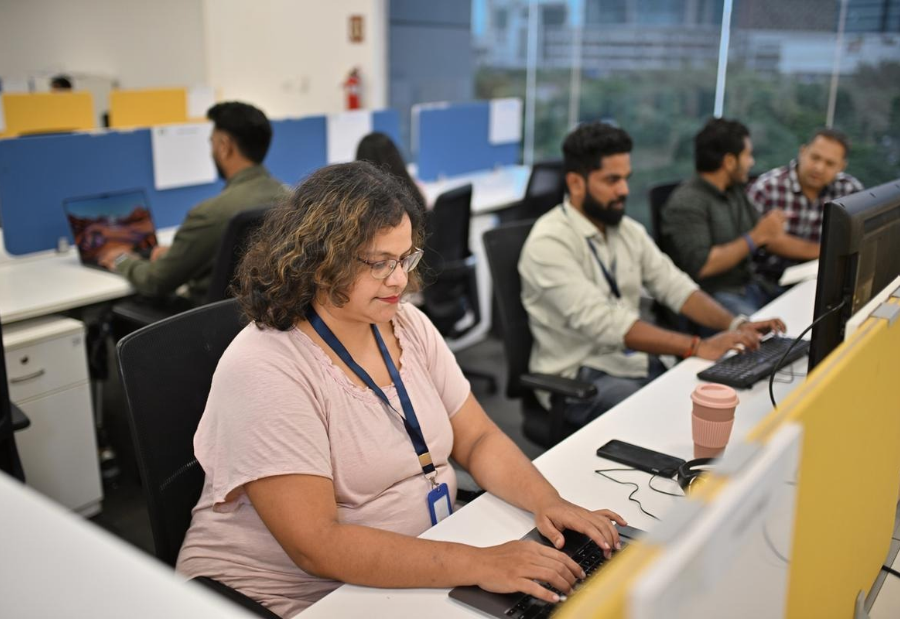
Career growth and access to practical AI skills are becoming major priorities for India’s technology workforce, with multinational global capability centres (GCCs) emerging as the leading choice for professionals considering their next move, according to a Talent500 survey.
The survey covered 2,000 technology, product and data professionals. Talent500 is part of ANSR, which has established more than 200 GCCs in India.
AI training and career growth remain key concerns
While 71% of respondents wanted hands-on AI training, only 29% said their employers offered it. Career progression was another important factor, with 87% saying clear career paths mattered greatly when choosing an employer. Additionally, 79% would abandon an application or reject an offer if growth opportunities were unclear, while 80% said a defined career path would influence their decision to accept a job.
Only 46% described their current career paths as very clear. Among GCC employees, the figure was 36%, compared with 50% in IT services and 51% in startups.
Nearly 59% of respondents were actively looking for a new role, while only 18% said they would definitely or probably stay if offered a comparable opportunity elsewhere. Among professionals with over 12 years of experience, 91% would consider moving, compared with 72% of those with under 3 years of experience.
GCCs emerged as the preferred next career move for 69% of respondents, ahead of Indian product companies at 37% and IT services and outsourcing firms at 28%. Career growth was the top factor in evaluating GCCs at 48%, followed by the global parent brand at 41%, local leadership and culture at 36%, and AI and technology exposure at 33%.
AI is reshaping GCC hiring
Vikram Ahuja, ANSR co-founder and 1Wrk CEO, said GCC hiring was growing 15–18% annually, with job roles evolving rather than recruitment stopping.
“Companies have spent around $300 billion on AI tools, infrastructure and transformation over the past four years, but fewer than 6% of global companies report a positive EBITDA impact,” Ahuja said.
He expects AI’s impact to become clearer at scale over the next 18 months. Demand is increasing for data engineering, data science, specialised AI teams and professionals who can redesign business processes.
Ahuja also highlighted forward-deployed engineers (FDEs), who combine technical skills with business knowledge to implement AI in complex workflows. GCCs may be well placed to develop these teams because their business and technology functions often work closely together. He estimates that 10–15% of GCC engineering staff could qualify for FDE roles, although only a portion are currently ready.
Also read: Viksit Workforce for a Viksit Bharat
Do Follow: The Mainstream LinkedIn | The Mainstream Facebook | The Mainstream Youtube | The Mainstream Twitter
About us:
The Mainstream is a premier platform delivering the latest updates and informed perspectives across the technology business and cyber landscape. Built on research-driven, thought leadership and original intellectual property, The Mainstream also curates summits & conferences that convene decision makers to explore how technology reshapes industries and leadership. With a growing presence in India and globally across the Middle East, Africa, ASEAN, the USA, the UK and Australia, The Mainstream carries a vision to bring the latest happenings and insights to 8.2 billion people and to place technology at the centre of conversation for leaders navigating the future.