


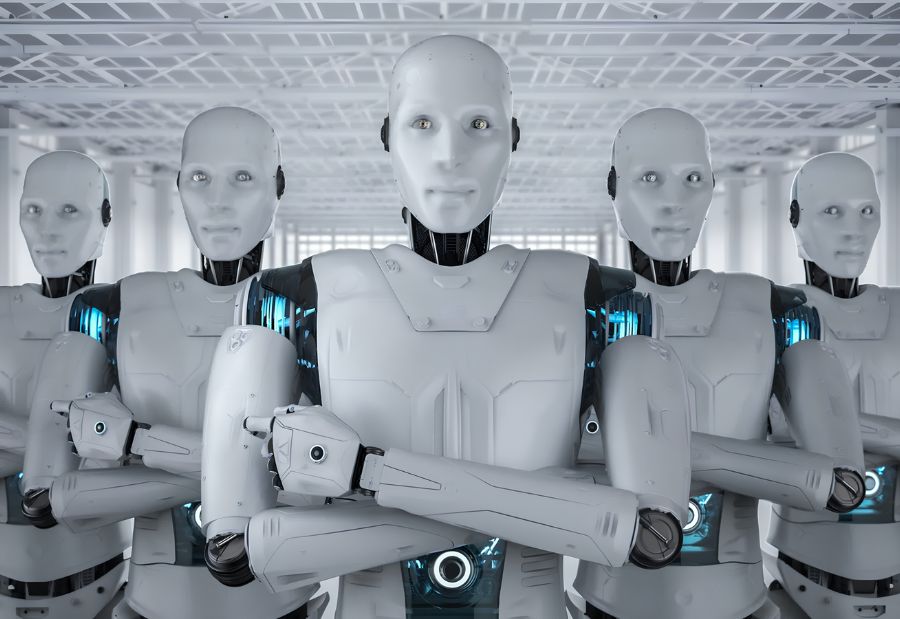
OpenAI is preparing to enter the humanoid robotics industry, with CEO Sam Altman indicating that the company could present a demonstration of its robot in 2027. The company is focusing on developing the AI capabilities needed to perform everyday tasks, while also hiring experts to work on robotics hardware and supporting systems.
Altman believes a human-like design is suitable for robots because “the world is very much designed for people.” Everyday objects, including doors, keyboards and tools, are built for human use. He added that “matching that form factor seems good.”
When asked whether OpenAI would build a humanoid robot, Altman responded, “We will.” However, he considers the intelligence behind the machine more important than its physical appearance. According to him, questions about the robot’s design are “less important than really figuring out … the brain that makes the robot work.”
Altman has not confirmed when the robot could become commercially available. He told a business publication, “I think we’ll have a cool demo in 2027 … I don’t think there will be robots walking the streets for a few years longer.” OpenAI has not disclosed what the demonstration will feature, what the robot will look like or when it might be accessible to the public.
Developing AI that can perform physical tasks
Building a humanoid robot capable of completing everyday activities presents several challenges. The machine must process information from cameras and sensors, understand instructions, plan actions and coordinate its movements. It must also adapt when its surroundings change.
For example, picking up a mug requires the robot to recognise the object, identify its handle and apply the right amount of pressure to lift it without dropping it or spilling its contents.
OpenAI is recruiting specialists to address these technical requirements. Its robotics roles include motion control, estimating the robot’s position and movement, controlling actuators and coordinating full-body movements. Other positions focus on developing the machine-learning infrastructure needed to train AI systems for physical tasks.
Building on previous robotics experiments
OpenAI’s earlier research offers a foundation for its latest efforts. Through its Dactyl project, the company trained a robotic hand in a simulated environment before using it to manipulate real objects. It later applied the same approach to solving a Rubik’s Cube.
These experiments demonstrated a major challenge in robotics: transferring skills learned in simulations into reliable actions in the physical world.
The company’s hardware plans are also reflected in its robotics job openings. These include work on custom electromechanical actuators that combine motors, transmissions, sensors and thermal systems. Other positions focus on manufacturing and supply chains, indicating that OpenAI is also addressing the requirements of producing hardware at scale.
The company’s key challenge is to combine AI intelligence with dependable hardware so that humanoid robots can perform everyday tasks reliably. Despite its planned demonstration, commercial deployment remains some distance away.
Also read: Viksit Workforce for a Viksit Bharat
Do Follow: The Mainstream LinkedIn | The Mainstream Facebook | The Mainstream Youtube | The Mainstream Twitter
About us:
The Mainstream is a premier platform delivering the latest updates and informed perspectives across the technology business and cyber landscape. Built on research-driven, thought leadership and original intellectual property, The Mainstream also curates summits & conferences that convene decision makers to explore how technology reshapes industries and leadership. With a growing presence in India and globally across the Middle East, Africa, ASEAN, the USA, the UK and Australia, The Mainstream carries a vision to bring the latest happenings and insights to 8.2 billion people and to place technology at the centre of conversation for leaders navigating the future.