


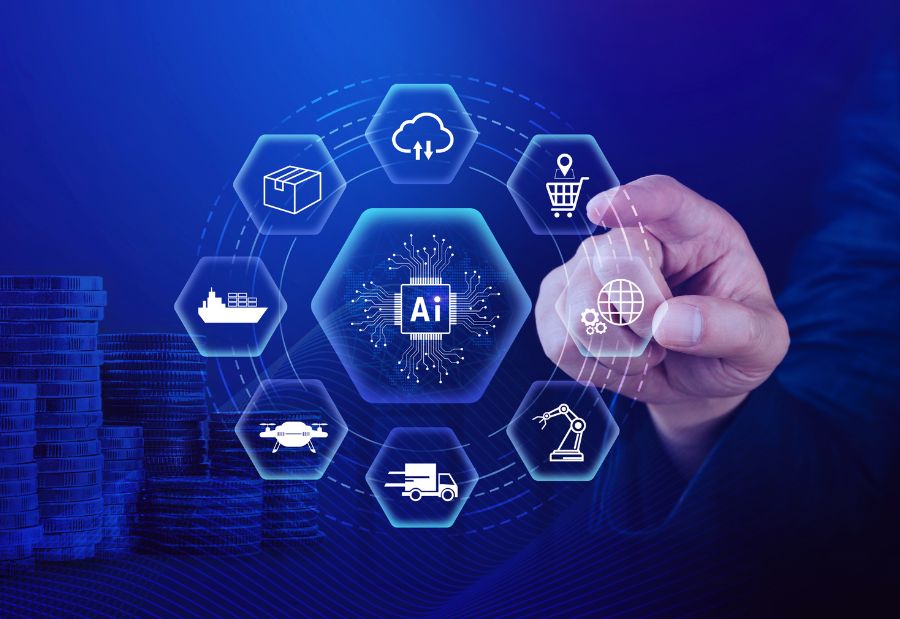
Businesses today rely on many external partners to deliver products, manage services and support daily operations. These partners may include software providers, cloud service companies, logistics firms, payment providers and consultants. While these relationships help businesses grow, they also create new cybersecurity risks. If one third-party partner experiences a cyberattack, the impact can spread across the entire business. That is why AI supply chain risk monitoring and third-party cybersecurity have become important for modern enterprises.
Artificial intelligence helps organizations identify risks faster, monitor supplier activity more effectively and strengthen cybersecurity across their supply chains. Instead of reacting to threats after they happen, businesses can take a more proactive approach to protecting their systems and data.
Why supply chain security is more important than ever
Every organization shares information with vendors, suppliers and business partners. These connections improve efficiency, but they also create additional entry points for cybercriminals.
Traditional security checks often happen only once or twice a year, leaving businesses with limited visibility into changing risks. AI changes this by continuously monitoring activities across connected systems. It can quickly identify unusual behavior, detect potential security issues and notify security teams before small problems become larger incidents.
This ongoing monitoring helps enterprises reduce risk while maintaining strong relationships with trusted partners.
How AI improves risk monitoring
One of the biggest advantages of AI is its ability to process large amounts of information quickly. Security teams no longer need to review every alert manually because AI can filter routine activity and highlight events that need immediate attention.
AI also learns from previous security events, allowing it to recognize suspicious patterns more accurately over time. This helps organizations respond faster to emerging threats and reduce the chances of overlooking important warning signs.
With better visibility into supplier activities, enterprises can make informed decisions about vendor relationships and improve overall cybersecurity planning.
Best practices for stronger third-party cybersecurity
AI delivers the best results when it is combined with strong security policies and good business practices. Enterprise leaders should focus on a balanced approach that includes both technology and people.
Some practical ways to strengthen AI supply chain risk monitoring and third-party cybersecurity include:
- Continuously monitor vendor activity using AI-powered tools.
- Review third-party access permissions on a regular basis.
- Encrypt sensitive business information shared with partners.
- Train employees to recognize cybersecurity risks involving external vendors.
- Work only with partners that follow strong security standards.
These simple practices help reduce cyber risks while supporting trusted business relationships.
Building long-term cyber resilience
Cybersecurity is not only about preventing attacks. It is also about preparing the business to respond effectively when challenges arise.
Organizations should regularly review their third-party security processes, update risk management policies and maintain open communication with suppliers. AI provides valuable insights throughout this process by identifying changing risks and helping businesses make better security decisions.
When combined with responsible governance and collaboration, AI helps create a stronger and more resilient digital ecosystem.
The Mainstream’s perspective on enterprise security
The Mainstream is a global tech media platform focused on enterprise and emerging technology, AI, digital transformation, cybersecurity, governance policy, GCC, Digital Natives, CX, BFSI and FinTech.
Through enterprise technology news, expert interviews, leadership conferences and cybersecurity insights, The Mainstream helps CIOs, CISOs and business leaders understand how technologies such as artificial intelligence are improving enterprise security. Its coverage focuses on practical business challenges, digital resilience and emerging trends that support informed decision-making.
By bringing together enterprise executives, technology experts and cybersecurity professionals, The Mainstream encourages meaningful discussions that help organizations strengthen both innovation and security.
Conclusion
As businesses continue to expand their digital networks, protecting suppliers and third-party relationships has become a key part of enterprise cybersecurity. AI supply chain risk monitoring and third-party cybersecurity allow organizations to identify threats earlier, improve visibility across their vendor ecosystem and respond more effectively to potential risks.
Enterprises that combine AI with strong governance, continuous monitoring and trusted partnerships will be better prepared for future cybersecurity challenges. By making security a shared responsibility across the entire supply chain, organizations can build greater resilience, protect valuable business assets and support sustainable digital growth.