


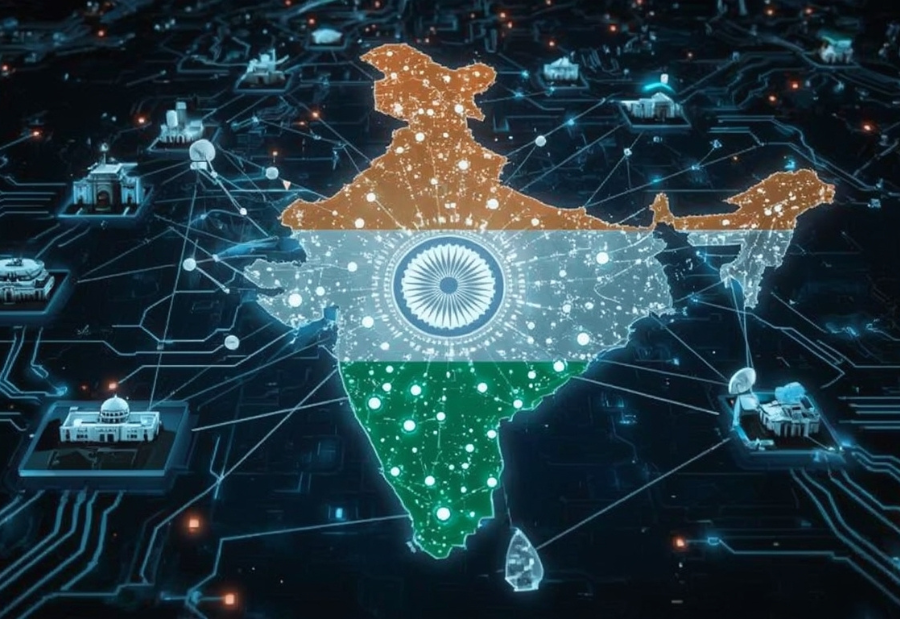
As artificial intelligence becomes a strategic national asset, India is increasingly focusing on building self-reliant AI capabilities while navigating growing uncertainty around access to advanced foreign AI systems. The discussion is no longer limited to developing local models but also concerns the risks associated with relying on overseas AI providers for critical operations.
The issue gained attention after Anthropic announced on June 12, 2026, that it had been directed by the US government to block foreign-national access to its Fable 5 and Mythos 5 AI models. While the restriction did not affect the company’s other models, it highlighted concerns around continuity, compliance, and long-term dependence on external AI platforms.
The debate has become particularly relevant for Indian enterprises, banks, telecom operators, and public institutions that increasingly rely on AI-powered tools and workflows. Experts note that access to AI models through APIs does not necessarily provide strategic control, as organizations remain vulnerable to changes in access policies and regulations.
India’s response is centered on strengthening its domestic AI ecosystem through the IndiaAI Mission, approved in March 2024 with an outlay of ₹10,371.92 crore. The initiative focuses on public AI computing infrastructure, indigenous foundation models, datasets, startup support, skill development, AI applications, and trusted AI solutions.
However, significant challenges remain. Industry observers point to gaps in advanced computing infrastructure, cloud capacity, model ownership, security testing, datasets, and procurement frameworks. Hardware dependency is another major concern, as India’s most advanced AI projects still rely heavily on global suppliers for chips, networking technologies, and software.
Open-weight AI models are emerging as a potential solution for reducing dependence on proprietary foreign systems, particularly for local-language applications and government services. However, India continues to have limited domestic alternatives for advanced cybersecurity, scientific research, coding, and complex agentic AI tasks.
Beyond models, experts stress that sovereign AI also requires strong infrastructure, including data centers, reliable power supply, cooling systems, security controls, audit mechanisms, and policies governing sensitive workloads.
Meanwhile, a proposed Trusted AI Corridor between India and the United States has been suggested as a possible framework for future AI access under defined security conditions. The focus now remains on future policy developments, potential technology agreements, and efforts to secure greater access to critical AI resources.
Also read: Viksit Workforce for a Viksit Bharat
Do Follow: The Mainstream LinkedIn | The Mainstream Facebook | The Mainstream Youtube | The Mainstream Twitter
About us:
The Mainstream is a premier platform delivering the latest updates and informed perspectives across the technology business and cyber landscape. Built on research-driven, thought leadership and original intellectual property, The Mainstream also curates summits & conferences that convene decision makers to explore how technology reshapes industries and leadership. With a growing presence in India and globally across the Middle East, Africa, ASEAN, the USA, the UK and Australia, The Mainstream carries a vision to bring the latest happenings and insights to 8.2 billion people and to place technology at the centre of conversation for leaders navigating the future.