


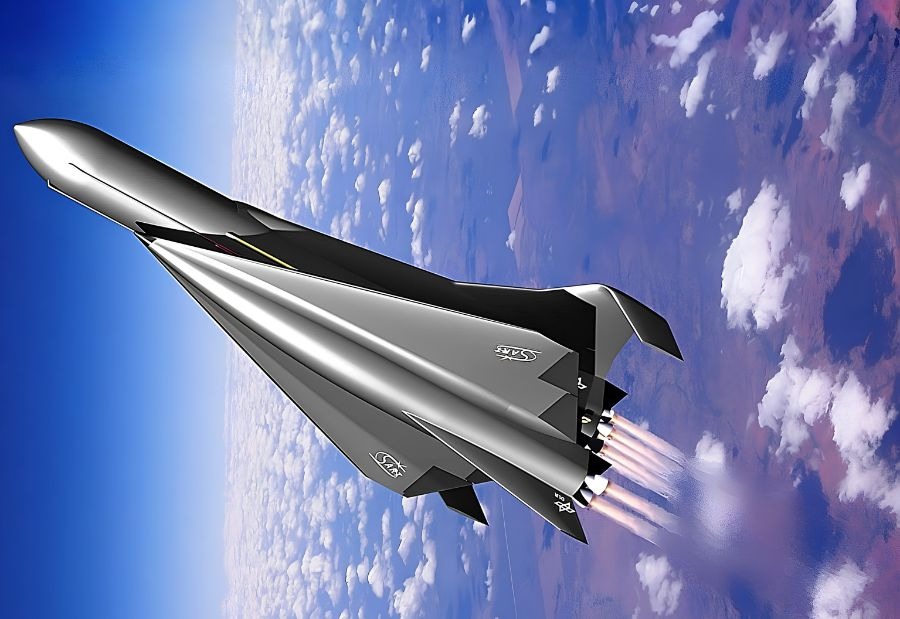
Europe has revealed plans for a new partially reusable rocket called the RLV C5, a heavy-lift launch vehicle designed to compete with SpaceX’s Starship through greater fuel efficiency and a more strategic reusable design approach.
According to research published in the CEAS Space Journal, the RLV C5 could carry more than 70 tons into orbit while offering a potentially more sustainable and efficient alternative to current super-heavy launch systems.
The announcement comes as SpaceX’s Starship continues drawing global attention following its major test milestones, including the successful simultaneous firing of all 33 engines and multiple large-scale launch demonstrations since 2023.
Independent analysis by researchers from the German Aerospace Center (DLR) suggests Starship can currently deliver around 59 tons to low Earth orbit in reusable mode. Future versions are expected to exceed 115 tons, potentially surpassing the capabilities of NASA’s historic Saturn V rocket.
Instead of directly replicating Starship’s massive scale, Europe’s RLV C5 focuses on engineering efficiency. The rocket combines a winged reusable booster with an expendable upper stage powered by liquid hydrogen and oxygen, which offers higher efficiency compared to Starship’s methane-oxygen propulsion system.
One of the project’s most unique features is its recovery system. Unlike Starship’s vertical landing approach, the RLV C5 booster would glide back through the atmosphere and be captured mid-air by a subsonic aircraft. This method removes the need for additional landing fuel, allowing a greater percentage of the rocket’s mass to be dedicated to payload delivery.
Early studies indicate that nearly 74% of the RLV C5’s launch mass could become payload, compared to roughly 40% for Starship, highlighting Europe’s focus on efficiency-driven engineering.
Researchers behind the project stated that the RLV C5 is not intended as a direct replacement for Starship but rather as a strategic European pathway toward reusable super-heavy launch capabilities without the massive financial investment required for full reusability.
The project is also expected to contribute to Europe’s broader SpaceLiner program by helping develop reusable launch technologies, recovery systems, and heavy-lift operational expertise.
Despite its promise, researchers acknowledged that the rocket currently remains a concept and still faces major engineering and operational challenges before becoming flight-ready.
Industry experts believe the RLV C5 reflects Europe’s broader ambition to secure independent access to space while building a long-term, scalable heavy-lift ecosystem focused on efficiency, sustainability, and strategic growth.
Also read: Viksit Workforce for a Viksit Bharat
Do Follow: The Mainstream LinkedIn | The Mainstream Facebook | The Mainstream Youtube | The Mainstream Twitter
About us:
The Mainstream is a premier platform delivering the latest updates and informed perspectives across the technology business and cyber landscape. Built on research-driven, thought leadership and original intellectual property, The Mainstream also curates summits & conferences that convene decision makers to explore how technology reshapes industries and leadership. With a growing presence in India and globally across the Middle East, Africa, ASEAN, the USA, the UK and Australia, The Mainstream carries a vision to bring the latest happenings and insights to 8.2 billion people and to place technology at the centre of conversation for leaders navigating the future.