


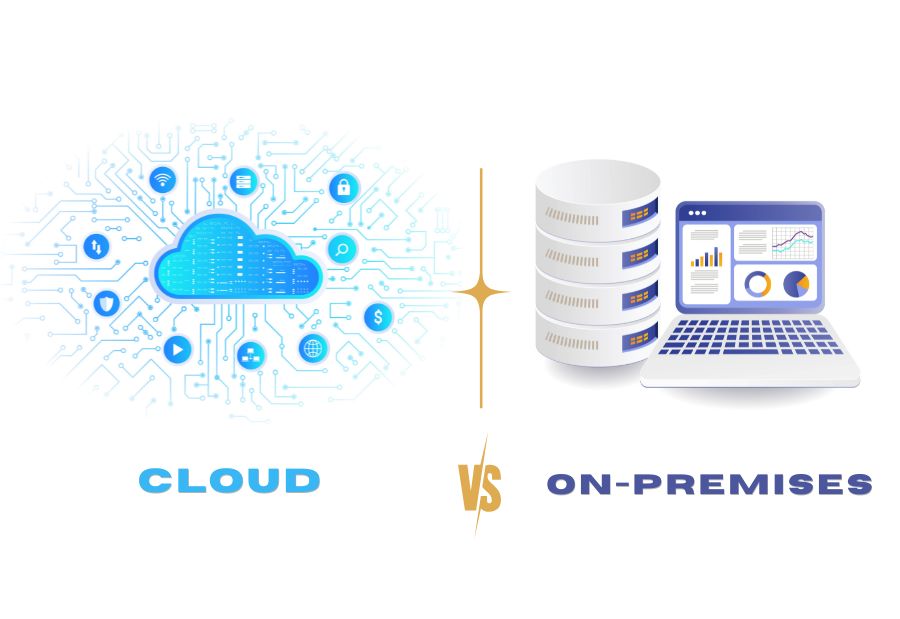
AI workloads are increasingly being deployed across different technology environments. Enterprises may run AI models in public cloud platforms, private cloud environments or on-premises infrastructure depending on their performance, data, security and compliance requirements. This makes securing AI workloads across cloud and on-premises environments an important priority for CIOs and CISOs.
Unlike traditional applications, AI workloads often process large volumes of business data and may connect with models, APIs, applications and automated workflows. A security strategy therefore needs to protect not only the infrastructure but also the data, identities and AI components connected to it.
Why AI workload security is becoming more complex
Enterprises rarely operate a single technology environment. Critical business applications may remain on-premises while AI workloads use cloud computing for scalability. Sensitive data may also need to stay within controlled environments because of regulatory or business requirements.
This creates multiple security boundaries. Different platforms may have different access controls, monitoring capabilities and security policies. Without consistent visibility, security teams can struggle to understand where AI workloads are running and what resources they can access.
The use of AI agents adds another layer of complexity because automated systems may interact with enterprise applications and data without requiring a user to initiate every action.
5 Ways enterprises can secure AI workloads
1. Build strong identity and access controls
Identity should be a central part of AI workload security. Enterprises need to control which employees, applications, AI models and automated agents can access data and infrastructure.
Least-privilege access can limit permissions to only what is necessary. Strong authentication and regular access reviews can further reduce the risk of compromised credentials being used to reach sensitive AI environments.
2. Protect data across environments
AI systems often depend on sensitive enterprise data. Organisations should identify where data is stored, processed and transferred between cloud and on-premises environments.
Encryption, data classification and access controls can help protect information throughout its lifecycle. Data governance should also define which information can be used by AI systems and under what conditions.
3. Maintain consistent security policies
Different environments should not operate under completely separate security rules. Enterprises should establish common security standards for AI workloads regardless of where they are deployed.
This can include policies covering identity, encryption, vulnerability management, logging, network access and incident response. Consistency makes it easier for security teams to manage risks across complex environments.
4. Improve visibility and continuous monitoring
AI workloads need continuous monitoring because their behaviour, data flows and infrastructure requirements can change over time.
Security teams should monitor access activity, unusual network behaviour, model interactions, API usage and changes to infrastructure. Centralised visibility can help identify suspicious activity across cloud and on-premises systems before it develops into a larger incident.
5. Secure the AI supply chain
AI workloads depend on more than infrastructure. Models, datasets, software libraries, APIs and third-party services can all introduce security risks.
Enterprises should assess the security of external AI components before integrating them into business environments. Model provenance, software dependencies, data sources and third-party access should be reviewed as part of the overall security process.
What should CISOs prioritize?
CISOs should treat AI workload security as an ongoing process rather than a one-time deployment exercise. Before scaling AI, security teams should understand which workloads are most sensitive, where they operate and what systems they connect to.
Key priorities include:
- Strong identity and least-privilege access
- Consistent security policies
- Data protection and governance
- Continuous monitoring
- Secure APIs and integrations
- AI supply-chain assessments
- Incident response and recovery planning
The Mainstream continues to track how enterprise security leaders are adapting their strategies as AI becomes more deeply integrated into business infrastructure.
Conclusion
Securing AI workloads across cloud and on-premises environments requires a unified approach to identity, data, infrastructure and monitoring. Enterprises cannot rely on protecting only the platform where an AI workload operates; they must also secure the data, applications, models and connections surrounding it.
As AI adoption expands, organisations that combine consistent security controls with strong governance and continuous visibility will be better positioned to scale AI while managing enterprise risk. The Mainstream will continue covering the cybersecurity priorities shaping enterprise AI adoption.