


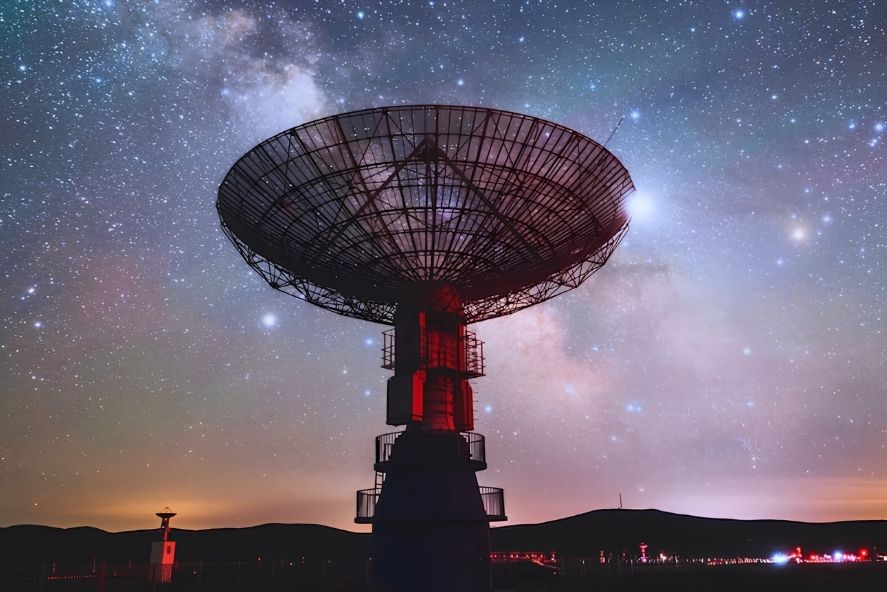
Reliance Jio is planning a satellite network of around 1,600 Low Earth Orbit (LEO) satellites and 23 ground stations to extend connectivity across India, as Starlink continues to complete the regulatory process for commercial operations in the country.
Jio showcased its satellite connectivity plans at India Mobile Congress 2026 in New Delhi, presenting the project as “Sovereign Satellite Connectivity”. The company plans to combine satellite technology with its existing mobile and fibre infrastructure to reach locations where conventional telecom networks are difficult or costly to build.
The proposed constellation would include around 1,600 LEO satellites supported by 23 ground stations. Jio aims to use the network to provide connectivity across land and maritime areas, including more than 600,000 villages.
Remote villages, islands and border locations are among the areas where Jio expects satellite connectivity to play a role. The company also sees potential applications across enterprises, aviation, maritime operations, government, defence and disaster response.
Jio’s vision includes direct-to-device calling for rural areas. Rather than operating the satellite network as an independent system, the company plans to integrate it with its terrestrial connectivity infrastructure to create a broader network.
The company also wants the satellite value chain to remain within India, covering design, engineering, integration, testing, launch, deployment and operations. Satellite connectivity could help Jio reach areas where laying fibre or building mobile towers is commercially challenging.
The plans come as Starlink continues to await remaining regulatory approvals for its commercial launch in India. Elon Musk has publicly pushed for the service to begin operations and recently accused unnamed “oligarchs” of blocking Starlink to protect their market positions.
The Indian government has rejected the allegation, saying the country follows a “fair and non-discriminatory” authorisation process for telecom and satellite communication services. It has also said Starlink, Jio Satellite Communications and Bharti-backed Eutelsat OneWeb are broadly at the same stage of the regulatory process, with security assessments underway.
Starlink has already secured its GMPCS licence and IN-SPACe authorisation but still needs to complete the remaining regulatory requirements. Spectrum assignment is also part of the process.
Meanwhile, SpaceX has been building its Indian infrastructure. Lauren Dreyer said at IMC that Starlink had established 20 gateway sites with hundreds of antennas and developed India-specific security controls to keep user data within the country.
Jio and Starlink are therefore taking different approaches to India’s satellite connectivity market, with Starlink working toward regulatory clearance while Jio is outlining a large-scale domestic satellite network.
Also read: Viksit Workforce for a Viksit Bharat
Do Follow: The Mainstream LinkedIn | The Mainstream Facebook | The Mainstream Youtube | The Mainstream Twitter
About us:
The Mainstream is a premier platform delivering the latest updates and informed perspectives across the technology business and cyber landscape. Built on research-driven, thought leadership and original intellectual property, The Mainstream also curates summits & conferences that convene decision makers to explore how technology reshapes industries and leadership. With a growing presence in India and globally across the Middle East, Africa, ASEAN, the USA, the UK and Australia, The Mainstream carries a vision to bring the latest happenings and insights to 8.2 billion people and to place technology at the centre of conversation for leaders navigating the future.