


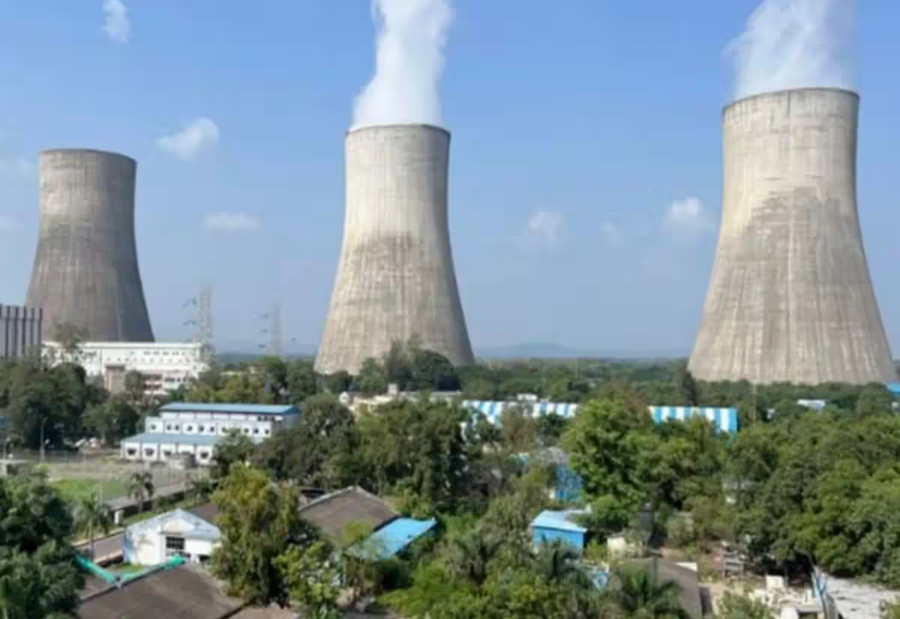
India’s plan to expand nuclear power and attract private investment could face delays if proposed rules place additional approval requirements on foreign reactor technologies, industry experts said.
The draft framework follows a new nuclear law passed last year that opened the tightly controlled sector to private companies and aimed to attract overseas technology and investment. India expects the nuclear industry to require nearly $210 billion to increase capacity almost 10-fold to 100 GW over the next 2 decades, helping reduce reliance on coal.
NPCIL, the country’s only nuclear power plant operator and technology holder, is already implementing a 14 GW expansion programme through 2032. Private investment and newer reactor technologies are expected to be important for reaching the 100 GW target.
Indian groups including Tata Power, Adani Power and Reliance Industries, along with Rosatom, EDF and GE Hitachi, have held discussions with the government. However, industry sources said companies are waiting for the final rules before committing investments. Feedback on the draft can be submitted until September 4.
Under the proposed framework, imported reactors would require operational and licensing certifications from their country of origin, along with separate design approval from India’s atomic energy regulator before construction.
“We are taking a step back from the promise of the new nuclear act that can transform India into a leader of the global nuclear renaissance if the rules discriminate between indigenous technology and technology from outside India and where foreign technology can only be considered if there is an operating plant,” said Suhaan Mukerji, managing partner at PLR Chambers.
He said small modular reactor (SMR) technology could be “dead” in the water because many SMR designs are only beginning commercial deployment globally.
The Department of Atomic Energy did not respond to queries. A senior government official involved in drafting the framework said the rules prioritise safety and follow international regulatory practices.
Industry executives warned that lengthy approval processes could restrict access to newer technologies. Developers may also have to wait for design approval before applications are processed.
“This will hamper reaching the target set by government,” Mukerji said.
Shri Venkatesh, a partner at SKV, said the lack of a fixed timeline for design approvals could further delay projects.
Investment details remain unclear
The draft also leaves questions over tariffs, investor returns and minimum financial and technical qualifications. Companies have sought clarity on fuel arrangements, reprocessing and exclusion zones.
Officials said earlier internal drafts contained more details, including qualification requirements and tariff reviews every 5 years, but several of these provisions are missing from the consultation version.
“The numbers that appear in the drafts are largely operational ones, governing how a licensee conducts itself once inside the system,” Venkatesh said.
“What is harder to find are the figures that determine whether a project is worth financing in the first place. Several of those numbers are left to future notifications.”
The final nuclear rules are expected within about 3 months after public consultation.
Also read: Viksit Workforce for a Viksit Bharat
Do Follow: The Mainstream LinkedIn | The Mainstream Facebook | The Mainstream Youtube | The Mainstream Twitter
About us:
The Mainstream is a premier platform delivering the latest updates and informed perspectives across the technology business and cyber landscape. Built on research-driven, thought leadership and original intellectual property, The Mainstream also curates summits & conferences that convene decision makers to explore how technology reshapes industries and leadership. With a growing presence in India and globally across the Middle East, Africa, ASEAN, the USA, the UK and Australia, The Mainstream carries a vision to bring the latest happenings and insights to 8.2 billion people and to place technology at the centre of conversation for leaders navigating the future.