


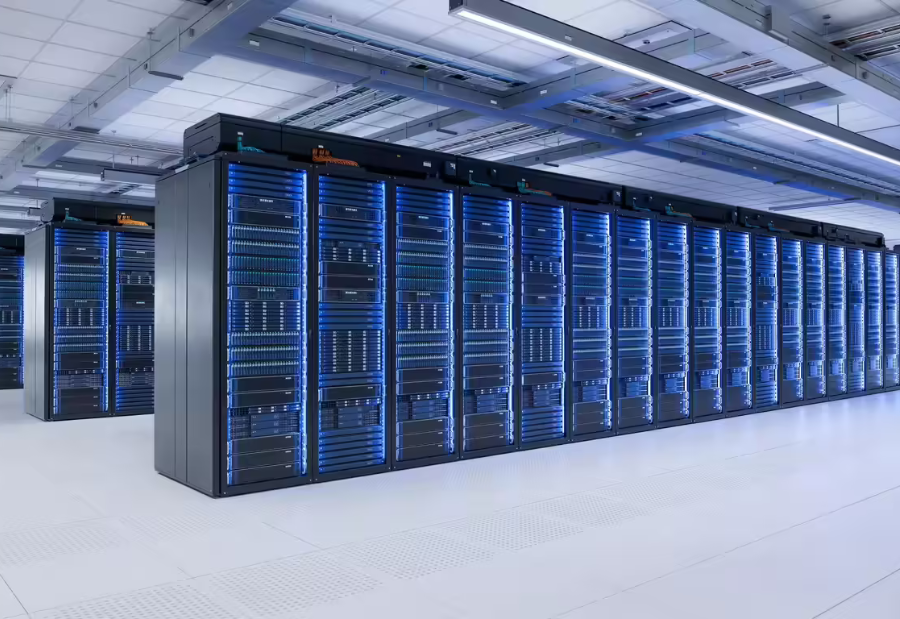
India’s data centre sector is rapidly expanding as cloud computing, digital services and artificial intelligence increase demand for computing infrastructure. Live capacity is projected to rise from 296 MW in 2016 to 1.6 GW by 2025.
Mumbai remains the country’s largest data centre market and is expected to account for around 47% of India’s live capacity by the end of 2025. Its capacity is projected to increase from 96.8 MW in 2016 to 766.6 MW. The city benefits from its financial hub status, strong fibre connectivity and international subsea cable landings. It also has 1,543.3 MW of committed capacity and 2,209 MW in early-stage development.
Chennai and Hyderabad expand their roles
Chennai’s live capacity is expected to reach 191.5 MW in 2025, up from 73.2 MW in 2022, giving it around 12% of India’s total capacity. The city also has an early-stage pipeline of 1,040 MW.
Hyderabad’s capacity is projected to grow from 60.9 MW in 2022 to 151.4 MW in 2025. Growth is being driven by GPU deployments, large-scale training compute and liquid cooling for hyperscale and AI infrastructure. The city has around 1.9 GW of committed and early-stage projects.
Bengaluru, Pune and Delhi-NCR are also developing as specialised markets. Bengaluru is expected to reach 169.5 MW, supported by high-density colocation demand from R&D centres and GCCs. Pune is projected at 145.3 MW as enterprises priced out of Mumbai look to the city. Delhi-NCR is expected to reach 174.5 MW, supported by BFSI and government demand.
Kolkata is emerging as Eastern India’s data centre hub, with capacity rising from 5 MW in 2016 to 23.1 MW by 2025. Its growth is supported by its role as a gateway to Eastern and Northeastern India and a new cable landing station at Digha. The city has a 133.4 MW committed and early-stage pipeline.
AI is also driving demand, with AI-related leasing accounting for 78% of total colocation leasing in 2025, up from 23% in 2024. Government plans to install 38,000 GPUs for startups and researchers, with another 20,000 planned, are also supporting domestic AI infrastructure.
Rising AI compute demand will require strategic planning for power, cooling and connectivity. Investment decisions will also depend on regional growth, as well as power, land and connectivity readiness in emerging hubs such as Hyderabad and Kolkata.
Also read: Viksit Workforce for a Viksit Bharat
Do Follow: The Mainstream LinkedIn | The Mainstream Facebook | The Mainstream Youtube | The Mainstream Twitter
About us:
The Mainstream is a premier platform delivering the latest updates and informed perspectives across the technology business and cyber landscape. Built on research-driven, thought leadership and original intellectual property, The Mainstream also curates summits & conferences that convene decision makers to explore how technology reshapes industries and leadership. With a growing presence in India and globally across the Middle East, Africa, ASEAN, the USA, the UK and Australia, The Mainstream carries a vision to bring the latest happenings and insights to 8.2 billion people and to place technology at the centre of conversation for leaders navigating the future.