


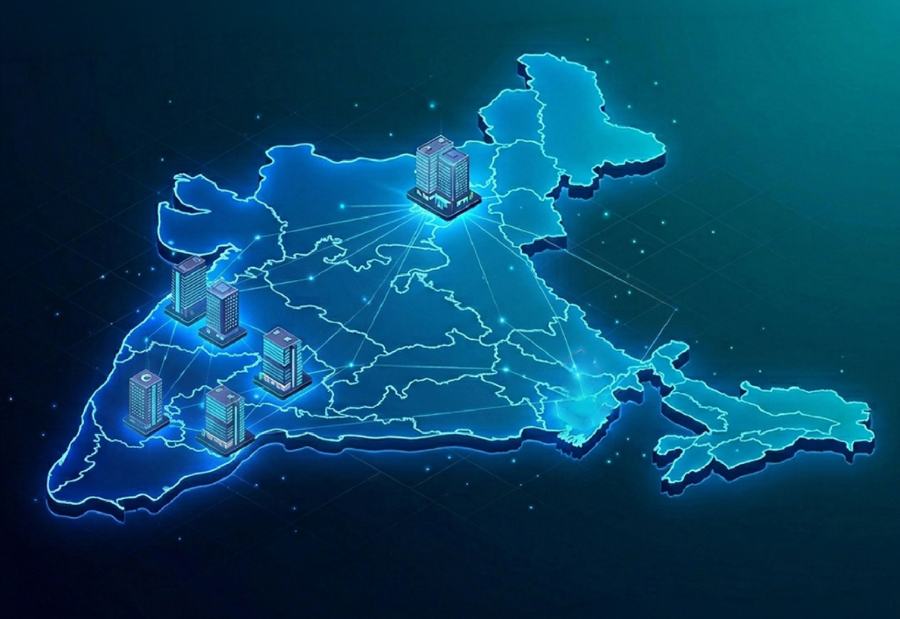
India’s Global Capability Center (GCC) landscape is rapidly evolving from a cost-efficiency destination into a strategic hub for innovation, engineering, AI, analytics, and global business operations.
Foreign companies are increasingly leveraging India’s talent pool, digital infrastructure, and operational scale to build advanced business capabilities. As a result, decisions around GCC structure, location, taxation, compliance, governance, and workforce management have become critical from the outset.
India currently hosts more than 1,700 GCCs, employing nearly 1.9 million professionals and generating US$64.6 billion in revenue in FY24. Revenue has grown significantly from US$40.4 billion in FY19 to US$64.6 billion in FY24, highlighting the country’s transition from a back-office support destination to a center for high-value enterprise functions.
Industry estimates suggest India’s GCC market could reach between US$99 billion and US$105 billion by 2030, driven by growing demand for engineering, digital transformation, analytics, finance, and R&D services.
The expansion is no longer limited to IT and financial services. Companies across investment management, healthcare, retail technology, medtech, semiconductors, hospitality, telecommunications, consumer goods, and life sciences are strengthening their presence in India.
Recent developments include Vanguard expanding operations in Hyderabad with a focus on AI, cloud engineering, data analytics, and technology. McDonald’s has also established a technology-focused GCC in Hyderabad. Medtronic has expanded its Pune operations across diabetes services, advanced analytics, digital technology, and patient financial services. Other notable examples include Best Buy in Bengaluru for AI and digital products, Infineon Technologies at GIFT City for semiconductor design and engineering, and Agilent Technologies in Hyderabad for biopharma capabilities and research.
Several factors continue to fuel this growth, including deep technology and engineering talent, mature IT and business ecosystems, strong startup networks, expanding Grade A office infrastructure, government initiatives such as Digital India and Skill India, and increasing demand from multinational companies to centralize global operations.
A GCC is an offshore or nearshore center established by a multinational company to manage technology, business, operational, or strategic functions for its global network. Unlike traditional outsourcing models, GCCs are typically owned and controlled by the parent company, enabling stronger oversight of intellectual property, data, talent, governance, and service quality.
The most successful GCCs are increasingly being positioned as strategic units that drive innovation, resilience, digital transformation, and long-term global growth.
Also read: Viksit Workforce for a Viksit Bharat
Do Follow: The Mainstream LinkedIn | The Mainstream Facebook | The Mainstream Youtube | The Mainstream Twitter
About us:
The Mainstream is a premier platform delivering the latest updates and informed perspectives across the technology business and cyber landscape. Built on research-driven, thought leadership and original intellectual property, The Mainstream also curates summits & conferences that convene decision makers to explore how technology reshapes industries and leadership. With a growing presence in India and globally across the Middle East, Africa, ASEAN, the USA, the UK and Australia, The Mainstream carries a vision to bring the latest happenings and insights to 8.2 billion people and to place technology at the centre of conversation for leaders navigating the future.