


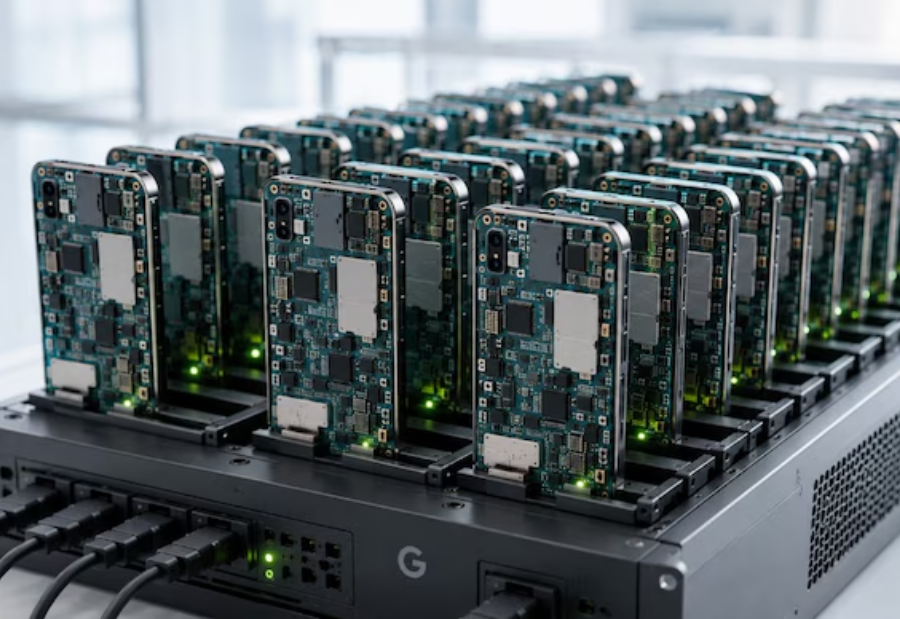
A new research initiative backed by Google is exploring an innovative way to tackle electronic waste while addressing the growing demand for computing power. Researchers at the University of California, San Diego are investigating whether discarded smartphones can be repurposed into low-cost computing clusters.
Millions of smartphones are replaced every year, often due to cracked screens, aging batteries, or upgrades to newer models. While many of these devices are no longer used by their owners, they remain technically functional.
The research project aims to give these retired devices a second life. Instead of recycling them for parts or sending them to landfills, researchers are exploring how smartphone motherboards can be extracted, connected, and used as a distributed computing system.
The approach comes at a time when demand for computing resources is rising rapidly, driven by artificial intelligence, cloud services, and large-scale data processing. Rather than building new servers, the project seeks to use existing phone hardware for computing tasks that do not require advanced processing capabilities.
Researchers have clarified that the goal is not to replace large AI data centres operated by companies such as Google, Microsoft, or Amazon. Instead, the focus is on creating a lower-cost and lower-carbon computing alternative for specific workloads where peak performance is not essential.
As part of the initiative, the team reportedly plans to develop a computing cluster made up of approximately 2,000 smartphones. The system could support university computer science programmes and research activities.
The environmental benefits could be substantial. Manufacturing new computing hardware requires significant amounts of energy, water, and raw materials. Extending the lifespan of existing devices could help reduce electronic waste and lower the environmental impact associated with building new infrastructure.
The project also comes as technology companies face increasing scrutiny over the energy consumption of AI systems and data centres. However, researchers acknowledge that technical challenges remain, as smartphones were not originally designed to operate as permanent server hardware.
If successful, the initiative could demonstrate how retired smartphones can contribute to future computing infrastructure instead of becoming electronic waste.
Also read: Viksit Workforce for a Viksit Bharat
Do Follow: The Mainstream LinkedIn | The Mainstream Facebook | The Mainstream Youtube | The Mainstream Twitter
About us:
The Mainstream is a premier platform delivering the latest updates and informed perspectives across the technology business and cyber landscape. Built on research-driven, thought leadership and original intellectual property, The Mainstream also curates summits & conferences that convene decision makers to explore how technology reshapes industries and leadership. With a growing presence in India and globally across the Middle East, Africa, ASEAN, the USA, the UK and Australia, The Mainstream carries a vision to bring the latest happenings and insights to 8.2 billion people and to place technology at the centre of conversation for leaders navigating the future.