


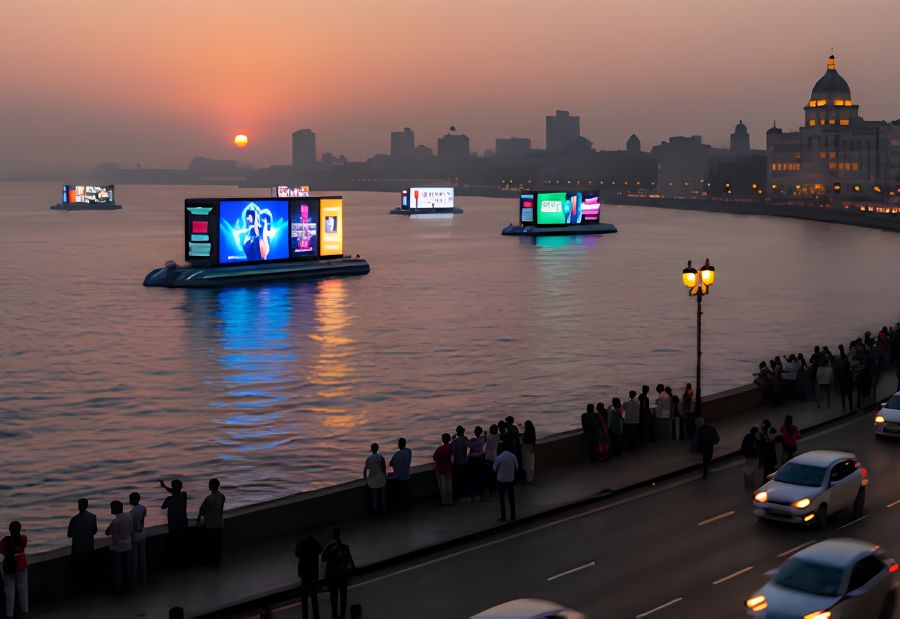
Mumbai’s coastal landscape could undergo a commercial makeover under a proposal by the Maharashtra Maritime Board (MMB) to introduce floating advertisements and hoardings at around 20 locations across the Mumbai Metropolitan Region. The plan has drawn criticism, with concerns that the installations could obstruct sea views and change the visual character of the city’s waterfront.
The proposed locations include Juhu Beach, Carter Road, Marve Jetty, Lotus Jetty and the Bandra-Worli Sea Link jetty in Worli. According to reports, the board has invited bids from agencies to install and manage the advertisements. While some structures would be placed on barges floating in the sea, others would take the form of conventional hoardings near beaches and jetties.
The initiative is intended to generate revenue for the MMB, which can be directed towards maintaining port facilities and supporting water transport projects. Under the proposed arrangement, selected agencies would receive advertising rights in return for installing and maintaining the structures.
Maharashtra Ports and Fisheries Minister Nitesh Rane has said that the board previously issued no-objection certificates for advertisements without earning revenue. The new arrangement is expected to create an income source for the authority. He has also maintained that the installations would comply with applicable environmental and coastal regulations.
However, questions have emerged over the regulatory approvals required for the project. The Maharashtra Coastal Zone Management Authority has reportedly flagged the absence of Coastal Regulation Zone (CRZ) clearances for the proposed installations.
Shiv Sena (UBT) leader Aaditya Thackeray has called on Chief Minister Devendra Fadnavis to intervene and stop the proposal. In a letter shared on X, he described the decision as irresponsible and warned that advertising structures would further affect Mumbai’s coastal aesthetics.
Thackeray argued that pollution has already reduced visibility of the sea from several parts of the city. He said floating advertisements would leave residents with commercial displays instead of open views of the Arabian Sea.
“Sadly, with this absurd decision to support a cartel of hoarding contractors, whatever can be seen, will be advertisements pasted in the faces of citizens, who are already bearing the brunt of the rampant pollution on land,” he said.
He also called for a policy to regulate LED hoardings, including restrictions on nighttime brightness and the total number of installations across the city.
“I urge you to intervene and stop this decision that is highly irresponsible, possibly corrupt, and surely one that ruins the aesthetics of Mumbai,” he wrote.
The proposal has also sparked reactions on social media. Several users have questioned the commercialisation of public waterfront spaces, while others have raised concerns about floating billboards obstructing sea views, sunsets and the overall coastal landscape.
The debate now centres on whether the proposed advertising initiative can generate revenue without compromising Mumbai’s public waterfront, coastal character and regulatory requirements.
Also read: Viksit Workforce for a Viksit Bharat
Do Follow: The Mainstream LinkedIn | The Mainstream Facebook | The Mainstream Youtube | The Mainstream Twitter
About us:
The Mainstream is a premier platform delivering the latest updates and informed perspectives across the technology business and cyber landscape. Built on research-driven, thought leadership and original intellectual property, The Mainstream also curates summits & conferences that convene decision makers to explore how technology reshapes industries and leadership. With a growing presence in India and globally across the Middle East, Africa, ASEAN, the USA, the UK and Australia, The Mainstream carries a vision to bring the latest happenings and insights to 8.2 billion people and to place technology at the centre of conversation for leaders navigating the future.