


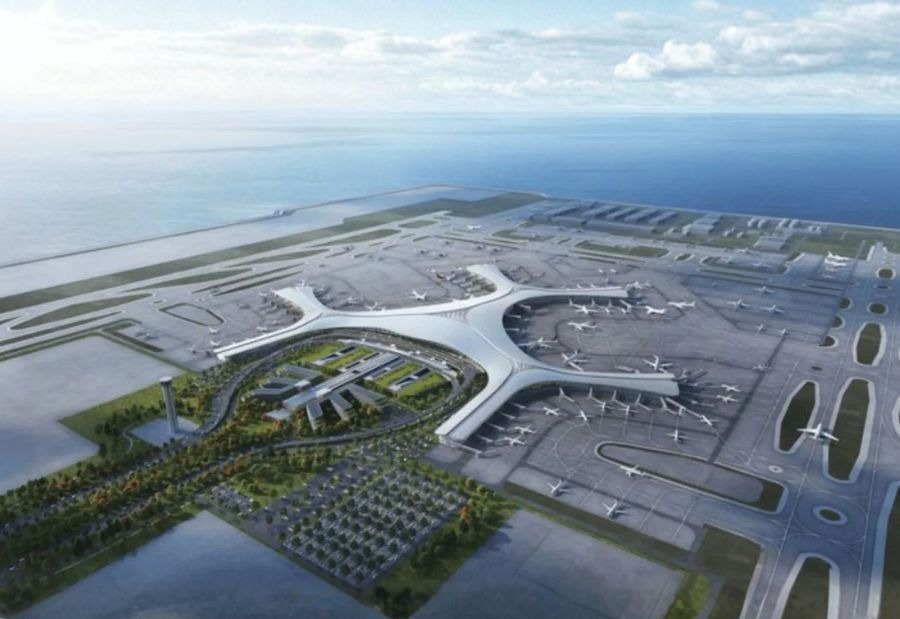
Delhi’s Indira Gandhi International Airport is set to introduce India’s first driverless Air Train system, marking a major upgrade in airport transportation infrastructure. The Automated People Mover (APM) project will connect terminals, Aerocity and Cargo City through a dedicated 7.7 km corridor, improving passenger mobility and reducing dependence on shuttle buses.
The project, estimated to cost between Rs 3,000 crore and Rs 4,000 crore, will be fully funded by Delhi International Airport Limited. The Air Train network is designed to connect Terminal 1, Terminal 2, Terminal 3, Aerocity and Cargo City, enabling faster and more seamless movement for passengers and airport staff.
The proposed corridor will span 7.7 km, with approximately 5.7 km running on elevated tracks and the remaining 2 km operating at ground level. The dedicated rail-guided system will function separately from regular airport traffic, offering more predictable and efficient travel times.
Construction is expected to take around 30 months. If completed as planned, the Air Train could become operational between late 2027 and 2029.
Airport authorities have indicated that the service is likely to remain free for transit passengers moving between terminals. However, visitors and non-passengers may be required to pay a nominal fare.
The new transit system is expected to significantly reduce inter-terminal travel times while lowering reliance on airport shuttle buses. Officials believe the project will enhance passenger convenience and contribute to improved Airport Service Quality (ASQ) ratings.
From an environmental perspective, the electric Air Train is expected to reduce road congestion within the airport campus and lower carbon emissions by replacing a substantial portion of the existing diesel-powered shuttle network.
The system is being designed to handle an initial daily passenger volume of 40,000 to 50,000 commuters. Over time, capacity could increase to 80,000–90,000 passengers per day through higher train frequencies as demand grows.
Similar driverless people mover systems are already operating at major global aviation hubs, including airports in Dubai, Singapore and Heathrow Airport.
While the project is expected to deliver long-term sustainability benefits, experts note that the construction phase could temporarily contribute to dust pollution due to excavation and elevated structure work. Concerns have also been raised about the impact on construction workers and nearby low-income communities that may face greater exposure to air quality challenges during the development period.
The Air Train project represents one of the most significant infrastructure upgrades at Delhi Airport and is expected to reshape passenger movement across one of India’s busiest aviation hubs.
Also read: Viksit Workforce for a Viksit Bharat
Do Follow: The Mainstream LinkedIn | The Mainstream Facebook | The Mainstream Youtube | The Mainstream Twitter
About us:
The Mainstream is a premier platform delivering the latest updates and informed perspectives across the technology business and cyber landscape. Built on research-driven, thought leadership and original intellectual property, The Mainstream also curates summits & conferences that convene decision makers to explore how technology reshapes industries and leadership. With a growing presence in India and globally across the Middle East, Africa, ASEAN, the USA, the UK and Australia, The Mainstream carries a vision to bring the latest happenings and insights to 8.2 billion people and to place technology at the centre of conversation for leaders navigating the future.