


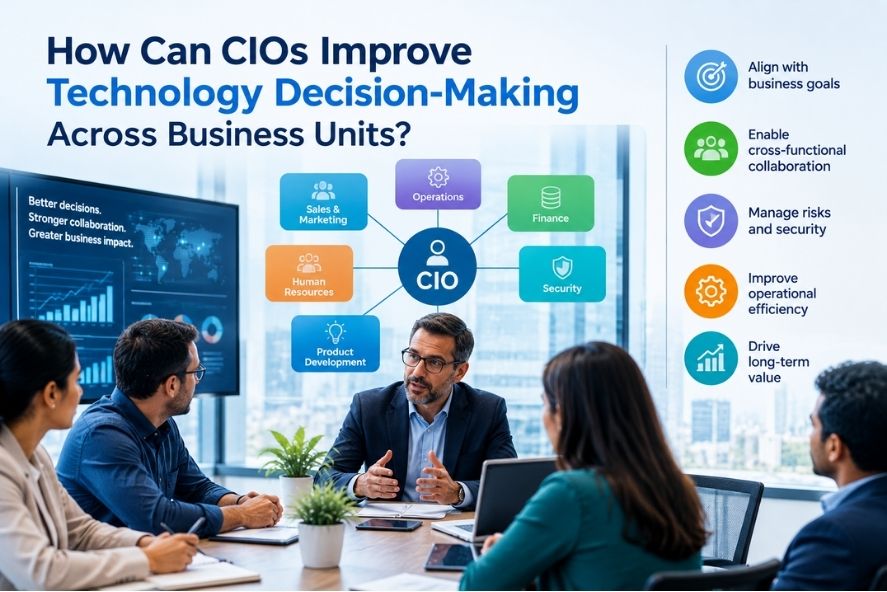
Technology decisions increasingly affect every part of a business, from customer service and finance to operations, marketing, and product development. However, different departments may have different priorities, budgets, and expectations from technology.
When teams make decisions independently, businesses can end up with overlapping tools, disconnected systems, rising costs, and unclear accountability. Better technology decision-making helps CIOs connect business priorities with technology investments while giving departments a clear role in the process.
Why can technology decisions become fragmented?
Different business units often select technology based on their immediate needs. One team may invest in a new analytics tool, while another adopts a similar platform without knowing that an existing solution could meet its requirements.
This can create duplicate spending, integration challenges, and inconsistent data practices. It may also make it harder for IT teams to manage security, support, and long-term maintenance.
CIOs can reduce fragmentation by establishing shared decision-making principles and improving communication between technology teams and business leaders.
How can CIOs align technology with business goals?
Technology decisions should begin with a clear business requirement. Before approving an investment, leaders should understand the problem, expected benefits, implementation needs, and potential risks.
A structured assessment can consider:
- The business outcome the technology is expected to support.
- The cost of implementation and ongoing operation.
- Integration with existing applications and data.
- Security, privacy, and regulatory requirements.
- The people and skills needed to manage the solution.
- How success will be measured after deployment.
This approach helps leaders compare proposals consistently and prioritize initiatives with meaningful business value.
Why is collaboration between departments important?
CIOs cannot make every technology decision without input from the teams that use the systems. Finance may understand budget constraints, operations may identify workflow problems, and business leaders may explain customer or market requirements.
Regular discussions between IT and business units can bring these perspectives together. Shared planning sessions can help teams identify common needs, resolve competing priorities, and evaluate whether an existing platform can support multiple functions.
This collaboration also creates shared responsibility for outcomes instead of treating technology projects as IT-only initiatives.
How can businesses establish clear governance?
Technology governance defines who can approve investments, how risks are reviewed, and which standards must be followed.
Businesses should clarify decision rights for major investments, departmental tools, data access, and technology architecture. Not every purchase requires the same level of review, so approval processes should reflect cost, complexity, risk, and business impact.
Clear governance can prevent unnecessary delays while maintaining oversight of important decisions.
How can data improve decision-making?
Reliable data gives CIOs and business leaders a stronger basis for comparing technology options. Investment dashboards can show spending, usage, project progress, system performance, and expected benefits.
Businesses should also review whether existing technology is being used effectively. Low adoption may indicate that a tool does not meet user needs or requires better training.
Combining financial and operational data helps leaders understand whether technology investments are delivering their intended value.
What should CIOs measure?
Technology decision-making should be assessed through outcomes rather than the number of projects completed. Useful measures include reduced operating costs, faster processes, improved customer experience, stronger security, and higher employee productivity.
CIOs should review results after deployment and use the findings to guide future investments. Projects that do not meet their objectives may need to be adjusted, expanded, or discontinued.
The Mainstream follows how technology leadership is evolving as organisations connect digital initiatives with wider business priorities.
Final Thought
Better technology decision-making requires clear priorities, collaboration, governance, and reliable information. CIOs can help business units make stronger choices by creating a consistent framework that balances local needs with the organization’s broader technology direction.
When business and IT leaders share responsibility for investments and outcomes, companies can reduce duplication, manage risk, and direct resources towards initiatives that deliver measurable value.