


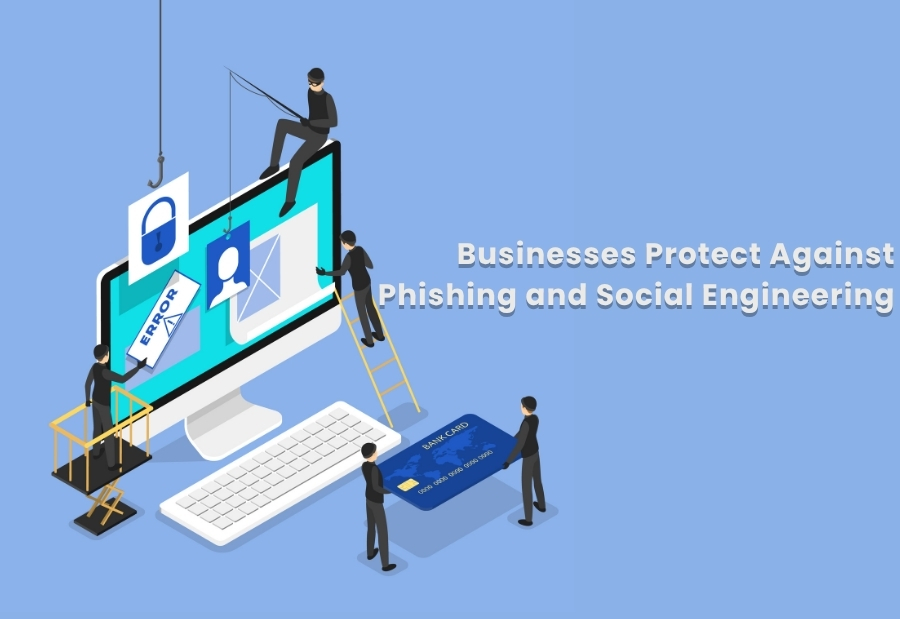
Cybersecurity is no longer only about protecting servers, applications and networks. People are also an important part of an organization’s security. Attackers often try to manipulate employees into sharing information, opening harmful links, approving unusual requests, or giving access to business systems. This is why understanding how businesses protect against phishing and social engineering has become an important part of modern cybersecurity.
Phishing and social engineering attacks rely on human interaction rather than only technical weaknesses. A convincing email, phone call, text message, or social media communication can sometimes persuade someone to take an unsafe action. With the right awareness and security controls, businesses can reduce these risks.
What are Phishing and Social Engineering?
Phishing is a type of cyberattack where criminals use fake messages or websites to trick people into revealing information or performing an action. These messages may appear to come from a colleague, manager, bank, technology provider, or other trusted organization.
Social engineering is a broader approach. Instead of directly attacking technology, criminals manipulate people by creating urgency, trust, fear, or curiosity.
For example, an employee might receive a message claiming that their account needs immediate verification. The message may contain a link that leads to a fake login page designed to collect credentials.
Understanding these tactics is the first step toward building stronger protection.
How businesses can reduce Phishing Risks
When considering how businesses protect against phishing and social engineering, organizations should combine employee awareness with technical security measures.
Employees should know how to recognize suspicious communication and understand what to do when something feels unusual. Security teams can also introduce controls that reduce the impact of mistakes.
Some practical measures include:
- Provide security awareness training, encourage employees to verify unusual requests, use multi-factor authentication, protect email systems and establish clear reporting procedures.
- Review suspicious messages, monitor account activity, restrict unnecessary access and keep security policies updated as attack methods change.
These measures create several layers of protection instead of relying on employees alone.
Teach employees to pause before acting
Many social engineering attacks depend on urgency. A message may tell an employee that an account will be disabled, a payment must be completed, or an important document needs immediate approval.
Encouraging employees to pause and verify unusual requests can make a significant difference. Employees should feel comfortable checking with a colleague or manager before taking action when something does not seem right.
Organizations should also create a culture where reporting mistakes or suspicious messages is encouraged. Employees are more likely to report an incident when they know the goal is to resolve the issue rather than assign blame.
Strengthen email and identity security
Email remains an important communication channel for businesses, making email security a key part of phishing protection.
Organizations can use email filtering, domain protection, malware detection and other security controls to identify suspicious messages before they reach employees.
Identity security is equally important. Multi-factor authentication can provide additional protection when passwords are stolen. Even if an attacker obtains login information, an additional verification step can make unauthorized access more difficult.
Businesses should also review account permissions regularly and remove access that is no longer required.
Build a clear incident reporting process
Employees need a simple way to report suspicious messages or possible security incidents. Complicated reporting procedures can discourage people from asking for help.
A clear process allows security teams to investigate quickly and determine whether other accounts or systems may be affected.
Regular awareness exercises can also help employees become more comfortable identifying suspicious behavior. These exercises should focus on education rather than creating fear.
The Mainstream’s perspective on cybersecurity
The Mainstream is a global tech media platform focused on enterprise and emerging technology, AI, digital transformation, cybersecurity, governance policy, GCC, Digital Natives, CX, BFSI and FinTech.
Through enterprise technology news, executive interviews, leadership conferences, expert opinions and industry insights, The Mainstream covers important cybersecurity topics, including phishing and social engineering, identity security, Zero Trust, cloud security, cyber resilience and enterprise risk.
Its coverage helps CIOs, CISOs, CEOs, technology professionals and business leaders understand changing cyber risks and practical approaches to protecting modern organizations. By connecting cybersecurity expertise with business leadership, The Mainstream supports informed conversations about building safer digital workplaces.
Conclusion
Understanding how businesses protect against phishing and social engineering requires more than employee training. Organizations need a combination of awareness, identity protection, email security, access controls, monitoring and clear reporting procedures.
The most effective approach is to create a security culture in which employees understand common threats and feel confident asking questions when something appears suspicious. As cyberattacks continue to evolve, businesses that combine human awareness with practical security controls can better protect their people, information and digital operations.