


For the past three years, the global conversation around artificial intelligence has been driven by one race: compute.
Who has the most advanced chips? Who can build the biggest models? Who can deploy AI at scale? But a quieter race is now emerging beneath the surface—one that has far less to do with algorithms and far more to do with resources.
Water.
As governments and technology giants pour billions into AI infrastructure, a growing body of evidence suggests that water availability may become one of the most critical constraints on the industry’s long-term growth. The challenge is no longer confined to sustainability reports or environmental debates. It is rapidly evolving into a strategic business, infrastructure, and governance issue. The reason is simple: AI is physical.
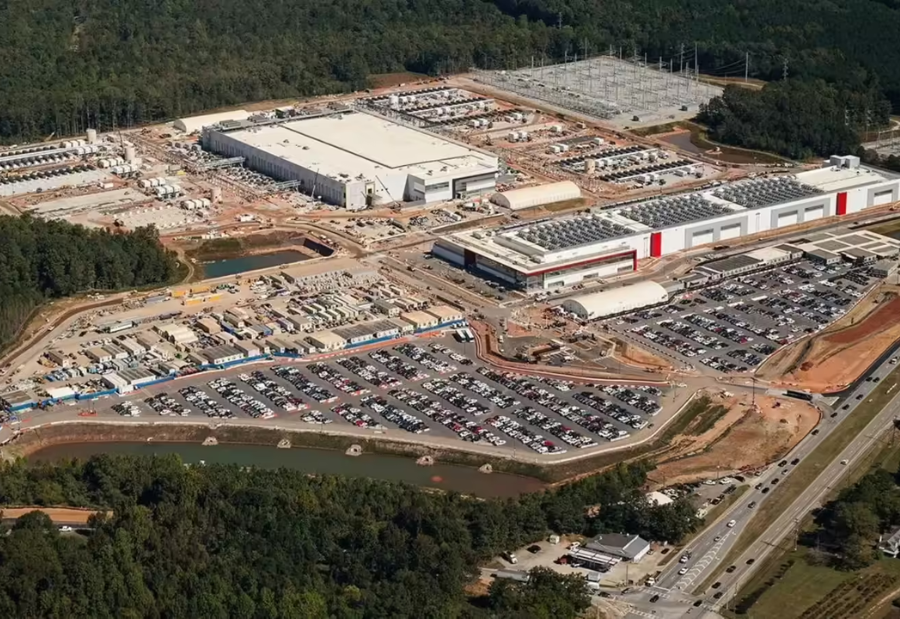
Behind every AI-generated response, recommendation, image, or prediction lies a network of data centres operating around the clock. These facilities require vast amounts of electricity, sophisticated cooling systems, and increasingly, access to reliable water resources. As AI workloads become more intensive, the infrastructure supporting them is expanding at unprecedented speed.
And that expansion is raising difficult questions.
Recent studies indicate that a significant proportion of new AI-focused data centre projects in the United States are being developed in regions already experiencing varying degrees of water stress. At the same time, researchers are warning that the combined water footprint of AI infrastructure—including cooling systems, electricity generation, and semiconductor manufacturing—could rise dramatically over the coming decade.
This represents a fundamental shift in how we think about AI.
For years, artificial intelligence has been viewed primarily through the lens of innovation and productivity. Today, it must also be viewed through the lens of resource management.
The implications extend far beyond the technology sector.
Communities across the United States are beginning to question whether the benefits of large-scale AI infrastructure outweigh the pressure such developments may place on local resources. In several regions, concerns around groundwater availability, energy consumption, and environmental impact are becoming central to discussions surrounding new data centre approvals.
The issue is particularly significant because water scarcity is inherently local. While data centres may account for a relatively small share of national water consumption, their impact can be substantial in regions already grappling with drought conditions, population growth, or infrastructure constraints.
This is where the conversation becomes more nuanced.
The challenge is not whether AI should continue to grow. The transformative potential of artificial intelligence across healthcare, manufacturing, research, education, and public services is undeniable. The question is whether the infrastructure supporting that growth can evolve responsibly.
To its credit, the industry is responding. Technology companies are investing heavily in advanced cooling systems, liquid-cooling technologies, water recycling mechanisms, and energy-efficient data centre designs. Many operators are also exploring locations with greater access to renewable energy and sustainable water resources.
Yet efficiency gains alone may not be enough.
As AI adoption accelerates globally, demand for computing power continues to outpace expectations. Every new model, every enterprise deployment, and every AI-powered service contributes to a growing infrastructure footprint. The scale of investment currently underway suggests that resource availability could soon become as important as access to capital or talent.
This is why the conversation around AI and water deserves greater attention.
The next phase of the AI revolution will not be determined solely by breakthroughs in machine learning. It will also be shaped by the physical systems that make those breakthroughs possible. Energy, water, land, and community acceptance are becoming critical inputs into the future of digital infrastructure.
In many ways, the debate reflects a broader reality about technological progress. Every transformative innovation eventually encounters real-world constraints. For artificial intelligence, that constraint may not be computing power alone.
It may be the availability of the natural resources needed to sustain it.
The industry’s next challenge, therefore, is not simply building smarter systems. It is building an AI ecosystem capable of growing responsibly in a world where resources are increasingly finite.
Because the future of AI will depend not only on how intelligently machines think—but on how intelligently we build the infrastructure that powers them.
Also read: Viksit Workforce for a Viksit Bharat
Do Follow: The Mainstream LinkedIn | The Mainstream Facebook | The Mainstream Youtube | The Mainstream Twitter
About us:
The Mainstream is a premier platform delivering the latest updates and informed perspectives across the technology business and cyber landscape. Built on research-driven, thought leadership and original intellectual property, The Mainstream also curates summits & conferences that convene decision makers to explore how technology reshapes industries and leadership. With a growing presence in India and globally across the Middle East, Africa, ASEAN, the USA, the UK and Australia, The Mainstream carries a vision to bring the latest happenings and insights to 8.2 billion people and to place technology at the centre of conversation for leaders navigating the future.