


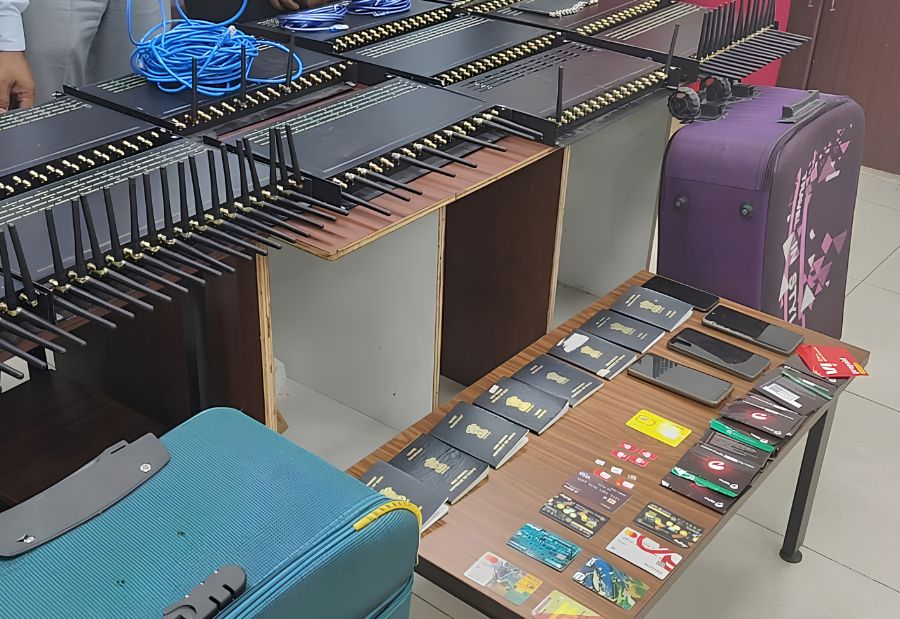
A major cybercrime operation has come under investigation after the Tamil Nadu Cyber Crime Wing uncovered an illegal SIM box network in Chennai’s Saidapet area. The operation has been linked to 301 cybercrime complaints registered across India, including 52 cases in Tamil Nadu. Authorities have arrested 2 individuals and seized telecom equipment suspected of being used to route fraudulent calls and facilitate cyber fraud.
The operation was conducted jointly with the Department of Telecommunications (DoT). Officials arrested Srinivasan, a manager, and Sanjay, an information technology technician. Both are accused of operating unauthorised telecommunications equipment without the required regulatory approvals.
The action followed intelligence shared by the Tamil Nadu Licensed Service Area unit of the DoT. After receiving a complaint seeking a joint surprise inspection, officials raided Bali Towers on Abdul Razak First Street in Saidapet. The premises housed M/s Fort Management Services on the third and fourth floors, while the company’s registered office is located on Potter Street in Saidapet.
During the inspection, authorities discovered an unauthorised telecom setup capable of operating multiple SIM cards simultaneously without the necessary licences or permissions.
Equipment seized during the operation
The joint team confiscated 10 SIM boxes, 182 SIM cards, 2 CPUs and 2 servers for forensic examination. The seized SIM boxes included units with 64 SIM slots, 7 devices with 32 slots each and 1 damaged unit.
Initial verification connected the seized equipment and SIM cards to 301 complaints filed on the National Cybercrime Reporting Portal from different states. Of these, 52 complaints originated in Tamil Nadu. Investigators are examining the digital evidence to establish the network’s exact role and identify the involvement of the accused in individual cases.
How illegal SIM box networks enable cyber fraud
A SIM box allows multiple SIM cards to operate simultaneously. It routes internet-based calls through local mobile networks, making them appear like regular domestic calls.
When used illegally, this technology can conceal the caller’s actual identity and location, making it harder for telecom authorities to trace fraudulent communications.
Such networks are often misused by cybercriminals to impersonate government officials, police personnel and bank representatives. They can facilitate digital arrest scams, fake account verification calls and fraudulent KYC update requests.
Investigation expands across states
The Cyber Crime Wing is continuing its investigation to identify the sources of the seized SIM cards and trace other individuals or entities connected to the operation.
Authorities are also examining whether the facility was used only for illegal call routing or directly supported financial fraud across multiple states.
Given the 301 complaints linked to the network, investigators are assessing the number of victims affected and tracing the bank accounts and channels potentially used to transfer defrauded money. Forensic analysis of the seized servers and CPUs remains a key priority as authorities work to establish the full scale of the operation.
Also read: Viksit Workforce for a Viksit Bharat
Do Follow: The Mainstream LinkedIn | The Mainstream Facebook | The Mainstream Youtube | The Mainstream Twitter
About us:
The Mainstream is a premier platform delivering the latest updates and informed perspectives across the technology business and cyber landscape. Built on research-driven, thought leadership and original intellectual property, The Mainstream also curates summits & conferences that convene decision makers to explore how technology reshapes industries and leadership. With a growing presence in India and globally across the Middle East, Africa, ASEAN, the USA, the UK and Australia, The Mainstream carries a vision to bring the latest happenings and insights to 8.2 billion people and to place technology at the centre of conversation for leaders navigating the future.