


The talent landscape is shifting from traditional job-based hiring to capability-driven workforce planning. As AI, digital technologies and changing career expectations reshape work, organisations are focusing on building adaptable talent, strengthening internal mobility and developing skills that will remain relevant for the future.
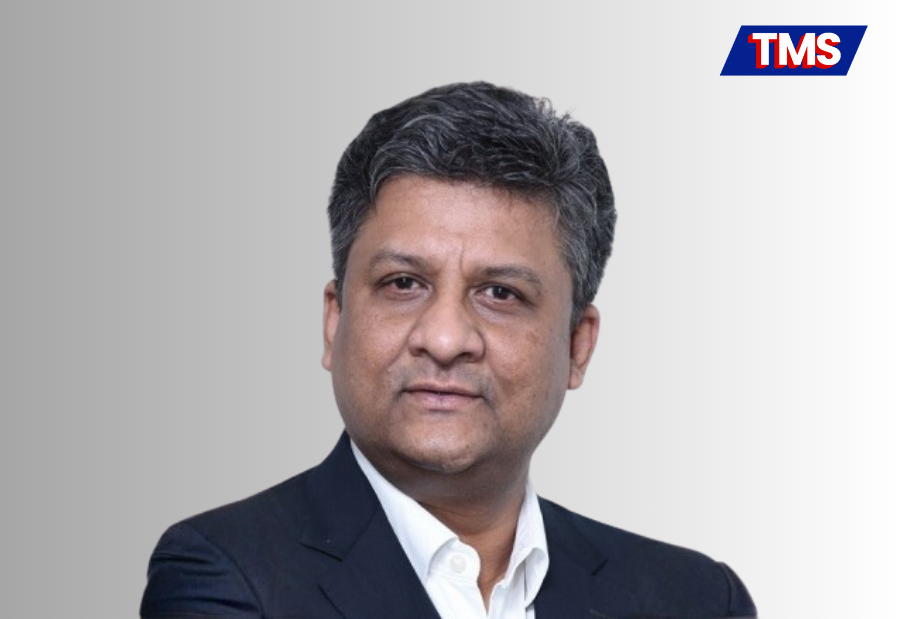
In an exclusive conversation with The Mainstream, Dipankar Ghosh, Group Head – HR at Apollo Tyres Ltd, shares his insights on the evolving talent landscape, building future-ready capabilities, the impact of AI and digital technologies on jobs and skills, and the importance of continuous learning, reskilling and internal mobility in shaping a globally capable workforce.
Q1. With over 25 years across industries and diverse HR leadership roles, what experiences have shaped your approach to building and leading talent?
In last three decades, I have had the opportunity to work across different industries, organisational forms & geographies helping shape my insight woven around perspectives and contexts. If there is one lesson that has shaped my approach to talent, it is that talent cannot be built in isolation from the business.
Some of my most valuable experiences have come from working closely with businesses during periods of transformation—whether it was scaling operations, managing change, building new capabilities or responding to disruption. These experiences taught me that the role of HR is not simply to identify good people; it is to anticipate what the business will need tomorrow and start building those capabilities today.
A second important learning has been the importance of giving people meaningful opportunities. I strongly believe that potential is often revealed through challenging assignments rather than through conventional career progression. Some of the best talent decisions I have seen have been about giving people an opportunity before they were completely “ready” and then creating the environment for them to succeed.
Finally, great talent hotbeds often balance performance, potential and purpose. And hence focussing on traditional HIPO management do not suffice. I have often betted big on people with right intent and a BANI mindset because organisation need today than ever before is one who owns the purpose, can adapt and lead in an uncertain future.
So, my approach to talent has evolved from asking, “Who are our best people?” to asking, “What capabilities will our business need in the future, and how do we create an organisation where those capabilities can flourish?”
Q2. India’s workforce is evolving rapidly, with changing employee expectations, new career paths and emerging skills. What are the biggest shifts you see shaping India’s talent landscape?
First, careers are becoming less linear. The traditional model of joining an organisation, moving vertically and eventually becoming a leader is giving way to more fluid careers—with lateral moves, projects, gig assignments, cross-functional experiences and reskilling becoming increasingly important.
Second, employees are increasingly looking for employability rather than just employment. People want to know whether the organisation will continue to invest in their relevance and growth. This makes learning and career development a critical part of the employee value proposition.
Third, we are seeing a fundamental shift from job-based skills to capability-based talent management. Organisations can no longer recruit simply against today’s job descriptions. They need to understand the capabilities that will matter two, three or five years from now.
Fourth, technology is democratising access to opportunity. Digital platforms, AI-enabled learning and remote collaboration are allowing talent from smaller cities and diverse backgrounds to participate in opportunities that were historically concentrated in major talent hubs.
And finally, I believe manufacturing itself is becoming a technology-talent intensive sector. The workforce of the future in manufacturing will increasingly combine domain expertise with digital, analytical and problem-solving capabilities. The implication is quite profound: the war for talent is gradually becoming a war for capabilities—and organisations that can continuously create capabilities will have a significant advantage.
Q3. As AI and digital technologies reshape jobs, how should organisations rethink the skills they hire for and the capabilities they build internally?
AI is fundamentally changing the conversation around talent. The question should not be, “Which jobs will AI replace?” but rather, “How will jobs change because humans and AI will work differently but together?” This requires organisations to rethink both hiring and development.
When hiring, we should increasingly look for learning agility, problem-solving ability, adaptability, digital fluency and curiosity, in addition to domain expertise. Technical skills will continue to matter, but their shelf life is becoming shorter.
Internally, organisations need to move from a predominantly training-oriented mindset to a continuous capability-building mindset. Employees should have opportunities to learn new technologies, experiment with them and apply them to real business problems.
I also believe that organisations need to distinguish between AI literacy and AI expertise. Not everyone needs to become an AI specialist. But increasingly, every professional will need to understand how AI can augment their work, how to work effectively with AI-enabled tools, and importantly, where human judgement remains essential. For a manufacturing organisation, this becomes even more interesting. The future workforce will need a combination of manufacturing domain expertise, data and digital capabilities, automation understanding and human problem-solving skills.
Ultimately, AI will make some skills less differentiating and make uniquely human capabilities—judgement, creativity, collaboration, leadership and empathy—even more important. The winning model will therefore not be human versus technology, but human capability multiplied by technology.
Q4. India’s talent pool is increasingly competing on a global stage. What can Indian organisations do to build a workforce with globally relevant skills and capabilities?
India has a tremendous demographic and intellectual advantage, but having a large talent pool is not enough. The opportunity is to convert that scale into globally benchmarked capability. I would focus on four things.
First, organisations need to expose talent to global benchmarks and global ways of working. Employees need opportunities to work across geographies, cultures, technologies and business models.
Second, we need to build stronger cross-cultural and global leadership capabilities. Technical competence alone does not make someone globally effective. The ability to influence across cultures, work in diverse teams and understand different customer and market contexts is equally important.
Third, organisations need to make digital and data literacy universal, while developing deeper expertise in areas that will shape the future—AI, automation, advanced analytics, cybersecurity, sustainability and new-age manufacturing technologies.
And fourth, we need to make internal talent development more rigorous. In my organisations, we are in the process of setting up clearly defined capability frameworks, robust assessments, differentiated development journeys and opportunities for high-potential talent to take on global & differentiated assignments. One of the key differentiator we have is that we do not view global exposure as something that happens only after someone reaches senior management. Global capability needs to be built much earlier in the talent journey and we believed in that philosophy helping helping bring up many talent with global capabilities. The aspiration should be to create professionals who are Indian in their understanding of the market, but global in their capability, mindset and ambition.
- Beyond hiring, how can organisations create stronger talent pipelines through continuous learning, reskilling and internal mobility?
The most sustainable talent pipeline is the one an organisation builds, rather than buys. That requires three things to work together: learning, reskilling and mobility.
First, learning needs to move closer to the flow of work. Traditional classroom-based training has its place, but much of the capability building of the future will happen through 70/20/10 models like rotations, stretched, stretch assignments, exposure to cross functional projects, digital learning, coaching and exposure to new technologies.
Second, organisations need to proactively identify roles and skills that are likely to change and create reskilling pathways before the disruption happens. Reskilling should not become a response to redundancy; it should become a strategic workforce-planning mechanism.
Third, internal mobility needs to become much more intentional. Employees should be able to see the skills required for their next career move and understand how they can acquire those skills. This creates a much stronger connection between career aspirations and organisational capability requirements.
At Apollo Tyres, particularly in a manufacturing environment undergoing significant technological change, this becomes critical. The workforce of tomorrow will need to combine deep domain knowledge with digital, automation, analytics and new problem-solving capabilities.
I would summarise the philosophy quite simply: don’t wait for the future to arrive and then search for talent. Build the talent that the future will require. And perhaps most importantly, organisations need to create a culture where moving from one role to another is not seen as losing talent from one function—it is seen as retaining talent within the organisation while creating new organisational capability.
Also read: Viksit Workforce for a Viksit Bharat
Do Follow: The Mainstream LinkedIn | The Mainstream Facebook | The Mainstream Youtube | The Mainstream Twitter
About us:
The Mainstream is a premier platform delivering the latest updates and informed perspectives across the technology business and cyber landscape. Built on research-driven, thought leadership and original intellectual property, The Mainstream also curates summits & conferences that convene decision makers to explore how technology reshapes industries and leadership. With a growing presence in India and globally across the Middle East, Africa, ASEAN, the USA, the UK and Australia, The Mainstream carries a vision to bring the latest happenings and insights to 8.2 billion people and to place technology at the centre of conversation for leaders navigating the future.