


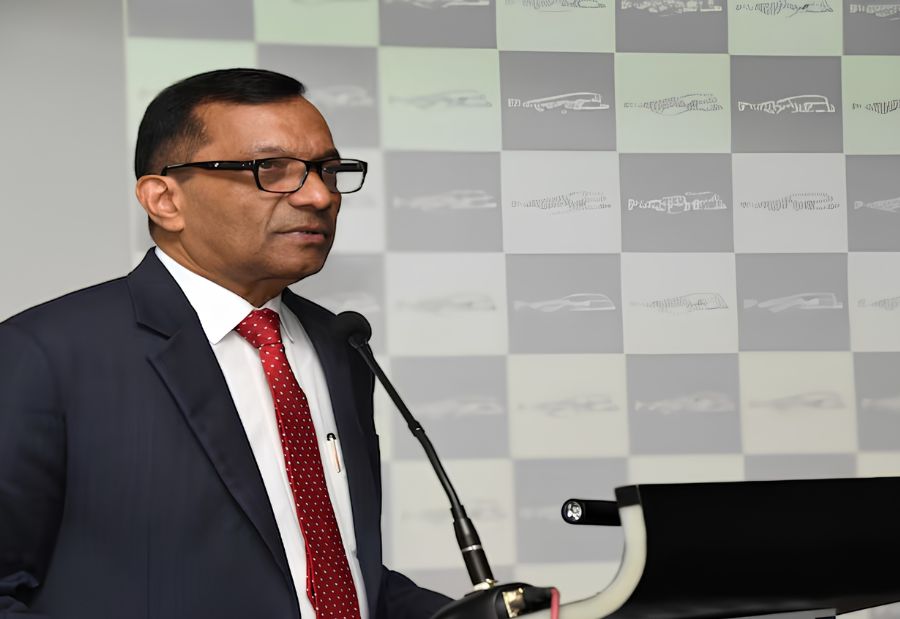
India’s space sector is entering a new phase of expansion, with the country targeting 50 launches every year by 2030. Pawan Goenka, chairman of the Indian National Space Promotion and Authorisation Centre (IN-SPACe), said the goal is aimed at building a stronger commercial space ecosystem through closer cooperation between the government and private industry.
In a post on X, Goenka said India opened the space sector to private players 5 years ago with 2 key objectives: allowing the Indian Space Research Organisation (ISRO) to focus on new technological frontiers and enabling private companies to scale their capabilities.
“Today, we are seeing both take shape,” Goenka said, referring to ISRO’s latest EOS-05 mission and the rapid growth of India’s space startup ecosystem.
India had a “barely handful” of space startups 5 years ago. The number has now crossed 450, Goenka said. Private companies have also moved beyond prototypes, with an Indian private company successfully flying a rocket to orbit.
The next priority is scaling this progress. “We have set ourselves an ambitious target of 50 launches a year by 2030,” Goenka said. Reaching this target will require the government and private industry to work together.
Government data shows that registered space startups increased to around 440 by August 2026, compared with just 1 in 2014. India’s space economy is currently valued at around $9 billion and is projected to reach $40-45 billion over the next decade.
Private investment has also grown significantly, rising from $100.5 million in 2021-22 to $618.5 million by March 2026.
Goenka said private companies must now move beyond individual projects and build manufacturing capabilities at scale. “Private industry must translate that momentum into manufacturing at scale: more rockets, more satellites, more launch capacity and new technologies,” he said.
ISRO will continue to focus on advancing technology, while private industry will increasingly help convert those capabilities into commercial products and services. Companies including Skyroot Aerospace, Agnikul Cosmos, Pixxel and Digantara are already active in launch vehicles, satellite manufacturing and Earth observation.
EOS-05 milestone
Goenka’s comments followed ISRO’s successful launch of EOS-05 aboard GSLV-F17, which placed the Earth observation satellite into a sub-geosynchronous transfer orbit.
EOS-05 is India’s first imaging satellite designed to operate from a geosynchronous orbit. It is expected to provide persistent observation of the same region for applications such as disaster management, agriculture, environmental monitoring and strategic surveillance.
The mission was also an important step for the GSLV programme. EOS-05 weighs around 2,367 kg, making it the heaviest satellite launched by the vehicle.
“The opportunity before us is immense: build in India, launch from India and serve the world from India,” Goenka said. He added that India was “well on our way” to taking its space sector to a new orbit, both figuratively and literally.
Also read: Viksit Workforce for a Viksit Bharat
Do Follow: The Mainstream LinkedIn | The Mainstream Facebook | The Mainstream Youtube | The Mainstream Twitter
About us:
The Mainstream is a premier platform delivering the latest updates and informed perspectives across the technology business and cyber landscape. Built on research-driven, thought leadership and original intellectual property, The Mainstream also curates summits & conferences that convene decision makers to explore how technology reshapes industries and leadership. With a growing presence in India and globally across the Middle East, Africa, ASEAN, the USA, the UK and Australia, The Mainstream carries a vision to bring the latest happenings and insights to 8.2 billion people and to place technology at the centre of conversation for leaders navigating the future.