


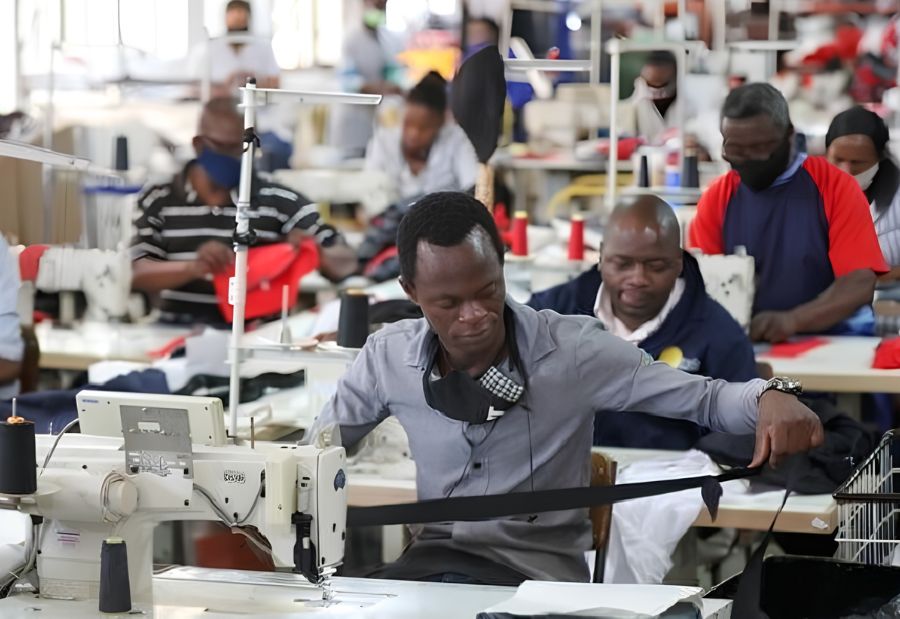
Clothing manufacturers in Newcastle, KwaZulu-Natal, are facing labour shortages after anti-immigrant protests prompted thousands of migrant workers to leave South Africa. Factory owners say the loss of skilled workers has disrupted production and made it difficult to fill vacancies with local employees.
The protests, led by anti-immigrant group March and March, aimed to create more employment opportunities for South Africans, where about 1 in 3 people are unemployed. However, factory owners told Reuters they have lost between 12% and 19% of their workforce, with many departing workers possessing specialised sewing skills that are difficult to replace.
Manufacturers say many local workers are unwilling to take low-paying factory jobs. Mpho Nkosi, a South African administrator at one of the factories, said, “People don’t want to work in factories.”
Following a June 30 deadline issued by March and March for undocumented migrants to leave the country, many foreign workers left their jobs. The group argues that migrants contribute to unemployment by accepting lower wages, while researchers dispute this claim.
Factory owners say most of their workforce is South African, but experienced workers from neighbouring Eswatini and Lesotho are essential for specialised garment production. Alex Liu, a factory owner, said skilled workers cannot be replaced immediately, while another owner, Ronghua Yan, has begun training 7 local employees after losing about 40 migrant workers.
According to the Southern African Clothing and Textile Workers’ Union, around 15% of Newcastle’s 15,000 textile workers left during the protests. However, the union argues that the main issue is low wages rather than a shortage of skilled workers.
Labour market experts say improving wages, working conditions, and career opportunities will be essential to attract more South Africans to manufacturing jobs. Workers are generally paid per garment produced, with only the most productive earning the national minimum wage of 30.23 rand ($1.83) per hour, while many earn less.
The industry is also recovering from government inspections earlier this year that uncovered illegal labour practices at some factories, resulting in reduced retail orders. Factory owners warn that rising costs, labour shortages, and declining demand could force more factories to close, putting even more South African jobs at risk.
Also read: Viksit Workforce for a Viksit Bharat
Do Follow: The Mainstream LinkedIn | The Mainstream Facebook | The Mainstream Youtube | The Mainstream Twitter
About us:
The Mainstream is a premier platform delivering the latest updates and informed perspectives across the technology business and cyber landscape. Built on research-driven, thought leadership and original intellectual property, The Mainstream also curates summits & conferences that convene decision makers to explore how technology reshapes industries and leadership. With a growing presence in India and globally across the Middle East, Africa, ASEAN, the USA, the UK and Australia, The Mainstream carries a vision to bring the latest happenings and insights to 8.2 billion people and to place technology at the centre of conversation for leaders navigating the future.