


Amid ongoing conflict and widespread destruction, many technology professionals in Gaza are rebuilding their lives through remote work and the digital economy.
Despite losing homes, jobs, and loved ones, they continue to pursue careers in technology while supporting their families under extremely difficult conditions.
Walaa Volidis, a 24-year-old Palestinian software engineer, now lives in a tent in central Gaza with her displaced family. After losing her job, university, and several family members during the war, she focused on rebuilding her career. She continues to improve her AI skills through online mentoring and recently secured a full-time position with a Dubai-based company. Her goal is to support her family and help her younger sister, who suffers from lymphoedema after war-related injuries, receive medical treatment outside Gaza.
With unemployment exceeding 80%, according to the UN, humanitarian organizations say remote work has become one of the few reliable income opportunities. Before the war, Gaza had a growing technology sector, with many professionals working remotely despite long-standing border restrictions.
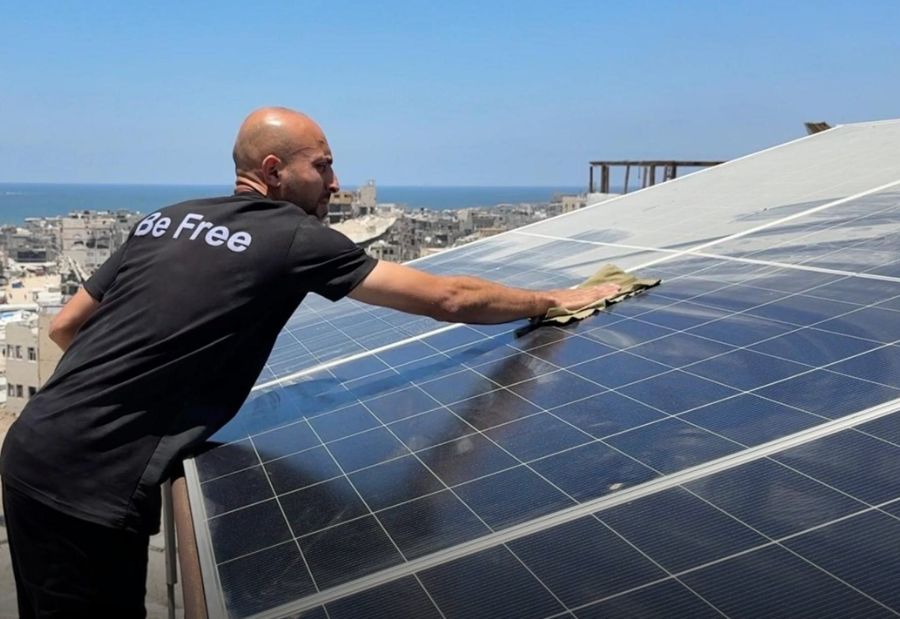
Organizations such as Gaza Sky Geeks, founded in 2012 by Google and Mercy Corps, helped build Gaza’s startup ecosystem through coding programs and business support. Although 2 of its 3 hubs were destroyed during the war, Mercy Corps now supports co-working spaces powered by generators and solar panels to provide internet access and electricity.
Many professionals continue freelancing despite major challenges. Tarik Zaeem, formerly the Chief Technology Officer of a local company, now develops software for international clients while supporting his wife and 3 children living in Egypt. However, limited banking services, cash shortages, and high payment conversion fees make earning a stable income difficult.
Security risks remain a constant concern. Air strikes continue to disrupt daily life, and technology workers often reassure overseas clients that projects will continue despite the dangers. Mahran Bayed, who lost his home, office, and equipment, now develops mobile apps, websites, and digital advertisements while working with damaged hardware because computer imports remain restricted.
Despite these hardships, Gaza’s technology community continues to adapt. Through remote work, international collaboration, and digital skills, many professionals are finding new opportunities and offering a glimpse of hope for the region’s future.
Also read: Viksit Workforce for a Viksit Bharat
Do Follow: The Mainstream LinkedIn | The Mainstream Facebook | The Mainstream Youtube | The Mainstream Twitter
About us:
The Mainstream is a premier platform delivering the latest updates and informed perspectives across the technology business and cyber landscape. Built on research-driven, thought leadership and original intellectual property, The Mainstream also curates summits & conferences that convene decision makers to explore how technology reshapes industries and leadership. With a growing presence in India and globally across the Middle East, Africa, ASEAN, the USA, the UK and Australia, The Mainstream carries a vision to bring the latest happenings and insights to 8.2 billion people and to place technology at the centre of conversation for leaders navigating the future.