


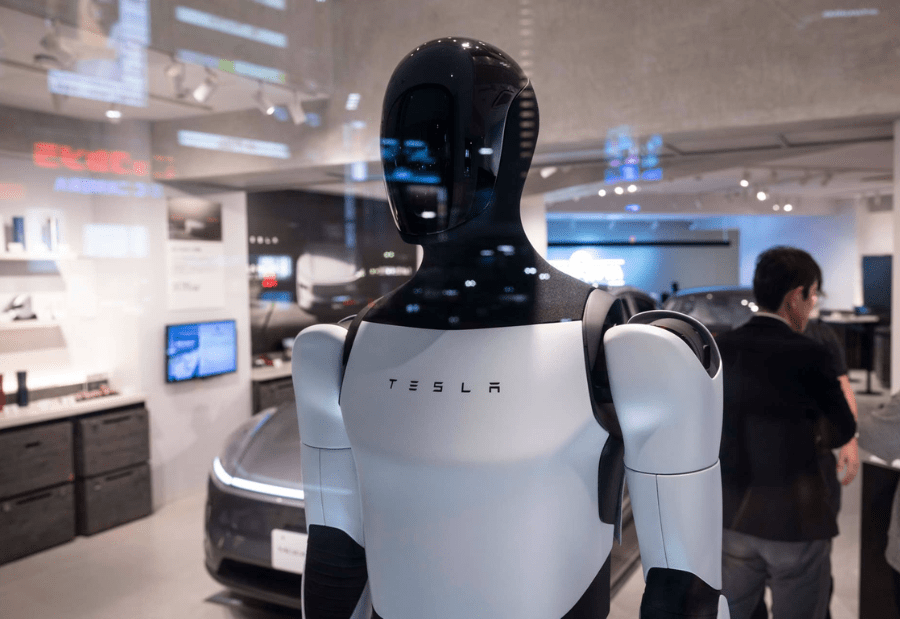
A bold production target from Tesla is sparking debate, as the company outlines plans to scale humanoid robot manufacturing despite limited clarity on buyers.
In its latest quarterly update, Tesla revealed preparations for its first large-scale Optimus factory, expected to begin in Q2. The company plans a first-generation production line capable of building 1 million robots per year, replacing the Model S and Model X lines at its Fremont facility. It is also preparing Gigafactory Texas for a second-generation line targeting long-term production of 10 million robots annually.
The move signals a major shift in focus, as Tesla transitions capacity from producing around 40,000 premium vehicles annually to large-scale robot manufacturing.
However, questions remain around demand. Tesla’s Optimus humanoid robots are still in early development stages, with limited demonstrated capabilities. While expected pricing is estimated at around $30,000 or more, the value proposition for consumers remains unclear.
For individual buyers, affordability is a major concern. At this price point, mass adoption appears unlikely, especially given that the robots are not yet capable of performing complex household tasks such as cleaning, childcare or daily errands.
Tesla’s initial strategy appears focused on internal use and enterprise adoption. The company plans to deploy these robots within its own factories and potentially sell them to other manufacturing businesses. Even here, challenges remain. Many industries already rely on specialised robots designed for specific tasks, raising questions about the need for general-purpose humanoid systems that may be slower and less efficient in early versions.
Consumer sales are not expected to begin until the end of 2027, indicating that widespread adoption is still some distance away.
The report also referenced “Digital Optimus,” described as an AI-driven intelligence layer aimed at automating digital workloads alongside physical robotics. This suggests Tesla is building a broader ecosystem that combines software and hardware automation.
While the long-term vision is ambitious, uncertainty around real-world applications and market demand continues to surround Tesla’s plan to produce robots at such scale.
Also read: Viksit Workforce for a Viksit Bharat
Do Follow: The Mainstream LinkedIn | The Mainstream Facebook | The Mainstream Youtube | The Mainstream Twitter
About us:
The Mainstream is a premier platform delivering the latest updates and informed perspectives across the technology business and cyber landscape. Built on research-driven, thought leadership and original intellectual property, The Mainstream also curates summits & conferences that convene decision makers to explore how technology reshapes industries and leadership. With a growing presence in India and globally across the Middle East, Africa, ASEAN, the USA, the UK and Australia, The Mainstream carries a vision to bring the latest happenings and insights to 8.2 billion people and to place technology at the centre of conversation for leaders navigating the future.