


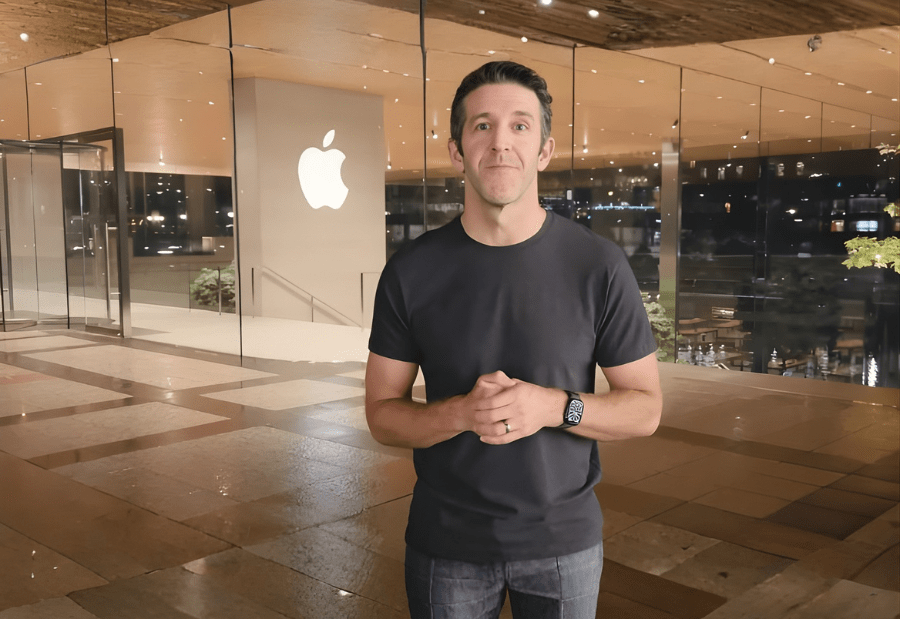
Apple is entering a major leadership transition as John Ternus prepares to take over as CEO, with expectations rising around how the company will position itself in the fast-evolving artificial intelligence space.
The company confirmed that Tim Cook will step down on September 1, ending a 15-year tenure. Ternus, Apple’s long-time hardware chief, will become only the second CEO since Steve Jobs stepped down in 2011.
Despite maintaining dominance in consumer devices and reaching a $4 trillion market cap, Apple has largely stayed cautious in the AI race. This contrasts with rivals like Microsoft, Google, Amazon, and Meta, which are investing heavily in AI infrastructure and data centers.
Apple’s current AI approach has focused on limiting capital expenditure and relying on partnerships. The company is using Google’s Gemini to power features, including an upgraded Siri expected later this year after delays. In 2024, Apple introduced Apple Intelligence, offering tools such as text rewriting, image generation, notification summaries, and integration with OpenAI’s ChatGPT. However, user response has been mixed.
AI apps from competitors are gaining traction on iOS. ChatGPT and Anthropic’s Claude rank among the most downloaded free apps, with Gemini and Meta AI also widely used. Meanwhile, Apple continues to benefit from strong iPhone sales, with revenue rising 23% year-on-year to $85.3 billion, driven by demand for iPhone 17 models.
Ternus is expected to double down on Apple’s hardware-first approach to AI. The company has been embedding AI-capable chips in devices since 2017 and is betting that future AI workloads will increasingly run on-device. This aligns with plans to expand into AI-powered hardware, including wearables, spatial computing devices, and possibly new product categories.
Reports suggest Apple is accelerating development of AI-focused wearables such as smart glasses, a pendant device, and AirPods with cameras, all centered around Siri. The company is also preparing to launch a foldable phone, which industry observers see as a significant upcoming hardware shift.
Beyond hardware, Ternus will need to strengthen AI integration in Apple’s services business, which includes subscriptions like AppleCare, iCloud, and Apple TV+, along with transaction-based revenue from Apple Pay. As users adopt paid AI tools like ChatGPT and Claude, Apple benefits through its platform ecosystem.
Another key decision will be balancing Apple’s long-standing privacy-first approach with the growing demand for AI-driven personalization. This trade-off could shape how competitive Apple becomes against companies that rely heavily on data-driven targeting.
Notably, Apple’s official announcement of the leadership change did not mention AI, focusing instead on Ternus’ 25-year track record and his role in launching major product lines such as iPad and AirPods.
As the transition approaches, it is clear that defining a compelling AI strategy will be central to Ternus’ leadership, as Apple looks to return to its roots of innovation while adapting to a rapidly shifting technology landscape.
Also read: Viksit Workforce for a Viksit Bharat
Do Follow: The Mainstream LinkedIn | The Mainstream Facebook | The Mainstream Youtube | The Mainstream Twitter
About us:
The Mainstream is a premier platform delivering the latest updates and informed perspectives across the technology business and cyber landscape. Built on research-driven, thought leadership and original intellectual property, The Mainstream also curates summits & conferences that convene decision makers to explore how technology reshapes industries and leadership. With a growing presence in India and globally across the Middle East, Africa, ASEAN, the USA, the UK and Australia, The Mainstream carries a vision to bring the latest happenings and insights to 8.2 billion people and to place technology at the centre of conversation for leaders navigating the future.