


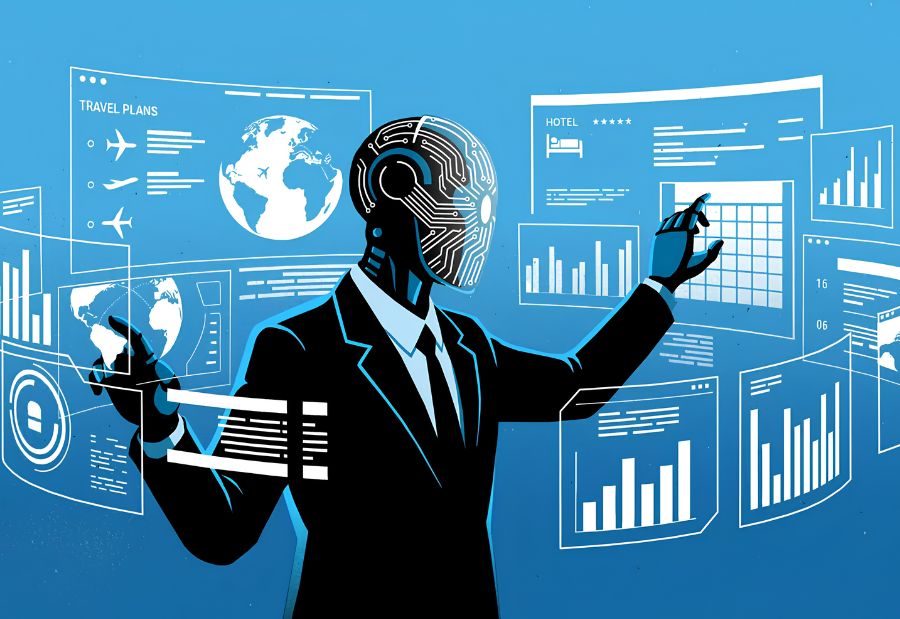
The next digital divide will not be between people who use AI and those who do not. It will be between those who question AI and those who trust it without hesitation.
Artificial intelligence has become exceptionally good at giving answers. It can write reports, generate images, summarise research, draft emails and even hold conversations that feel remarkably human. In a matter of years, AI has gone from being an emerging technology to becoming an everyday companion at work and in life. Yet as we rush to embrace its capabilities, one question deserves far more attention than it receives. Are we becoming better at using AI or simply better at believing it?
The global conversation around AI is dominated by investments, infrastructure and innovation. Countries are building sovereign AI ecosystems. Enterprises are embedding AI into every business function. Employees are being encouraged to adopt AI tools to improve productivity. These are important developments but they overshadow a more fundamental challenge. The future of AI will depend as much on human judgement as it does on technological progress.
The internet has quietly entered a new era where information is no longer scarce but certainty is. Finding an answer is effortless. Knowing whether that answer is accurate has become significantly harder. Generative AI has blurred the lines between authentic and artificial content with astonishing speed. Fake reviews read like genuine customer experiences. Deepfake videos continue to become more convincing. Voice cloning can imitate familiar voices with unsettling accuracy. Even trusted AI assistants occasionally present incorrect information with complete confidence.
This is where AI literacy becomes indispensable. It is not about learning clever prompts or discovering shortcuts to generate content faster. It is about understanding how AI arrives at its responses, recognising its limitations and developing the instinct to verify information before accepting it as fact. AI is built to predict the most likely answer. It is not built to understand truth in the way humans do.
Perhaps the biggest misconception surrounding AI is that fluency equals accuracy. Humans naturally associate confident communication with expertise. AI exploits this tendency without intending to. A polished response can feel authoritative even when it contains factual errors or fabricated references. That makes critical thinking more valuable than ever. The ability to question what we read may soon become as important as the ability to read itself.
Cybersecurity is also undergoing a profound transformation. The greatest risks are no longer confined to malicious software or compromised passwords. Increasingly they involve manipulation through language, emotion and trust. AI generated phishing emails, cloned executive voices and convincing fake customer support interactions are designed to influence behaviour rather than exploit technology. The weakest link has never been the machine. It has always been human judgement.
The answer is not to fear AI or reject it. AI is already transforming healthcare, education, research and business in meaningful ways. Used responsibly, it has the potential to improve decision making, expand access to knowledge and unlock new forms of creativity. The challenge is ensuring that our ability to evaluate information evolves at the same pace as the technology creating it.
Schools, universities and workplaces have an important role to play. AI literacy should not be treated as an optional technical skill reserved for developers or data scientists. It is rapidly becoming a core life skill that belongs alongside digital literacy and financial literacy. Understanding how AI works and where it can fail will be essential for everyone who participates in an increasingly AI powered world.
The next digital divide will not be defined by who has access to artificial intelligence. Access is becoming universal. The real divide will separate those who know when to trust AI from those who never stop to question it.
Technology has always rewarded those who adapt. The AI era will reward something even more valuable. Discernment.
Also read: Viksit Workforce for a Viksit Bharat
Do Follow: The Mainstream LinkedIn | The Mainstream Facebook | The Mainstream Youtube | The Mainstream Twitter
About us:
The Mainstream is a premier platform delivering the latest updates and informed perspectives across the technology business and cyber landscape. Built on research-driven, thought leadership and original intellectual property, The Mainstream also curates summits & conferences that convene decision makers to explore how technology reshapes industries and leadership. With a growing presence in India and globally across the Middle East, Africa, ASEAN, the USA, the UK and Australia, The Mainstream carries a vision to bring the latest happenings and insights to 8.2 billion people and to place technology at the centre of conversation for leaders navigating the future.