


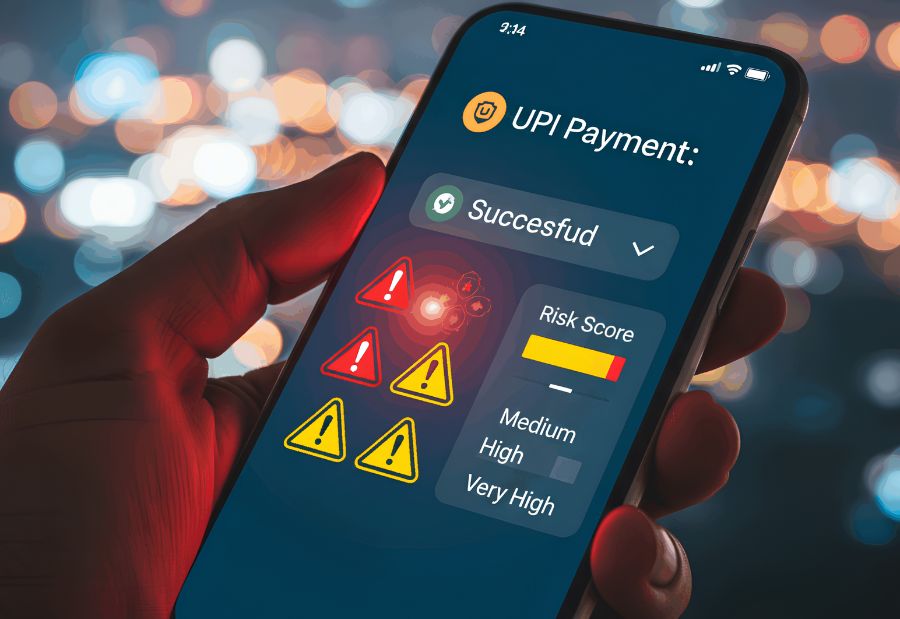
The Telangana State Consumer Disputes Redressal Commission has held that the use of a UPI PIN or other authentication mechanism does not, by itself, establish that a customer authorised a digital payment. In a ruling on banking accountability, the commission directed the State Bank of India (SBI) to refund ₹55,000 lost by a woman in a UPI fraud and pay an additional ₹30,000 as compensation and litigation costs.
The case involved a 44-year-old woman from Telangana who reported an unauthorised debit of ₹55,000 from her SBI account through UPI on November 3, 2022. She maintained that she had neither carried out the transaction nor authorised anyone else to do so. She also denied sharing her confidential banking credentials.
After discovering the withdrawal, she filed a complaint on the National Cyber Crime Reporting Portal on November 6, 2022, followed by a written complaint to her SBI branch on November 7. Although the bank acknowledged the complaint, it did not refund the disputed amount.
The woman later approached the police, following which an FIR was registered on December 31, 2024. With the bank continuing to deny her refund request, she moved the consumer commission. Advocate N Poornachandra represented her in the proceedings.
SBI argued that the disputed transaction had been completed using a UPI PIN along with mobile and SIM-binding authentication. The bank maintained that the payment could not have gone through without the required security protocols, suggesting that the customer had either authorised the transaction or compromised her credentials. It also raised concerns over the delay in reporting the fraud.
After considering the arguments, a bench comprising Commission President Mamidi Christopher and members S Sandhya Rani and K Venkateswarlu delivered its order on November 10. The commission observed that authentication through a UPI PIN does not conclusively prove that a customer consented to a transaction or negligently disclosed sensitive banking information. It stated that banks must provide concrete evidence to establish that the account holder actually authorised the disputed payment.
The commission also highlighted the service provider relationship between banks and their customers, noting that financial institutions are responsible for addressing grievances and maintaining prescribed security standards.
Examining the complaint timeline, the bench found that the woman had reported the fraud within the stipulated three-working-day window. The transaction took place on November 3, and the complaint was submitted to the bank on November 7. Since November 6 was a Sunday, the commission considered the bank complaint timely.
The commission concluded that SBI’s failure to refund the amount despite the timely complaint amounted to a deficiency in service. It also noted that there was insufficient evidence to establish that the woman had carried out the transaction or shared her credentials.
Accordingly, SBI was directed to refund the disputed ₹55,000, pay ₹20,000 as compensation for deficiency in service and ₹10,000 towards litigation expenses, taking the total payout to ₹85,000.
Also read: Viksit Workforce for a Viksit Bharat
Do Follow: The Mainstream LinkedIn | The Mainstream Facebook | The Mainstream Youtube | The Mainstream Twitter
About us:
The Mainstream is a premier platform delivering the latest updates and informed perspectives across the technology business and cyber landscape. Built on research-driven, thought leadership and original intellectual property, The Mainstream also curates summits & conferences that convene decision makers to explore how technology reshapes industries and leadership. With a growing presence in India and globally across the Middle East, Africa, ASEAN, the USA, the UK and Australia, The Mainstream carries a vision to bring the latest happenings and insights to 8.2 billion people and to place technology at the centre of conversation for leaders navigating the future.