


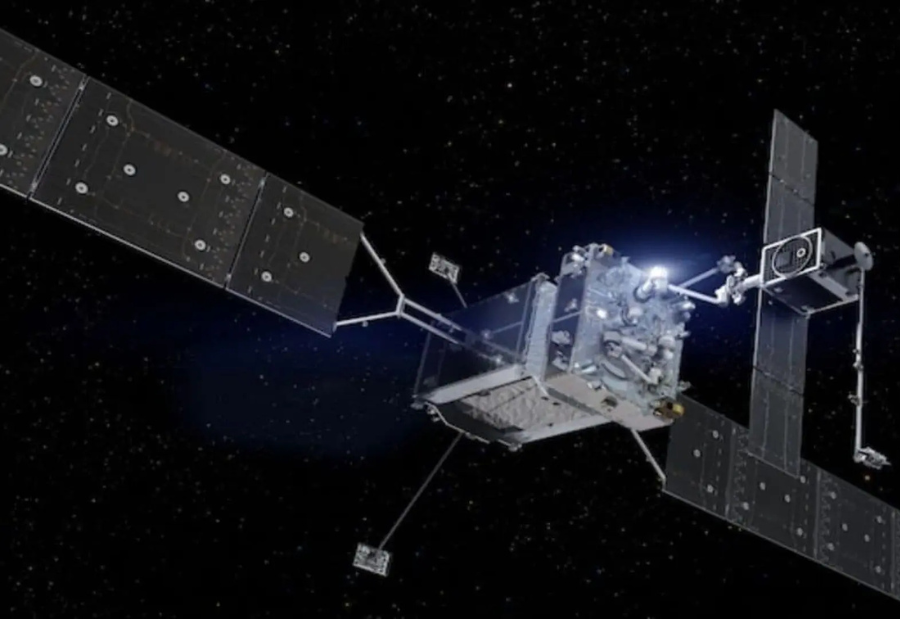
A major step towards in-orbit satellite servicing has been achieved as SpaceX successfully launched a mission aimed at extending the operational life of ageing satellites in geostationary orbit. The mission introduces advanced robotic technology that can install life-extension systems without replacing existing spacecraft.
The Falcon 9 rocket lifted off from Cape Canaveral Space Force Station in Florida on July 21 at 5:15 pm EDT (July 22 at 2:45 am IST), carrying Northrop Grumman’s Mission Robotic Vehicle (MRV) along with 3 Mission Extension Pods (MEPs). Operated by SpaceLogistics, a subsidiary of Northrop Grumman, the mission marks the first deployment of the company’s new satellite life-extension pods.
The MRV is travelling to geostationary orbit, around 35,786 km above Earth, where it will use its 2 robotic arms, each measuring 10 feet, to attach the 3 MEPs to separate satellites. The pods act as propulsion units, helping satellites maintain their orbit and manage momentum, extending their operational life by up to 8 years.
Optus has reserved 1 pod, while Intelsat will use the remaining 2 for its satellites.
Unlike previous satellite servicing missions, the MRV and MEPs will travel separately before meeting in orbit. The robotic vehicle will capture each pod, transport it to its assigned satellite, and install it. After completing all 3 installations, the MRV will remain in space to support future servicing missions.
The spacecraft is also designed to inspect, relocate, repair and upgrade satellites. It carries a Passive Refueling Module, the first refuelling interface standard approved by the U.S. Space Force, allowing the vehicle to be refuelled in orbit for long-term operations.
The mission builds on Northrop Grumman’s earlier Mission Extension Vehicle programme launched in 2019 and 2020. This latest mission introduces reusable robotic servicing capable of supporting multiple satellites.
The Falcon 9 upper stage deployed the MRV around 35.5 minutes after liftoff, followed by the release of the 3 MEPs at 10-minute intervals. Due to the mission’s high-performance requirements, SpaceX did not attempt to recover the first-stage booster, which completed its 32nd and final flight.
Also read: Viksit Workforce for a Viksit Bharat
Do Follow: The Mainstream LinkedIn | The Mainstream Facebook | The Mainstream Youtube | The Mainstream Twitter
About us:
The Mainstream is a premier platform delivering the latest updates and informed perspectives across the technology business and cyber landscape. Built on research-driven, thought leadership and original intellectual property, The Mainstream also curates summits & conferences that convene decision makers to explore how technology reshapes industries and leadership. With a growing presence in India and globally across the Middle East, Africa, ASEAN, the USA, the UK and Australia, The Mainstream carries a vision to bring the latest happenings and insights to 8.2 billion people and to place technology at the centre of conversation for leaders navigating the future.