


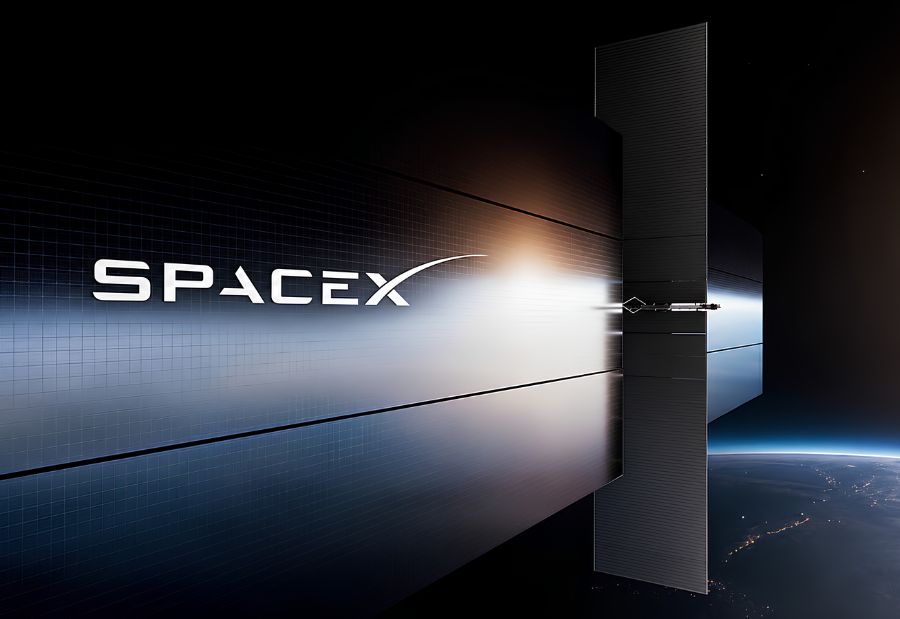
Space-based computing is gaining momentum as SpaceX receives regulatory approval for a massive satellite network designed to support artificial intelligence (AI) operations in orbit. The Federal Communications Commission (FCC) has authorised Elon Musk’s SpaceX to deploy 1 million AI computing satellites, FCC Chairman Brendan Carr announced on Wednesday.
In a post on X, the social media platform owned by SpaceX, Carr said the company’s Starmind constellation, along with “competitor constellations will use solar power to extend America’s lead” in AI.
Musk responded, “Much appreciated. This will be a great asset to America and the world.”
According to the FCC’s authorisation filing, SpaceX’s application “received a substantial number of comments from the public, including petitions to deny filed by Kuiper Systems LLC (Amazon Leo), Viasat Inc. (Viasat), and the American Astronomical Society (AAS).”
In a petition submitted in March, Amazon urged the FCC to reject SpaceX’s proposal, describing the Starmind project as a “lofty ambition rather than a real plan.”
Amazon, which is developing a satellite internet service to compete with SpaceX’s Starlink, argued that building the proposed constellation would take SpaceX “centuries”. It also questioned the limited details provided by the company on how it planned to achieve its ambitious target.
The petition drew a response from Carr, who said Amazon “should focus on the fact” that it was falling short of its own satellite deployment milestone. Amazon declined to comment on the FCC’s approval.
Other companies exploring orbital data centres
SpaceX is not the only company looking at space-based computing infrastructure.
Google announced Project Suncatcher last year, describing it as a “moonshot to put AI in space.” In October, it sent its first AI chips into space aboard a SpaceX rocket and a Planet Labs satellite.
In March, Jeff Bezos’ Blue Origin also approached the FCC for permission to launch up to 51,600 satellites under a proposed low Earth orbit constellation called Project Sunrise. The network would operate alongside the company’s planned TeraWave satellite internet service, announced in January.
Concerns over space debris and environmental impact
The FCC’s decision has raised concerns among experts and environmental groups.
Astrophysicist and author Adam Becker criticised the move, warning about the potential impact on the night sky and the risk of collisions involving space debris.
“Any serious attempt at this is going to further pollute the night sky and runs a serious risk of a cascading chain reaction of space junk collisions, which would be a disaster for all of humanity,” he wrote. “Musk and Carr are either profoundly stupid themselves, or hoping the rest of us are too stupid to notice this is nonsense.”
SpaceX did not respond to a request for comment.
Jan Hasselman, a senior attorney at Earthjustice, also criticised the FCC for announcing its decision during a holiday week and approving the proposal without an environmental review, which he said was required under the National Environmental Policy Act.
In its authorisation, the FCC said it dismissed “comments and concerns raised regarding topics over which the Commission has no authority, including environmental concerns,” as well as concerns about the project’s impact on “optical astronomy.”
Also read: Viksit Workforce for a Viksit Bharat
Do Follow: The Mainstream LinkedIn | The Mainstream Facebook | The Mainstream Youtube | The Mainstream Twitter
About us:
The Mainstream is a premier platform delivering the latest updates and informed perspectives across the technology business and cyber landscape. Built on research-driven, thought leadership and original intellectual property, The Mainstream also curates summits & conferences that convene decision makers to explore how technology reshapes industries and leadership. With a growing presence in India and globally across the Middle East, Africa, ASEAN, the USA, the UK and Australia, The Mainstream carries a vision to bring the latest happenings and insights to 8.2 billion people and to place technology at the centre of conversation for leaders navigating the future.