


South Korea has announced an ambitious technology roadmap covering 7 major areas as it looks to develop new sources of economic growth beyond semiconductors and AI. The strategy includes plans for a domestic moon landing by 2030, a 100-qubit quantum computer by 2029 and commercial brain-computer interface products by 2035.
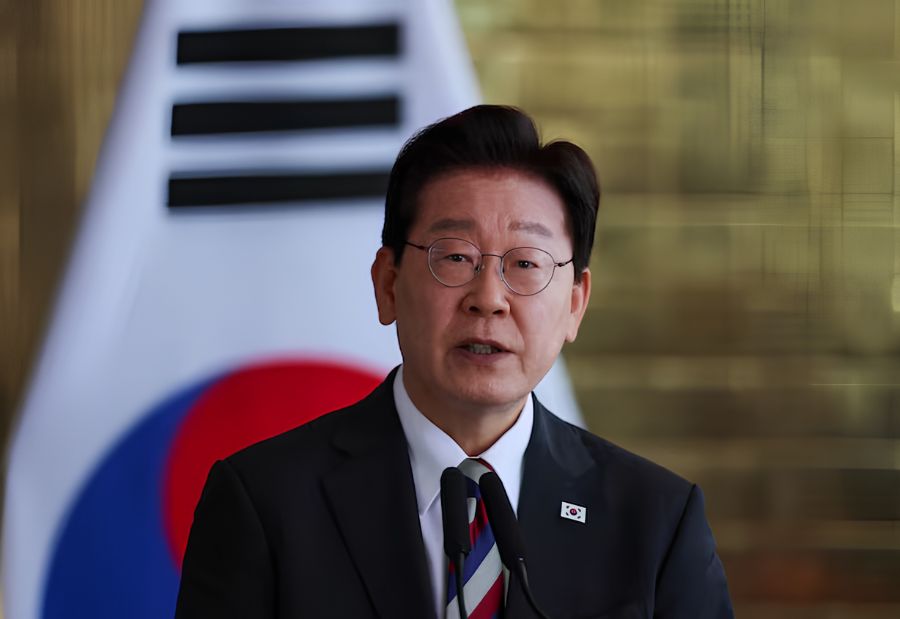
The “Seven Major SEED” initiative was announced at a Blue House meeting chaired by President Lee Jae Myung. The programme covers nuclear energy, fusion energy, renewable energy, quantum technology, space and aviation, advanced biotechnology, and critical minerals and materials supply chains.
Lee said South Korea should use the current growth in semiconductors and AI to prepare for its next generation of industries.
“The seven SEED projects we are discussing today will become next-generation growth engines and core strategic national assets,” Lee said.
The plan comes as South Korea faces a declining working-age population and slower potential economic growth. The country is also seeking an advantage in emerging technologies considered important for economic competitiveness and national security.
“We will help these seeds grow and build a South Korea that no one can rival in 10 or 20 years,” Science Minister Bae Kyung-hoon said.
Under the nuclear energy programme, South Korea aims to commercialise a domestically developed small modular reactor (SMR) by 2035 and begin construction of non-light-water SMRs during the 2030s. It also plans to pursue fusion-based electricity generation in the late 2030s.
The renewable energy programme includes ultra-efficient solar cells, advanced offshore wind technologies, hydrogen production systems and AI-powered electricity grid technologies.
In quantum technology, the government plans to develop an error-corrected 100-qubit quantum processor by 2029 and become the world’s leading quantum-chip manufacturing nation by 2035.
The space programme includes a domestic moon landing in 2030, a 2nd lunar lander mission in 2032 and an independent low-Earth-orbit satellite communications network by 2035. South Korea also plans to develop space data-centre technologies and support participation in next-generation commercial aircraft programmes.
In biotechnology, the country aims to establish AI-bio infrastructure by 2030 and commercialise brain-computer interface products by 2035. It will also support AI-driven drug discovery, autonomous laboratories and advanced gene and cell therapies.
The critical minerals strategy includes expanding domestic processing and recycling, increasing strategic stockpiles, diversifying sources and investing 10 trillion won ($7.1 billion) in materials, parts and equipment technologies by 2030.
A public-private task force will also be established to accelerate commercialisation through regulatory reforms.
Also read: Viksit Workforce for a Viksit Bharat
Do Follow: The Mainstream LinkedIn | The Mainstream Facebook | The Mainstream Youtube | The Mainstream Twitter
About us:
The Mainstream is a premier platform delivering the latest updates and informed perspectives across the technology business and cyber landscape. Built on research-driven, thought leadership and original intellectual property, The Mainstream also curates summits & conferences that convene decision makers to explore how technology reshapes industries and leadership. With a growing presence in India and globally across the Middle East, Africa, ASEAN, the USA, the UK and Australia, The Mainstream carries a vision to bring the latest happenings and insights to 8.2 billion people and to place technology at the centre of conversation for leaders navigating the future.