


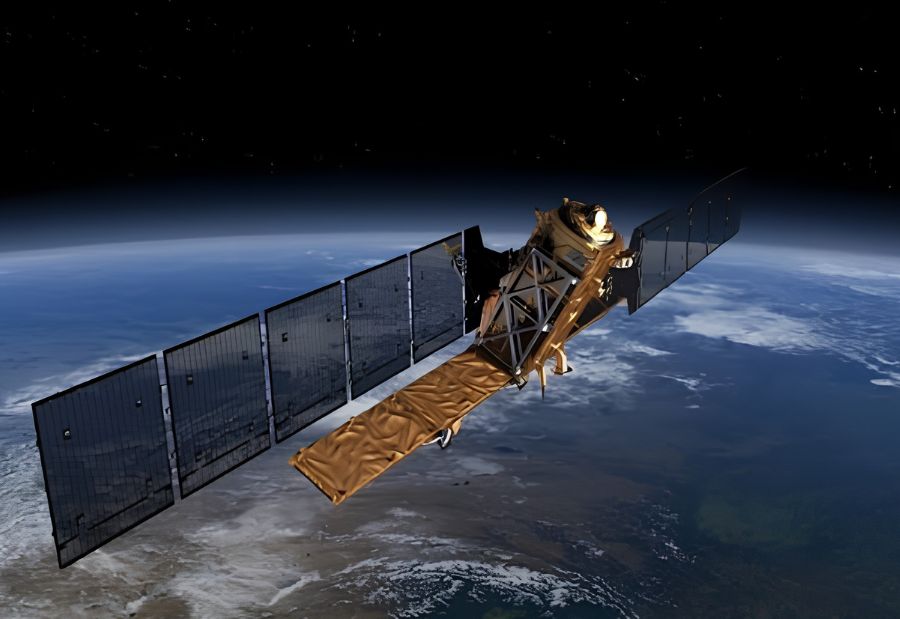
After more than 12 years in orbit, the Copernicus Sentinel-1A radar satellite has officially completed its mission, concluding a landmark chapter in Earth observation. Originally designed for a 7-year operational life, the satellite significantly exceeded expectations, providing critical data that supported environmental monitoring, scientific research, disaster response and public safety worldwide.
Launched on April 3, 2014, Sentinel-1A became the 1st satellite of the Copernicus programme, the Earth observation component of the European Union’s space initiative. Equipped with an advanced C-band Synthetic Aperture Radar (SAR), it delivered high-resolution images of Earth day and night, regardless of weather conditions, making it an essential tool for monitoring Arctic sea ice, glacier movement, floods, oil spills and other environmental changes.
Sentinel-1A remained operational well beyond its planned mission duration and became even more important after Sentinel-1B experienced a power system failure in 2021. During that period, it played a leading role in maintaining Europe’s radar Earth observation capabilities.
According to the European Space Agency (ESA), Sentinel-1A officially ended its operational service on June 29, 2026. Among its final observations were radar images of western Iceland and Melbourne, Australia. Before retirement, ESA mission controllers carried out a series of complex orbital manoeuvres to position Sentinel-1C and Sentinel-1D into a 3-satellite configuration, ensuring a smooth transition of operational responsibilities.
Nuno Miranda, ESA’s Sentinel-1 Mission Manager, said, “Sentinel-1A holds a special place for all of us. As the first satellite of the Copernicus programme, it paved the way for new approaches in both operations and science.”
He added, “While Sentinel-1A’s operational life has come to an end, its story is not yet over. The team is now preparing for the disposal phase, which is expected to begin during the summer.”
ESA confirmed that Sentinel-1C and Sentinel-1D are now operating together, positioned 180° apart to maximise global coverage. Both satellites carry C-band Synthetic Aperture Radar and Automatic Identification System (AIS) instruments, enhancing Earth observation while improving maritime vessel detection and tracking.
ESA’s Director of Earth Observation Programmes said, “Sentinel-1A was far more than a satellite – it opened the Copernicus era. For over a decade, it delivered vital data every day, helping us better understand our planet and respond to some of society’s most pressing challenges.”
The Sentinel-1 mission will now continue through Sentinel-1C and Sentinel-1D, ensuring uninterrupted radar-based Earth observation for years to come.
Also read: Viksit Workforce for a Viksit Bharat
Do Follow: The Mainstream LinkedIn | The Mainstream Facebook | The Mainstream Youtube | The Mainstream Twitter
About us:
The Mainstream is a premier platform delivering the latest updates and informed perspectives across the technology business and cyber landscape. Built on research-driven, thought leadership and original intellectual property, The Mainstream also curates summits & conferences that convene decision makers to explore how technology reshapes industries and leadership. With a growing presence in India and globally across the Middle East, Africa, ASEAN, the USA, the UK and Australia, The Mainstream carries a vision to bring the latest happenings and insights to 8.2 billion people and to place technology at the centre of conversation for leaders navigating the future.