


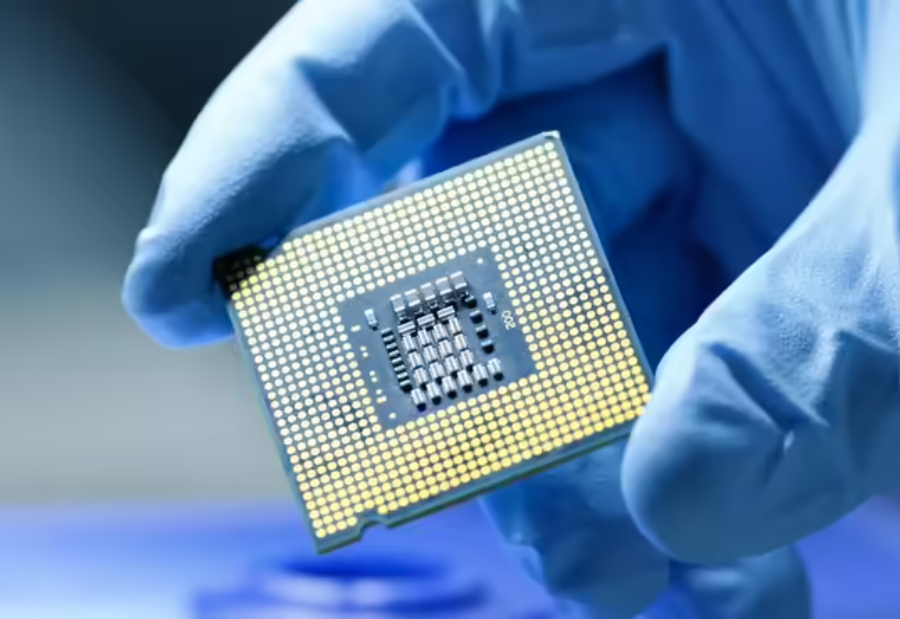
As artificial intelligence continues to dominate global technology discussions, industry leaders believe the real long-term competitive advantage will be determined by semiconductor capabilities rather than AI applications alone.
Gilroy Mathew, Chief Operating Officer of UST, said semiconductors and AI are closely connected and will shape the future of technology. According to him, control over semiconductor technology will influence the efficiency, scalability and economics of AI systems. “Control over silicon increasingly determines the efficiency, scalability, and economics of AI systems, making semiconductors a foundational strategic lever in the broader technology landscape.”
Mathew believes India’s semiconductor opportunity is fundamentally different from previous technology waves such as outsourcing, cloud computing and digital transformation. “The semiconductor opportunity is very different from outsourcing, cloud, or digital transformation because it is not only a services opportunity, it is a strategic manufacturing, design, and national capability opportunity.”
UST entered the semiconductor sector in 2009 and expanded its capabilities through the acquisition of SeviTech Systems in 2018. By 2023-24, the company was supporting 35 of the world’s leading semiconductor firms across chip design, validation and embedded software development. In late 2025, UST partnered with Kaynes Semicon to establish a ₹3,330 crore Outsourced Semiconductor Assembly and Test (OSAT) facility in Sanand, Gujarat.
According to Mathew, Indian engineering and IT firms must move beyond talent support and take ownership of larger semiconductor programmes. He noted that global semiconductor companies are increasingly seeking partners capable of managing end-to-end engineering execution and delivering measurable outcomes.
He identified chip design, advanced packaging and embedded systems as India’s strongest near-term opportunities. India already accounts for nearly 20% of the world’s chip design engineers, providing a strong foundation for growth.
Mathew also highlighted the progress of the India Semiconductor Mission, with multiple manufacturing and OSAT/ATMP projects moving from policy planning to execution.
While AI is expected to automate repetitive functions such as application maintenance, manual testing and basic support services, he believes India’s biggest opportunity lies in combining software expertise with semiconductor capabilities. “The real opportunity is not just in designing chips, but in enabling intelligent systems where hardware, embedded software, and cloud-native capabilities come together seamlessly.”
He added that semiconductor leadership will require sustained investment, technical excellence and ecosystem development over the long term.
Also read: Viksit Workforce for a Viksit Bharat
Do Follow: The Mainstream LinkedIn | The Mainstream Facebook | The Mainstream Youtube | The Mainstream Twitter
About us:
The Mainstream is a premier platform delivering the latest updates and informed perspectives across the technology business and cyber landscape. Built on research-driven, thought leadership and original intellectual property, The Mainstream also curates summits & conferences that convene decision makers to explore how technology reshapes industries and leadership. With a growing presence in India and globally across the Middle East, Africa, ASEAN, the USA, the UK and Australia, The Mainstream carries a vision to bring the latest happenings and insights to 8.2 billion people and to place technology at the centre of conversation for leaders navigating the future.