


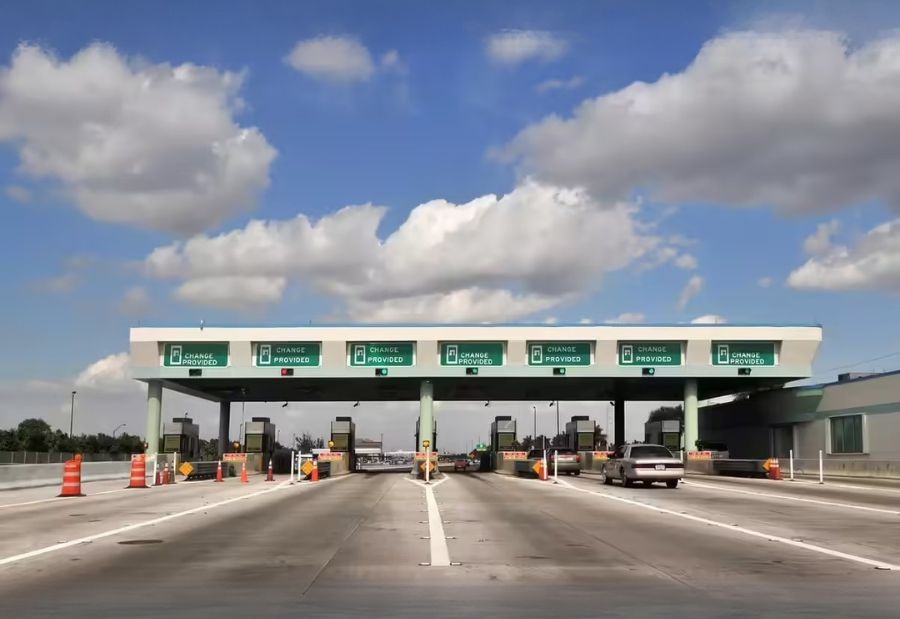
India’s highway tolling system is moving towards a faster and fully digital future as the National Highways Authority of India (NHAI) continues expanding Multi Lane Free Flow (MLFF) tolling across the country.
Union Road Transport and Highways Minister Nitin Gadkari on May 11 inaugurated the barrier-free MLFF tolling system at the Mundka-Bakkarwala Toll Plaza on Urban Extension Road-II (UER-II), making it the second MLFF toll plaza operational in India.
MLFF is a barrier-less toll collection system that allows vehicles to pass through toll plazas without stopping. The technology uses FASTag readers, AI-enabled cameras, and Number Plate Recognition systems to automatically collect toll charges while enabling vehicles to travel at speeds of up to 80 kmph.
According to NHAI, the authority plans to make all toll plazas across India barrier-free by the end of 2026. The initiative is expected to reduce congestion, improve travel time, and enable seamless traffic movement on national highways.
NHAI stated that the technology is being implemented by banks under a “Per-Transaction Fee Model,” eliminating the need for additional government capital investment. The authority added that MLFF will significantly reduce toll collection operational costs from the current 12-15% to nearly 3-4%.
Studies cited by NHAI suggest the new system could help save nearly ₹285 crore in fuel annually while reducing carbon dioxide emissions by around 81,000 tonnes every year. The initiative is also expected to improve logistics efficiency and save millions of travel hours.
India’s first MLFF toll plaza became operational on May 1, 2026, at the Choryasi Toll Plaza on the NH-48 Surat-Bharuch route. According to NHAI, the Choryasi plaza has already recorded 2-3% higher toll collection compared to traditional barrier-based systems.
Currently, nearly 17 MLFF toll plazas are under implementation, while tenders have been invited for 108 public-funded toll plazas across Delhi-NCR, Rajasthan, and Gujarat. Discussions are also underway to include BOT, TOT, and InvIT toll plazas within the MLFF network.
NHAI has advised commuters to maintain sufficient FASTag balance, ensure annual passes remain active, and use HSRP number plates for improved AI-based vehicle identification. Vehicles with invalid FASTags may receive e-Notices, while delayed payments beyond 72 hours could attract double toll charges and service restrictions.
Also read: Viksit Workforce for a Viksit Bharat
Do Follow: The Mainstream LinkedIn | The Mainstream Facebook | The Mainstream Youtube | The Mainstream Twitter
About us:
The Mainstream is a premier platform delivering the latest updates and informed perspectives across the technology business and cyber landscape. Built on research-driven, thought leadership and original intellectual property, The Mainstream also curates summits & conferences that convene decision makers to explore how technology reshapes industries and leadership. With a growing presence in India and globally across the Middle East, Africa, ASEAN, the USA, the UK and Australia, The Mainstream carries a vision to bring the latest happenings and insights to 8.2 billion people and to place technology at the centre of conversation for leaders navigating the future.