


The role of the CHRO is evolving from managing people processes to shaping organisational capability. As AI reshapes jobs and workflows, and businesses navigate continuous transformation, HR leaders are increasingly expected to anticipate future skills, build agile talent models and connect workforce strategy with business priorities. The focus is shifting from how many people an organisation needs to what capabilities it must build to remain competitive and future-ready.
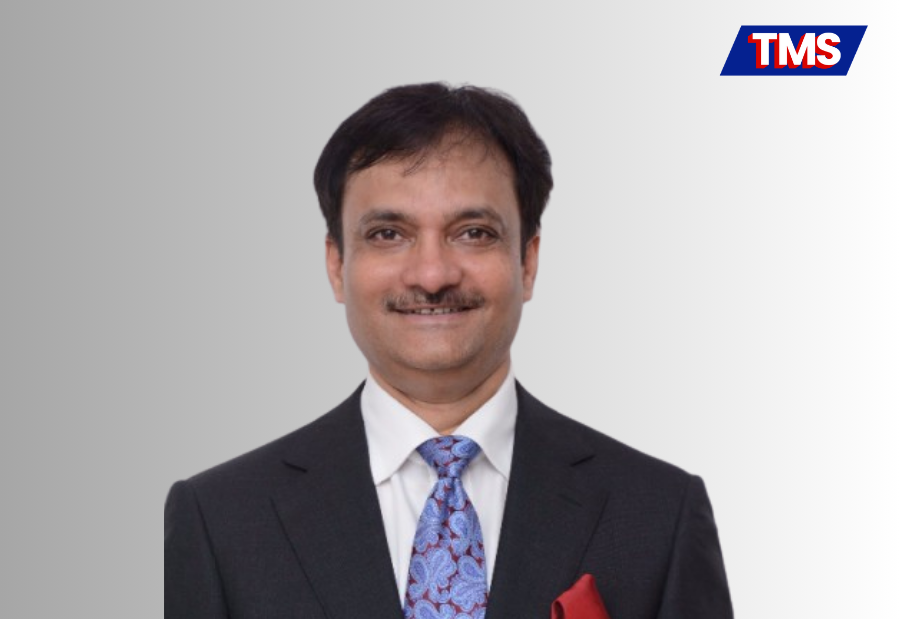
In an exclusive conversation with The Mainstream, Devvesh P Srivastav, Global HR Director & Regional HR Head at Centrient Pharmaceuticals, shares his perspective on the evolving role of HR leadership, building agile and capability-driven workforces, and preparing organisations for an AI-shaped future. He also explores how continuous learning, leadership development, culture and trust are becoming critical to organisational transformation, while emphasising the need for CHROs to connect business strategy, organisational capability and human potential.
1. Over the course of your 30+ year HR career across different markets and organisations, how has your approach to leadership evolved, and what experiences have shaped it the most?
Earlier, I believed leadership was about having the answers. Today, I believe it is about asking the right questions.
Thirty-plus years across different businesses, cultures and transformations taught me that there is no one-size-fits-all leadership model. My biggest learning came through M&A and transformation—where you must balance business continuity with human emotions.
Today, I see leadership as three things: clarity of purpose, courage to make difficult choices, and empathy to take people along.
Leadership is not about being in front; it is about making the organisation stronger even when you are not in the room.
- As business priorities and workforce needs continue to change, how can organisations build a more agile workforce and plan for the capabilities they will need in the future?
Organisations should stop asking, “How many people do we need?” and start asking, “What capabilities will we need?” I would focus on three things: critical skills, critical roles and critical people. Build a dynamic skills inventory, identify future capability gaps and create flexible talent pools through reskilling, internal mobility, gig talent and technology. The future workforce will not necessarily be smaller or bigger, it will be more fluid.
The winning organisation will be the one that can move talent faster than the market moves.
- As AI reshapes roles, workflows and the skills organisations need, how do you see it impacting the next generation of the workforce?
AI will not simply replace jobs; it will redefine jobs.
The real shift will be from “What can AI do?” to “What can humans do better because of AI?” Routine work will increasingly be automated, while curiosity, judgement, creativity, collaboration and problem-solving will become more valuable. The AI literacy is not that important actually it AI fluency which will differentiate. You may not know the Technology though you must know the usage of Technology is more imp. Therefore, organisations need to prepare people not just to use AI, but to work differently because of AI. AI may replace some tasks—but people who know how to use AI will replace people who don’t.
- With skills evolving faster than ever, how should organisations rethink learning, reskilling and leadership development to keep their workforce future-ready?
We need to move from “learning programmes” to “learning in the flow of work.” The traditional model of sending people to a classroom once a year is no longer enough. Learning must be continuous, personalised and directly connected to business problems. The key is “capability development “ and not L&D should be replaced with C&C Development ( Competence & Capability) “Kshamta “of your own human capital is key to Success .
I would build development around 70% real-life experiences, 20% coaching and collaboration, and 10% formal learning, supported by AI and digital platforms. The best learning is not what people remember from a programme; it is what they apply on Monday morning.
- The CHRO’s role is moving beyond people management towards becoming a strategic business partner. How can HR leaders better align people strategy with business growth and organisational transformation?
The CHRO must first understand the business before talking about people. If the Enterprise / Promoters wants to grow, HR should know where growth will come from, what capabilities it requires, what organisation model will enable it and where the talent risks are.
I have always believed that the CHRO should be sitting in the room when the business strategy is being created, not brought in later to execute the people implications.
HR should not ask, “What do you want us to do?” It should ask, “What are we trying to achieve—and what will it take from people and organisation to get there?”
- During periods of transformation, maintaining culture and employee trust can be challenging. What role should HR play in building a culture that can adapt to change while keeping people connected to the organisation’s purpose?
Transformation creates uncertainty. People don’t resist change as much as they resist uncertainty about what the change means for them. HR’s role is therefore to create clarity, connection and confidence.
Communicate the “why”, involve people early, listen genuinely and make leaders visible during difficult periods. Culture should not become a communication campaign; it must be demonstrated through leadership behaviour and decisions.
My experience with large integrations taught me one important lesson:
You can integrate systems in months. You integrate cultures only when people start believing: “This is our organisation.”
- Looking ahead to the next three years, what do you see as the biggest priorities for the modern CHRO, and what should organisations start building today to create a more agile and future-ready workforce?
I see the following 5 five priorities to be remembered as on our finger tips:
- AI & Workforce Transformation – redesign work, not just introduce technology.
- Skills & Talent Agility – build capabilities faster than the business changes.
- Leadership & Succession – create leadership pipelines before the need arises.
- Culture & Trust – maintain human connection in increasingly digital organisations.
- Organisation Productivity – continuously challenge structures, layers, roles and ways of working.
But underneath all five is one fundamental responsibility: The CHRO must connect business strategy, organisation capability and human potential. We need an integrated HRM (Human resource Management) within and with Business & Market
And perhaps the biggest shift is this:
The CHRO of tomorrow cannot be only the “voice of the people”; the CHRO has to be the architect of organisational capability.
Also read: Viksit Workforce for a Viksit Bharat
Do Follow: The Mainstream LinkedIn | The Mainstream Facebook | The Mainstream Youtube | The Mainstream Twitter
About us:
The Mainstream is a premier platform delivering the latest updates and informed perspectives across the technology business and cyber landscape. Built on research-driven, thought leadership and original intellectual property, The Mainstream also curates summits & conferences that convene decision makers to explore how technology reshapes industries and leadership. With a growing presence in India and globally across the Middle East, Africa, ASEAN, the USA, the UK and Australia, The Mainstream carries a vision to bring the latest happenings and insights to 8.2 billion people and to place technology at the centre of conversation for leaders navigating the future.