


EOS-05 reached its intended geosynchronous orbit on September 7 after ISRO successfully completed its third and final orbit-raising manoeuvre. The Liquid Apogee Motor (LAM) fired for 1,247 seconds from 8:57 pm, placing the satellite in an estimated orbit of around 35,000 km.
India’s latest Earth-observation satellite has completed its orbital climb, marking a major step toward beginning its operational mission.
ISRO confirmed that the spacecraft remains healthy and is now at the required altitude for its mission. However, additional work will be completed before EOS-05 begins routine Earth observation.
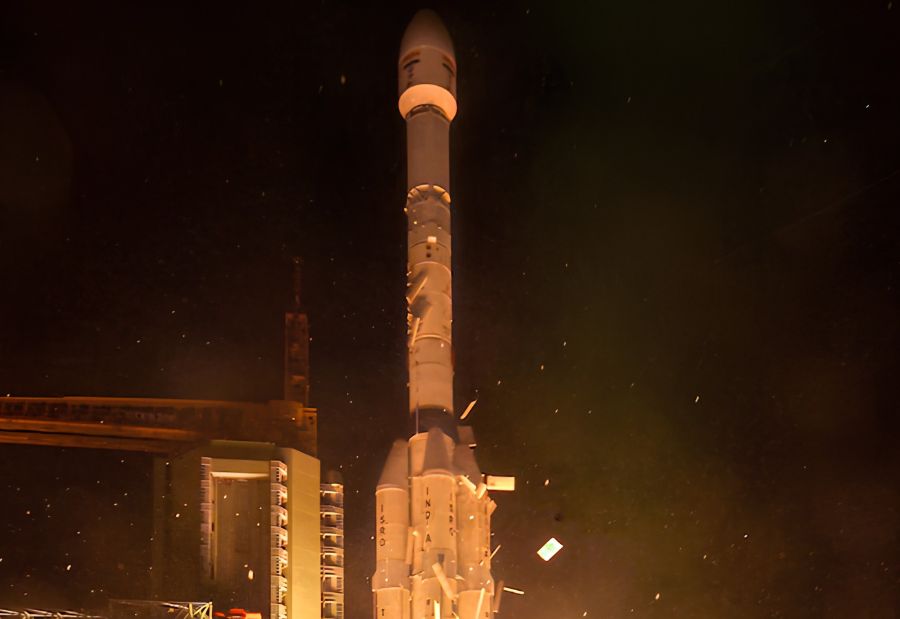
The satellite was launched from Sriharikota at 2:55 am on September 4 aboard ISRO’s GSLV-F17. Weighing 2,367 kg, EOS-05 is the heaviest payload carried by the GSLV so far.
Rather than placing the satellite directly into its final orbit, the rocket initially released it into a sub-geosynchronous transfer orbit. EOS-05 then used its own LAM engine to progressively raise its orbit.
The first manoeuvre on September 5 lasted 5,406.4 seconds and raised the orbit to an estimated 20,000 km by 31,129 km. The second manoeuvre on September 6 increased the apogee to around 35,786 km.
The final burn on September 7 further raised the perigee, resulting in a near-circular orbit of 34,903 km by 35,884 km. ISRO has said EOS-05 will eventually be positioned at the 85.5° East orbital slot.
EOS-05 is significant as India’s first imaging satellite designed to operate from geosynchronous orbit. At roughly 36,000 km above Earth, it can remain broadly over the same region as the planet rotates, offering a different perspective from conventional low-Earth-orbit imaging satellites.
The satellite is designed to repeatedly observe large areas of the Indian subcontinent. Its planned mission profile allows broad-area imaging at roughly 30-minute intervals, while priority locations could be revisited in as little as 5 minutes.
This rapid repeat imaging could support monitoring of fast-changing events such as cyclones, floods and forest fires, while also helping track crops, water bodies and other natural resources.
EOS-05 is designed for applications including disaster monitoring, agriculture, forestry and other Earth-observation requirements.
Also read: Viksit Workforce for a Viksit Bharat
Do Follow: The Mainstream LinkedIn | The Mainstream Facebook | The Mainstream Youtube | The Mainstream Twitter
About us:
The Mainstream is a premier platform delivering the latest updates and informed perspectives across the technology business and cyber landscape. Built on research-driven, thought leadership and original intellectual property, The Mainstream also curates summits & conferences that convene decision makers to explore how technology reshapes industries and leadership. With a growing presence in India and globally across the Middle East, Africa, ASEAN, the USA, the UK and Australia, The Mainstream carries a vision to bring the latest happenings and insights to 8.2 billion people and to place technology at the centre of conversation for leaders navigating the future.