


Intel has signed its first external customer for its advanced 18A chip manufacturing process, marking a significant step in the company’s efforts to expand its foundry business and compete with leading semiconductor manufacturers.
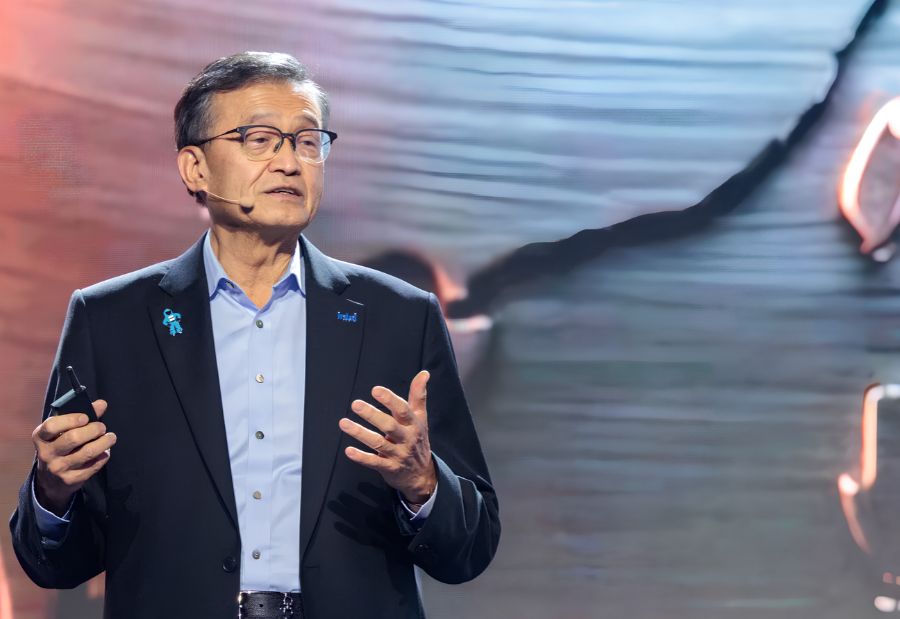
Intel CEO Lip-Bu Tan announced the development on Wednesday at the TomorrowX Summit in Austin, Texas. “Resilient supply on the foundry is very important,” Tan said. “And then 18A, I’m involved in production and we just signed the first customer,” he added, without revealing the customer’s identity.
The development represents an important milestone in Intel’s five-year effort to challenge Taiwan Semiconductor Manufacturing Company (TSMC), the global leader in contract chip manufacturing. After facing production setbacks and low manufacturing yields, Intel has positioned its 18A process as a key part of its strategy to attract external customers and manufacture chips for other companies.
“It’s a huge win for foundry,” Creative Strategies analyst Ben Bajarin said.
Intel technology chief Pushkar Ranade later clarified on X that the customer had signed up for the company’s 18A-P manufacturing process node, which entered risk production in June 2026. The announcement has also renewed speculation around a possible deal with Apple. Reports in May indicated that Apple and Intel were nearing an agreement for Intel to manufacture some chips used in Apple devices.
Analysts have identified Nvidia, Apple and major cloud computing companies as possible customers. Bajarin pointed to Amazon, Microsoft and Google, which are developing their own processors and facing capacity constraints at TSMC.
“Amazon, Microsoft and Google are struggling to get capacity for their CPU ambitions at TSMC,” he said. “So it makes sense that you go somewhere for at least some capacity.”
The announcement comes as Intel faces pressure over its financial and operational performance. Its stock has lost more than half its value since the end of September, with much of the decline occurring late last month after the company warned that quarterly revenue could fall at least $1 billion short of analyst estimates. A slowdown in PC sales and supply chain challenges contributed to the outlook.
Tan said in late October that the global server processor market could expand up to fivefold over the next 5 years, reaching approximately $200 billion. However, he acknowledged that Intel is currently unable to meet customer demand.
Intel’s foundry ambitions have received support from the US government, which acquired a 10% stake in the company in August 2025. Nvidia also invested $5 billion, reflecting growing interest in strengthening domestic semiconductor manufacturing and reducing dependence on Taiwan.
Until now, Intel’s foundry operations have largely focused on producing chips for its own products, with no major publicly identified external customer for its advanced manufacturing business.
Alongside the 18A announcement, Tan also named Microsoft as the first publicly disclosed customer for Intel’s advanced packaging technology, known as Embedded Multi-die Interconnect Bridge (EMIB). The technology connects multiple chip components within a larger semiconductor package, adding another milestone to Intel’s efforts to expand its manufacturing partnerships.
Also read: Viksit Workforce for a Viksit Bharat
Do Follow: The Mainstream LinkedIn | The Mainstream Facebook | The Mainstream Youtube | The Mainstream Twitter
About us:
The Mainstream is a premier platform delivering the latest updates and informed perspectives across the technology business and cyber landscape. Built on research-driven, thought leadership and original intellectual property, The Mainstream also curates summits & conferences that convene decision makers to explore how technology reshapes industries and leadership. With a growing presence in India and globally across the Middle East, Africa, ASEAN, the USA, the UK and Australia, The Mainstream carries a vision to bring the latest happenings and insights to 8.2 billion people and to place technology at the centre of conversation for leaders navigating the future.