


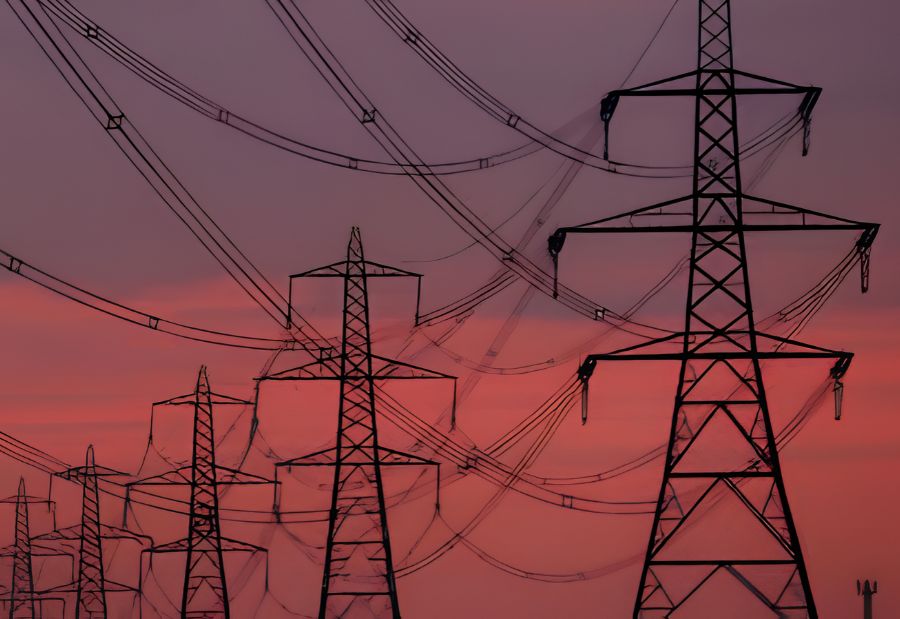
The ongoing conflict in West Asia has highlighted the vulnerabilities of global energy supply chains, with disruptions to major shipping routes raising concerns over oil and gas availability and prices. The International Energy Agency’s (IEA) World Energy Outlook 2026 examines the crisis’s potential impact on global energy markets and the changing energy priorities of countries, including India.
According to the IEA, India will account for more growth in energy demand over the next decade than any other country or region. Its energy consumption is projected to increase by 2.5% annually until 2035 under the Stated Policies Scenario (STEPS), nearly 3 times the global rate.
The scale of the West Asia disruption is significant. Since the crisis began, the Gulf has experienced a cumulative loss of 2.8 billion barrels of oil and 60 billion cubic metres (bcm) of natural gas. By November 2026, disruptions to energy flows through the Strait of Hormuz were continuing, with higher costs reaching consumers as supply buffers declined.
Asia has faced considerable pressure, accounting for around 80% of the oil and nearly 90% of the liquefied natural gas (LNG) that passed through the Strait before the crisis. Diesel supplies have also tightened, with prices crossing $200 per barrel.
Gulf producers are exploring alternative pipeline routes to reduce their dependence on the Strait. These projects could have a combined capacity of around 7 million barrels per day, require investments of approximately $40 billion and add around $2 per barrel to export costs.
For India, rising demand and import dependence present a significant challenge. The country imports around 40% of its overall energy requirements, including 90% of its crude oil and 50% of its natural gas. Around half of the LPG cylinders used by Indian households also depend on supplies passing through the Strait of Hormuz. LPG imports fell by more than 50% during the first 2 months of the conflict, prompting the government to maximise domestic production and prioritise household supplies.
India’s growing energy needs will be driven by rising incomes, urbanisation, industrial expansion and higher demand for cooling and mobility. Over the next decade, the country is expected to:
- Add more than 12,000 cars to its roads every day.
- Record a 33% increase in built-up spaces.
- Install an additional 200 million air conditioners in homes.
- Expand production of energy-intensive materials, including iron, steel and cement.
Despite these pressures, India is making progress in diversifying its energy mix. Solar power accounted for half of its power capacity additions over the past decade. The country also achieved its target of sourcing 50% of installed electricity capacity from non-fossil sources in 2025, 5 years ahead of schedule.
The IEA projects electricity demand to grow by 6% annually over the next decade as transport, buildings and industries increasingly shift towards electricity. Under the STEPS, India’s electricity generation is expected to rise from 2,114 terawatt-hours (TWh) in 2025 to 3,585 TWh by 2035. The share of non-fossil sources, including renewables and nuclear power, is projected to increase from around 28% to 51%.
Coal, however, will continue to play an important role due to India’s substantial domestic reserves, providing flexibility to the power system as renewable capacity expands.
India also remains a major refining hub. With nearly 6 million barrels per day (mb/d) of refining capacity in 2025, it was the world’s 4th-largest country by refining capacity and 3rd-largest by refinery runs. It was also the 2nd-largest net crude oil importer after China. An additional 840,000 barrels per day of refining capacity is under construction, strengthening India’s potential as an exporter of petroleum products, particularly diesel and other middle distillates.
However, domestic crude oil production is projected to decline by nearly 20% by 2035, even as refining capacity expands by 1 million barrels per day. This will increase crude import requirements, while imports from West Asia are expected to remain broadly stable.
LPG demand presents another concern. India, the world’s 2nd-largest LPG importer, met around 40% of its demand through domestic production in 2025. Under the STEPS, LPG demand could increase by almost 400,000 barrels per day by 2035, while domestic supply rises by less than 100,000 barrels per day. This could push imports close to 1 million barrels per day. The IEA also cautions that increasing LPG production could affect the output of higher-value products such as diesel and petrol.
The IEA’s Additional Response Case (ARC) explores how faster clean energy adoption, efficiency measures and greater use of domestic resources could reduce India’s dependence on imported fuels. Under this scenario, electric car adoption is 30% faster by 2035 than under the STEPS, alongside faster industrial electrification and improved energy efficiency.
These measures could reduce India’s oil requirements by 580,000 barrels per day and natural gas consumption by 8% compared with the STEPS by 2035. LPG imports could also fall below 750,000 barrels per day, against nearly 1 million barrels per day under the STEPS.
The report highlights that faster electrification, greater renewable energy adoption and improved efficiency could support India’s ambition of achieving energy independence by 2047. However, this transition will require substantial investment in electricity infrastructure, domestic energy production and diversified supply chains.
Also read: Viksit Workforce for a Viksit Bharat
Do Follow: The Mainstream LinkedIn | The Mainstream Facebook | The Mainstream Youtube | The Mainstream Twitter
About us:
The Mainstream is a premier platform delivering the latest updates and informed perspectives across the technology business and cyber landscape. Built on research-driven, thought leadership and original intellectual property, The Mainstream also curates summits & conferences that convene decision makers to explore how technology reshapes industries and leadership. With a growing presence in India and globally across the Middle East, Africa, ASEAN, the USA, the UK and Australia, The Mainstream carries a vision to bring the latest happenings and insights to 8.2 billion people and to place technology at the centre of conversation for leaders navigating the future.