


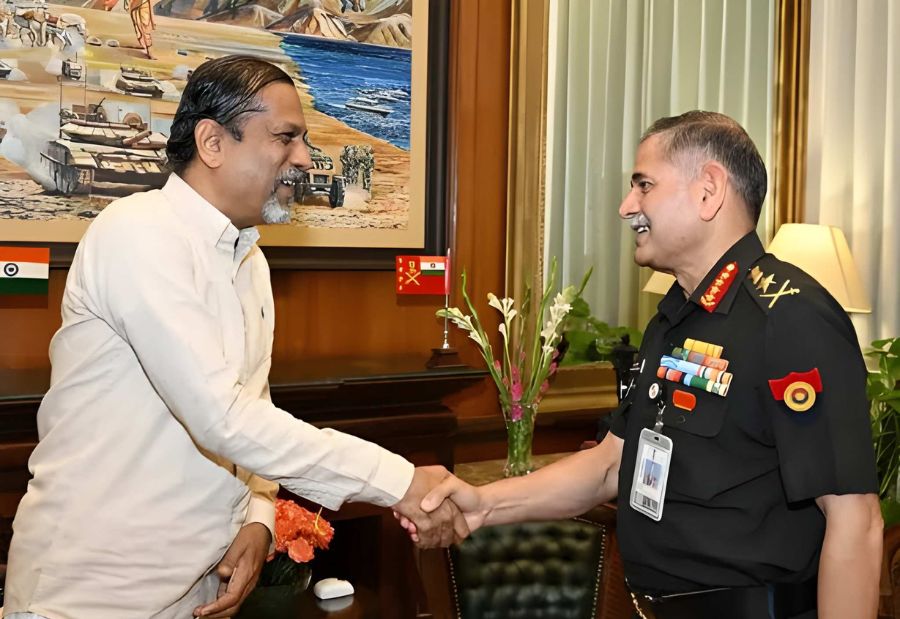
India’s push towards digital sovereignty and indigenous innovation has received a significant boost with the signing of a Memorandum of Understanding (MoU) between the Indian Army and Zoho Corporation. The partnership marks a key milestone in India’s defence digital transformation journey and reinforces the government’s vision of Atmanirbhar Bharat.
Signed under the Indian Army’s JAI framework—Jointness, Atmanirbharta, and Innovation—the collaboration seeks to advance research, develop secure digital solutions, and strengthen technology capabilities across defence operations. As cybersecurity, data protection, and digital resilience become critical national priorities, the agreement highlights the growing role of homegrown technology in supporting strategic sectors.
The MoU was signed by Lieutenant General Harsh Chhibber, Director General of Information Systems, Indian Army, and Rajendran Dandapani, Director of Engineering at Zoho Corporation. The ceremony was attended by General Upendra Dwivedi, Chief of the Army Staff, and Sridhar Vembu, Founder of Zoho Corporation.
Strengthening India’s Defence Digital Transformation
The Indian Army’s partnership with Zoho reflects a broader shift towards adopting indigenous technology solutions for mission-critical applications. As organizations globally reassess technology dependencies and prioritize digital sovereignty, India’s defence sector is increasingly investing in locally developed platforms that offer greater control, security, and operational resilience.
The collaboration is expected to support the development of secure digital infrastructure tailored to the unique requirements of military operations while enabling greater efficiency across administrative and operational functions.
Advancing Atmanirbhar Bharat Through Technology Innovation
The partnership aligns closely with India’s Atmanirbhar Bharat initiative, which emphasizes self-reliance in strategic sectors, including defence and technology. By working with Zoho, one of India’s leading enterprise software companies, the Indian Army is reinforcing the importance of domestic innovation in building future-ready capabilities.
Beyond technology development, the initiative will focus on research, innovation, and workforce upskilling. As artificial intelligence, automation, and advanced analytics continue to reshape operational environments, strengthening digital skills will be essential for enhancing defence preparedness and organizational agility.
Public-Private Partnerships Driving Defence Modernization
The agreement also underscores the growing importance of collaboration between government institutions and Indian technology companies. Defence modernization today extends beyond conventional systems and increasingly relies on secure software platforms, digital workflows, data intelligence, and emerging technologies.
As India’s digital economy continues to expand, partnerships such as the Indian Army–Zoho collaboration demonstrate how public-private innovation can accelerate national priorities while supporting secure and sustainable digital transformation.
With a strong focus on indigenous technology, digital sovereignty, and innovation-led growth, the partnership represents a strategic step toward building a resilient and technologically empowered future for India’s defence ecosystem.
Also read: Viksit Workforce for a Viksit Bharat
Do Follow: The Mainstream LinkedIn | The Mainstream Facebook | The Mainstream Youtube | The Mainstream Twitter
About us:
The Mainstream is a premier platform delivering the latest updates and informed perspectives across the technology business and cyber landscape. Built on research-driven, thought leadership and original intellectual property, The Mainstream also curates summits & conferences that convene decision makers to explore how technology reshapes industries and leadership. With a growing presence in India and globally across the Middle East, Africa, ASEAN, the USA, the UK and Australia, The Mainstream carries a vision to bring the latest happenings and insights to 8.2 billion people and to place technology at the centre of conversation for leaders navigating the future.