


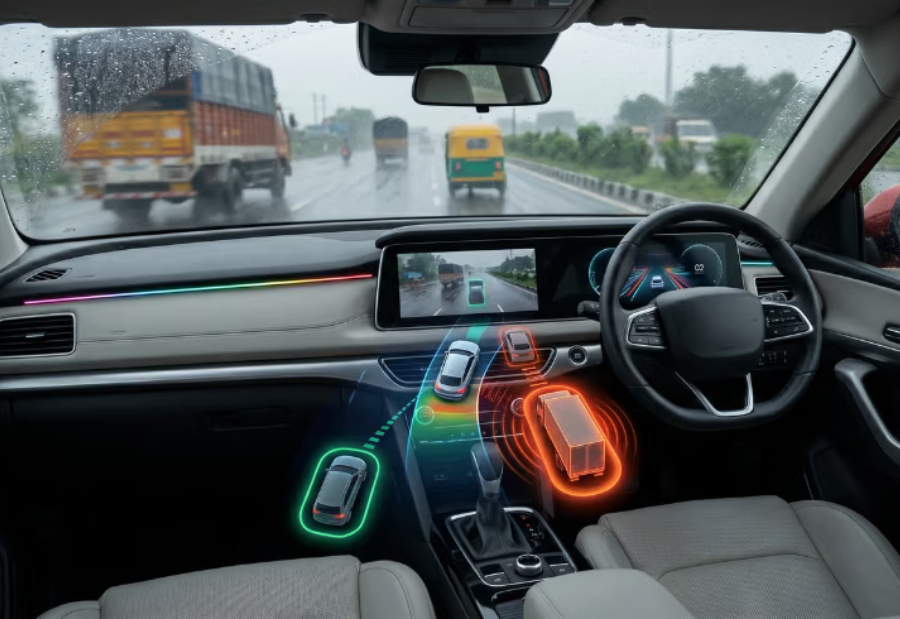
In a move aimed at improving road safety and supporting next-generation automotive technologies, India has removed licensing requirements for radio spectrum used by crash-avoidance and self-driving vehicle systems.
The decision eliminates a key commercial hurdle for automakers and could accelerate the deployment of advanced safety technologies across the country’s automotive sector. India, the world’s 3rd-largest car market, recorded more than 177,000 deaths from nearly 500,000 road accidents in 2024, according to the latest government data.
Under new government notifications issued on Thursday, radar sensors operating in the 77 GHz to 81 GHz frequency band will no longer require separate spectrum licensing. A separate notification also waived licensing requirements for the 5.9 GHz band, which supports vehicle-to-everything (V2X) communication systems, allowing vehicles to exchange information with each other and roadside infrastructure.
The move brings India in line with standards used in the United States and the European Union. This will enable automakers to use globally available hardware instead of developing customized local versions, reducing costs and speeding up technology adoption.
Global manufacturers such as Mercedes-Benz and BMW, which already offer radar-based driver assistance technologies in international markets, can now introduce similar systems more easily in India. Domestic automakers including Maruti Suzuki, Tata Motors, and Mahindra & Mahindra are also expected to benefit by expanding Advanced Driver-Assistance Systems (ADAS) into more affordable vehicle segments.
Technology suppliers such as Bosch, Continental, and Qualcomm could also see increased opportunities as demand for these systems grows.
Radar sensors support features such as emergency braking, adaptive cruise control, blind-spot monitoring, and safe-distance detection, all of which are essential building blocks for autonomous driving technologies.
V2X technology further enhances road safety by alerting drivers to hazards beyond their immediate view, including vehicles braking around blind turns or approaching emergency vehicles. A government panel in 2023 noted that many traffic incidents occur in such situations and stated, “Most sensors do not work well in these scenarios and V2X fills the gap.”
The panel also recommended including V2X capabilities in Bharat NCAP safety ratings. The development comes as India continues to address road safety challenges, including traffic congestion, weak lane discipline, speeding, and unpredictable road hazards.
Also read: Viksit Workforce for a Viksit Bharat
Do Follow: The Mainstream LinkedIn | The Mainstream Facebook | The Mainstream Youtube | The Mainstream Twitter
About us:
The Mainstream is a premier platform delivering the latest updates and informed perspectives across the technology business and cyber landscape. Built on research-driven, thought leadership and original intellectual property, The Mainstream also curates summits & conferences that convene decision makers to explore how technology reshapes industries and leadership. With a growing presence in India and globally across the Middle East, Africa, ASEAN, the USA, the UK and Australia, The Mainstream carries a vision to bring the latest happenings and insights to 8.2 billion people and to place technology at the centre of conversation for leaders navigating the future.