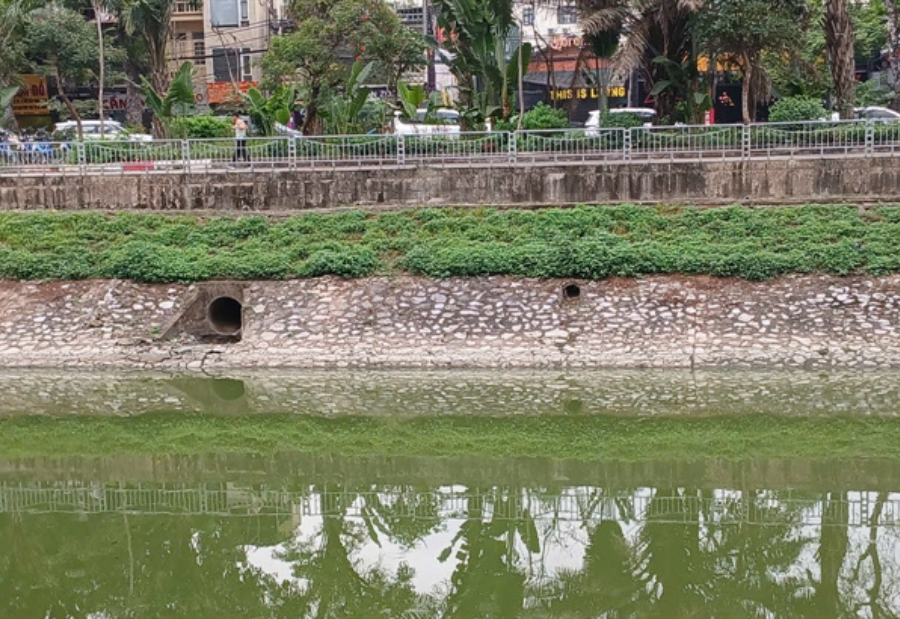
Beneath the busy streets of Hanoi, a silent transformation is underway as the city turns to advanced underground technology to tackle long-standing river pollution.
For years, rivers like the Tô Lịch River were heavily polluted due to untreated wastewater. Residents avoided these areas due to foul smell and stagnant water. Now, gradual improvements are being noticed as the city rolls out a modern wastewater management system.
At the core of this effort is an underground network of interceptor sewers and tunnels designed to redirect sewage to treatment plants instead of discharging it directly into rivers. A key facility in this system is the Yên Xá wastewater treatment plant, which has a capacity of 270,000 cubic metres per day and handles wastewater from multiple river basins and urban areas.
The project uses pipe jacking, a trenchless construction method that allows pipelines to be installed 10 to 15 metres underground without digging up roads. Tunnel-boring machines operate in closed systems, capturing soil, water, and sludge, ensuring no environmental contamination during construction.
“Basically, we use a tunnel-boring machine, a kind of robot, at the front, combined with jacking force from behind to push pipe sections through the ground at depths of around 10 to 15 metres,” said Trần Duy Tuấn.
“The whole process is a closed loop: water, soil, sand and sludge are all captured and processed. What remains is solid waste that can be reused in civil construction. The advantage is that we do not release mud or spoil into the environment during construction.”
Unlike traditional construction methods, this approach minimises disruption. Projects are built in segments of 100 to 150 metres, with limited surface impact.
Officials said that once the system became operational, wastewater from river catchments began flowing directly to treatment plants, reducing direct discharge into rivers.
“Yên Xá wastewater treatment plant was inaugurated in August last year. When the interceptor system along the Tô Lịch River came into operation, all wastewater from the river’s catchment was conveyed to the plant for treatment without interruption. At present, there is no longer any direct discharge of wastewater into the Tô Lịch River,” said Trần Quốc Bảo.
Authorities noted that while pollution levels have reduced, full restoration will take time. Additional measures such as regulating water flow and bringing clean water from the Red River are also being implemented.
Residents have started returning to riverbanks, with visible improvements encouraging daily activities. Urban planners believe cleaner rivers could enhance public spaces and support tourism and local economy.
“Once domestic contractors master the technology, costs will go down and we can apply it to many other projects in Hà Nội and across the country,” Tuấn said.
Also read: Viksit Workforce for a Viksit Bharat
Do Follow: The Mainstream LinkedIn | The Mainstream Facebook | The Mainstream Youtube | The Mainstream Twitter
About us:
The Mainstream is a premier platform delivering the latest updates and informed perspectives across the technology business and cyber landscape. Built on research-driven, thought leadership and original intellectual property, The Mainstream also curates summits & conferences that convene decision makers to explore how technology reshapes industries and leadership. With a growing presence in India and globally across the Middle East, Africa, ASEAN, the USA, the UK and Australia, The Mainstream carries a vision to bring the latest happenings and insights to 8.2 billion people and to place technology at the centre of conversation for leaders navigating the future.